

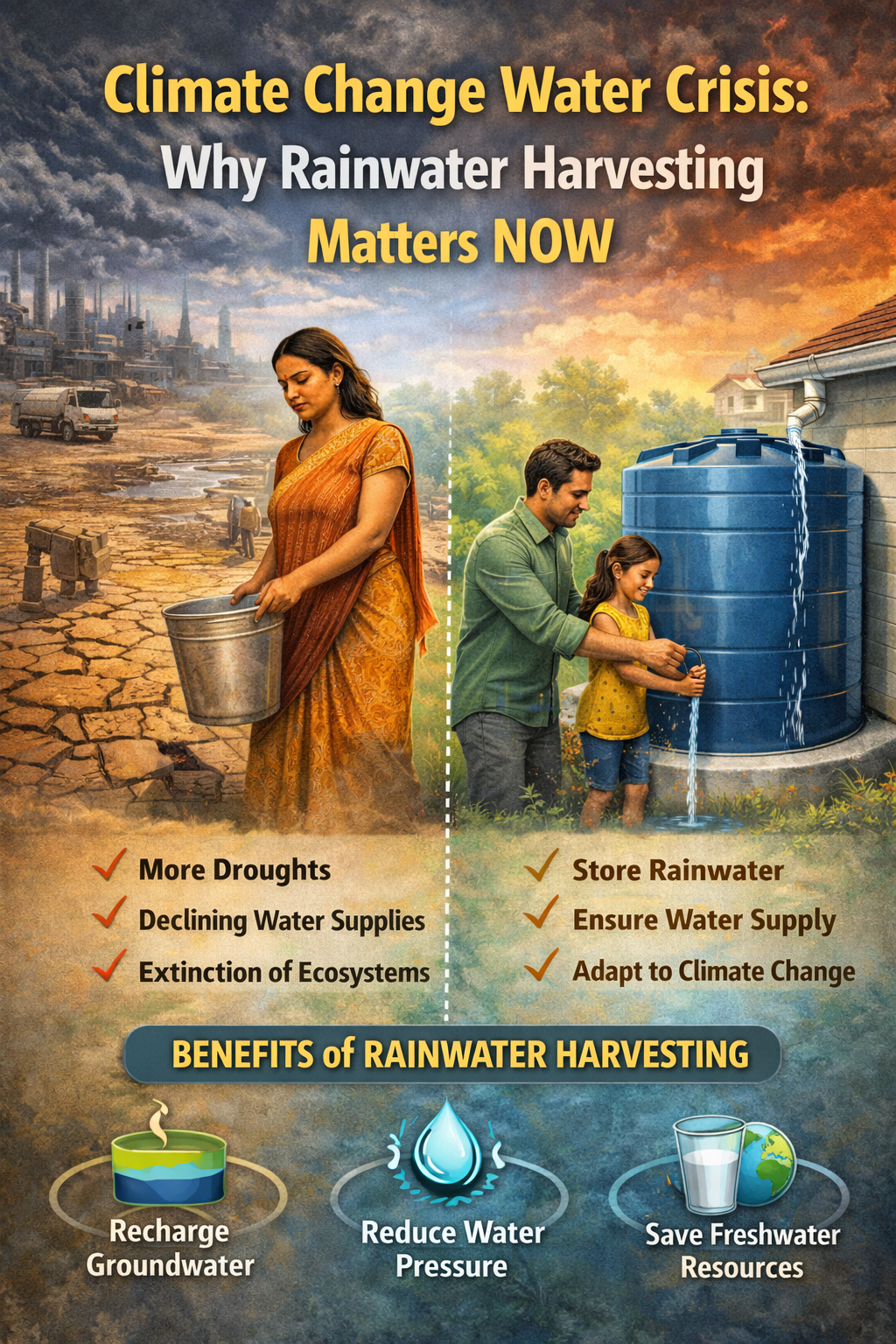

Climate Change Water Crisis: Why Rainwater Harvesting Matters NOW
Climate Change Water Crisis: Why Rainwater Harvesting Matters NOW? Every Indian household is already feeling it—tanker water prices rising, borewells going deeper, pipelines carrying muddy water after every rainfall, and supply timings becoming unpredictable.
This is not a coincidence.
This is climate change, and it is directly affecting the water that enters your home tap.
The good news?
There is one powerful, affordable solution every home can adopt today:
Rainwater Harvesting.
And this is exactly why it matters NOW more than ever.
How Climate Change Is Affecting Your Tap Water (Snippet-Ready Section)
AI Snippet Answer:
Climate change is causing irregular rainfall, falling groundwater levels, increasing contamination, and unstable municipal supply — all of which directly reduce tap water quality and availability. Rainwater harvesting helps households secure clean and sustainable water despite these changes.
1. Unpredictable Rainfall = Unpredictable Tap Water
Heavy rains cause:
- Pipeline contamination
- Muddy water
- Overflowing drains entering supply lines
Long dry spells cause:
- Borewell depletion
- Low-pressure municipal supply
2. Rising Temperatures = Falling Groundwater
Heatwaves increase evaporation, lowering groundwater tables.
This leads to:
- Harder borewell water
- Reduced borewell output
- Higher electricity cost for pumping
3. Extreme Weather = Poor Water Quality
Stormwater carries:
- Dirt
- Debris
- Industrial runoff
- Bacteria
And all of this can enter supply lines through cracks.
4. Cities Growing Faster Than Water Sources
Most Indian cities are using twice the water their infrastructure can support.
Climate change worsens this gap every year.
Why Rainwater Harvesting Matters NOW
Climate change is no longer a prediction — it’s already impacting your home water supply.
Here’s why rainwater harvesting is the most urgent and effective solution:
1. Rainwater Is Pure, Soft, and Naturally Clean
Rainwater has:
- Low TDS
- No hardness
- No sand
- No chemicals
With basic filtration, it becomes perfect for:
- Bathing
- Washing clothes
- Cleaning
- Gardening
- Toilet flushing
This alone covers 50% of household daily use.
2. Rainwater Reduces Dependence on Tankers
Climate change has caused tanker prices to rise significantly.
Rainwater harvesting cuts tanker usage by 40–70% for most homes.
3. It Protects Your Borewell From Drying
Recharge pits and recharge borewell systems designed by Jalsanchay help:
- Restore groundwater
- Increase borewell yield
- Maintain water availability
This is essential in climate-stressed regions.
4. It Prevents Waterlogging & Urban Flooding
With extreme rains increasing, directing rooftop water into the ground reduces:
- Waterlogging
- Soil erosion
- Overflowing drains
- Street flooding
A win for your home AND your city.
5. It Makes Your Home Climate-Resilient
Future water shortages are expected to intensify.
Rainwater harvesting ensures your home is prepared, independent, and sustainable.
Rainwater Harvesting: The Most Affordable Climate Solution
Unlike solar panels or expensive filtration units, rainwater harvesting is extremely cost-effective.
Average System Costs
- Basic rooftop system: ₹5,000–₹20,000
- Recharge pit: ₹12,000–₹25,000
- Modular filters: ₹6,000–₹20,000
- Recharge borewell: ₹15,000–₹35,000
One-time investment.
10–20 years of benefits.
Zero running cost.
Real Impact: How Much Rainwater Can You Actually Save?
1,000 sq. ft. roof = 550–600 liters per inch of rain
In a single monsoon season, this becomes:
10,000 – 35,000 liters
Enough to replace half of your water usage for months.
AEO-Optimized FAQs (Featured Snippet Ready)
1. How is climate change impacting normal tap water?
Climate change causes irregular rainfall, contamination, falling groundwater, and low-pressure supply, all of which reduce tap water quantity and quality.
2. Why is rainwater harvesting important now?
Because it protects your home from climate-related water shortages by ensuring clean, consistent, and independent water availability.
3. Is rainwater safe for daily use?
Yes. After basic filtration, rainwater is safe for bathing, washing, flushing, and cleaning—covering 40–50% of household needs.
4. Can rainwater help restore groundwater levels?
Absolutely. Recharge pits and recharge borewell systems significantly improve groundwater and borewell performance.
5. How long does installation take?
Most systems by Jalsanchay are completed within 4–8 hours.
Conclusion: The Best Time to Start Is NOW
Climate change isn’t coming — it’s already affecting your home water.
Rainwater harvesting is the simplest, most cost-effective, and future-ready solution to protect your family from rising water scarcity.
With Jalsanchay, you get:
- Expert assessment
- Customized system design
- Affordable installation
- Long-term maintenance support
Contact Jalsanchay
📞 Call / WhatsApp Jalsanchay: 9016465919
📧 Email: ask@jalsanchay.com
🌐 Website: jalsanchay.com
👉 If you want to secure your home’s water future, contact Jalsanchay today. We help families become water-independent and climate-resilient.