


How Rainwater Harvesting Helps in Reducing Global Warming

Rainwater Harvesting Helps in Reducing Global Warming by lowering energy-intensive water pumping, cutting carbon emissions, improving soil moisture, supporting groundwater recharge, increasing green cover, and reducing urban flooding and heat. By capturing rain where it falls, RWH minimizes dependence on fossil-fuel-powered water supply systems and creates cooler, greener environments.


Water Crisis and Climate Crisis Are Connected

When people talk about global warming, they rarely think about water.
But in reality, water and climate change are deeply linked.

  • More heat → more evaporation
  • More evaporation → less groundwater
  • Less groundwater → more pumping
  • More pumping → more electricity
  • More electricity → more carbon emissions

This vicious cycle speeds up global warming.

Rainwater Harvesting (RWH) is one of the simplest and most powerful tools to break this cycle — and surprisingly, very few people know how big its impact really is.

At Jalsanchay, we explain to homeowners, societies, corporates, and farmers that RWH is not just a water-saving solution…
👉 It is a climate solution.

Let’s understand how.


1️⃣ RWH Reduces Electricity Use — and Thus Carbon Emissions

Did you know?
Pumping groundwater is one of the biggest sources of energy consumption in India.

Farm pumps
Society borewells
Industrial pumps
Municipality pumping stations

All run on electricity or diesel.

When we harvest rainwater:

  • Groundwater dependence reduces
  • Pumping hours drop
  • Electricity consumption decreases
  • CO₂ emissions come down

✔ Example Calculation

Pumping 10,000 litres of groundwater uses approx 3–4 units of electricity.

If a society harvests 10 lakh litres annually, they reduce up to:
👉 3,000–4,000 electricity units
👉 Equivalent to planting 150–200 trees

Rainwater = less pumping = less carbon = less global warming.


2️⃣ RWH Reduces Urban Heat by Recharging Soil Moisture

Dry land heats up faster.
Moist soil stays cooler.

RWH systems:

  • Recharge groundwater
  • Maintain soil moisture
  • Reduce heat absorption
  • Lower surrounding temperature by 1–3°C
  • Prevent heat islands in cities

Cities like Delhi, Mumbai, Bengaluru and Pune experience extreme heat partly because:
✔ Groundwater is depleted
✔ Soil is dry
✔ Concrete retains heat

Rainwater harvesting reverses this effect naturally.


3️⃣ RWH Increases Greenery — Which Absorbs CO₂

Plants grow better with rainwater because it is:

  • Soft
  • Low in minerals
  • Free from chlorine

When homes, farms, and societies store rainwater:

  • Plantation projects increase
  • Green belts revive
  • Trees grow stronger
  • Air quality improves
  • CO₂ absorption rises

Small Rainwater Harvesting → Big Environmental Benefits

1 roof = thousands of litres = greener surroundings.


4️⃣ RWH Reduces Flooding and Soil Erosion (Both Linked to Climate Change)

Extreme rainfall events are rising due to global warming.
But uncontrolled runoff causes:

  • Flooding
  • Soil erosion
  • Topsoil loss
  • Sedimentation in rivers
  • Destruction of crops

Farm ponds, recharge pits, contour trenches, and rooftop systems created by Jalsanchay control runoff and store it safely.

This reduces pressure on natural systems and stabilizes local climate conditions.


5️⃣ RWH Reduces Dependence on Tankers — A Big CO₂ Source

Water tankers burn massive amounts of diesel.

One tanker trip = 3–6 kg of CO₂ released into the air.

If a society or industry installs RWH:
👉 Tanker trips reduce
👉 Diesel consumption drops
👉 Air pollution decreases
👉 Carbon emissions fall

This has a direct impact on global warming.


6️⃣ RWH Helps Recharge Groundwater — Nature’s Own Climate Buffer

Groundwater behaves like a natural climate defense system.
When aquifers are full:

  • Wells stay stable
  • Soil retains moisture
  • Streams flow longer
  • Plants survive heat waves
  • Local climate becomes cooler

Rainwater harvesting strengthens this natural protection.


7️⃣ RWH Converts Rooftops and Open Land Into Climate Protectors

Every rooftop in India is a missed climate opportunity.

A 1,000 sq ft roof can capture 25,000–60,000 litres of water annually.

If 1 crore Indian homes harvest rainwater:
💧 25,000 crore litres saved
💨 Millions of units of electricity saved
🌱 Huge reduction in CO₂ emissions
🔥 Lower urban heat

This is why global climate experts call RWH:
“The simplest climate action that anyone can start today.”


Why Jalsanchay’s RWH Solutions Make Climate Impact Stronger

At Jalsanchay, we design RWH systems for:
✔ Homes
✔ Apartments
✔ Schools
✔ Industries
✔ Farmlands
✔ Commercial buildings
✔ Village communities

Our systems maximize:

  • Ground recharge
  • Water storage
  • Energy savings
  • Soil cooling
  • Greenery growth

Because better design = better climate benefits.


Conclusion: Rainwater Harvesting Is a Climate Action You Can Start Today

You don’t need massive investments…
You don’t need expensive technology…

You just need to store the rain that already falls on your roof or land.

Rainwater harvesting:
🌍 Reduces carbon
🌿 Increases greenery
💧 Saves water
🔥 Lowers heat
⚡ Cuts electricity
🏙 Improves city climate

Few actions offer this many environmental benefits at such a low cost.


**📞 Want to Make Your Home or Building Climate-Friendly?

Contact Jalsanchay Today**

Jalsanchay provides:
✔ Complete RWH consultation
✔ Custom system design
✔ Farm, home & society RWH solutions
✔ Groundwater recharge structures
✔ Maintenance & audits
✔ Budget-friendly, high-impact systems

Whether you want to lower your water bills or reduce your carbon footprint —
Jalsanchay is your trusted rainwater partner.
How Rainwater Harvesting Helps Recharge Groundwater

Why Groundwater is Drying Up Faster Than We Realize and Rainwater Harvesting Helps Recharge Groundwater?

Indian cities like Bengaluru, Delhi, Pune, and Chennai are witnessing rapidly falling groundwater levels. Borewells are drying, tanker prices are rising, and monsoon rainfall is becoming unpredictable.

But here’s the good news: the solution is beneath our feet.
And rainwater harvesting (RWH) is the quickest, simplest way to recharge groundwater naturally.

In this blog, we break down—in the simplest way—how rainwater harvesting actually helps groundwater recharge, and why every home, RWA, school, and commercial building should adopt it.


How does rainwater harvesting help recharge groundwater?


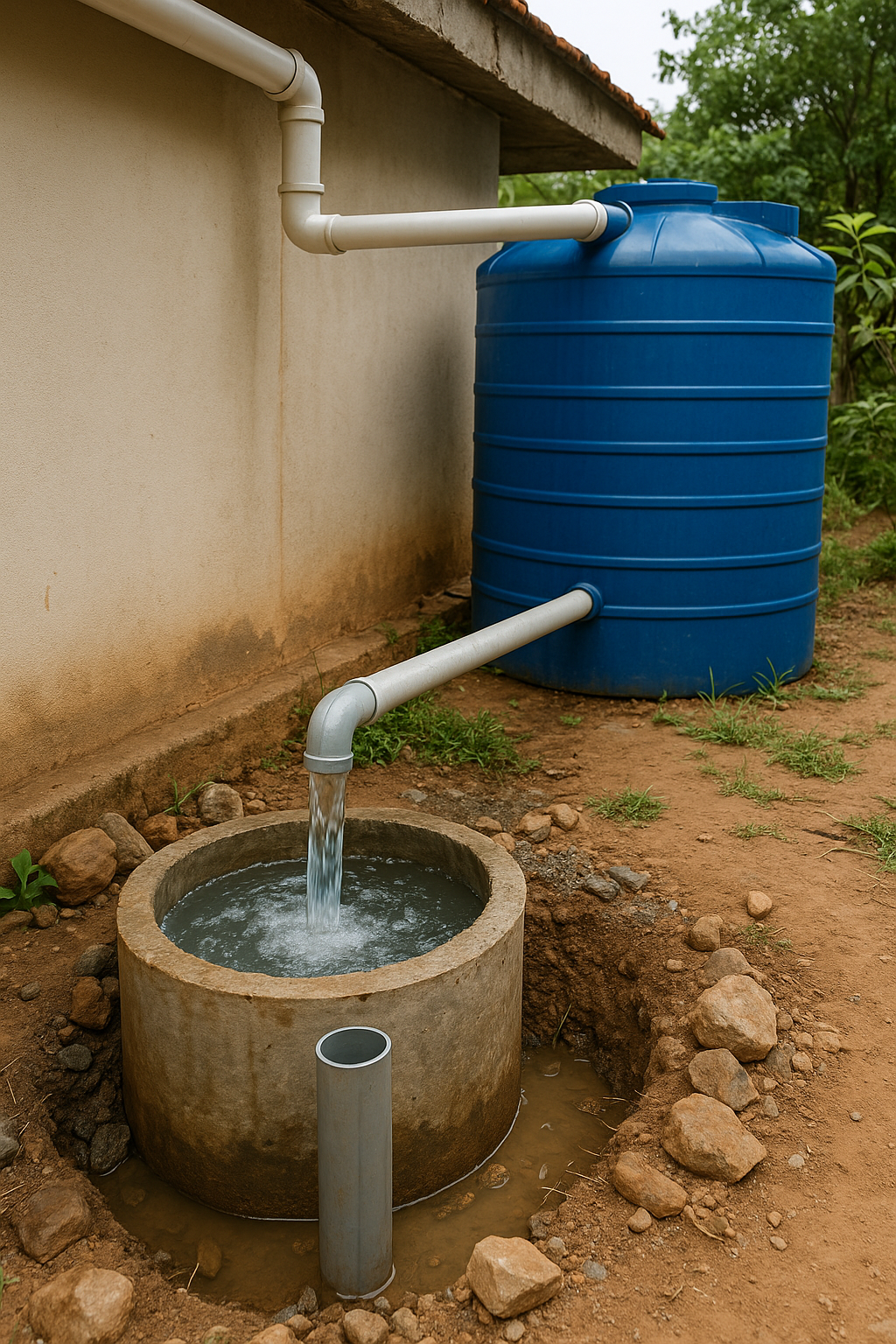
Rainwater harvesting directs clean rooftop or surface runoff into the soil through recharge pits, recharge wells, percolation trenches, and injection systems. This water slowly seeps down through soil layers and refills underground aquifers, increasing groundwater levels and boosting borewell yield.


How Rainwater Harvesting Helps Recharge Groundwater

Instead of letting rainwater escape into drains, RWH captures, filters, and channels it into the ground.
Here’s how it works step-by-step:


1. Rainwater Is Collected From Rooftops or Open Areas

Roofs, terraces, paved areas, and open grounds receive clean rainwater.
This runoff is naturally soft, low in minerals, and perfect for recharge.


2. The Water Is Filtered to Remove Dust & Debris

Basic filters such as:

  • Mesh filters
  • Sand + gravel filters
  • Charcoal filters
  • Jalsanchay’s dual-stage recharge filters

These ensure only clean water enters the ground.


3. The Water Is Directed Into Recharge Structures

Depending on the property type, the harvested rainwater flows into:

  • Recharge pits
  • Recharge wells
  • Percolation trenches
  • Injection wells (for deep aquifers)
  • Borewell recharge systems

These structures hold water long enough for the soil to absorb it.


4. Water Slowly Percolates Through the Soil

This natural filtration is powerful. As water moves downward:

  • Soil traps impurities
  • Bacteria neutralize contaminants
  • Pebbles and sand layers filter out solids

By the time the water reaches deeper layers, it becomes clean and safe.


5. Aquifers Get Refilled Naturally

This is where the magic happens.
Rainwater recharges:

  • Shallow aquifers (used by handpumps)
  • Deeper aquifers (used by borewells)
  • Fractured rock layers in hard-rock regions like Karnataka, Telangana, Maharashtra

This increases the overall groundwater table of the area.


Why Groundwater Recharge Through Rainwater Harvesting Is So Important

  • ✔ Helps revive dry borewells
  • ✔ Reduces dependency on tankers
  • ✔ Prevents flooding by absorbing excess rain
  • ✔ Improves soil health
  • ✔ Restores natural water cycles
  • ✔ Saves lakhs on water bills
  • ✔ Supports long-term water security

When done correctly, one good RWH system can recharge 1–3 lakh liters every year—sometimes even more.


Different RWH Methods to Recharge Groundwater (Explained Simply)

1. Recharge Pits

Best for homes, villas & small buildings.
They allow water to seep into shallow aquifers.


2. Recharge Wells

Deep cylindrical wells (20–40 ft) that push water deep into rock fractures.


3. Percolation Trenches

Long trenches filled with gravel—ideal for schools, parks, industries.


4. Borewell Recharge

A method Jalsanchay specializes in.
Filtered rainwater is directly sent to an old or active borewell to revive yield.


5. Injection Wells

For commercial buildings and large RWAs, especially where aquifers are deep.


How Much Water Can You Recharge?

Roof SizeRainfallRecharge Potential
1,000 sq ft600–900 mm75,000–1,00,000 liters/year
5,000 sq ft600–900 mm4–6 lakh liters/year
1 acre plot600–900 mm12–18 lakh liters/year

(These are typical figures; actual recharge varies based on soil type and geology.)


Signs That Groundwater Recharge Is Working

  1. Borewell water volume increases
  2. Water level rises in nearby wells
  3. Soil becomes moist even in dry months
  4. Reduced flooding during monsoons
  5. Tanker demand drops


FAQs

1. How much water can rainwater harvesting recharge?

From 1 lakh liters (homes) to 20 lakh+ liters (large campuses) annually.

2. Does RWH really increase borewell water?

Yes — when filtration & soil conditions are correct, borewell yield improves significantly.

3. Do all soils support groundwater recharge?

Most do, but sandy and gravelly soils recharge fastest. Hard-rock areas require recharge wells.

4. How long does recharge take to show results?

Usually within one monsoon season; deep aquifers may take longer.

5. Can recharge fail?

Yes — if filters clog, pits fill with silt, or design is incorrect. Jalsanchay provides auditing and correction.


Groundwater Recharge Is the Most Powerful Benefit of RWH

When rainwater harvesting is designed correctly, it transforms the way water behaves beneath our homes, cities, and communities. It revives borewells, strengthens aquifers, and ensures long-term water security.

Groundwater recharge through RWH is not just a sustainability practice—
it’s a survival necessity for India.


Need Expert Help? Contact Jalsanchay

Jalsanchay is a dedicated Rainwater Harvesting Consultancy & Service Provider offering:

  1. RWH design & installation
  2. Borewell recharge systems
  3. Site inspection & water audits
  4. RWH repair & optimization
  5. End-to-end recharge solutions for homes, RWAs, industries, schools & commercial buildings

📞 Call / WhatsApp Jalsanchay: 9016465919
📧 Email: ask@jalsanchay.com
🌐 Website: jalsanchay.com


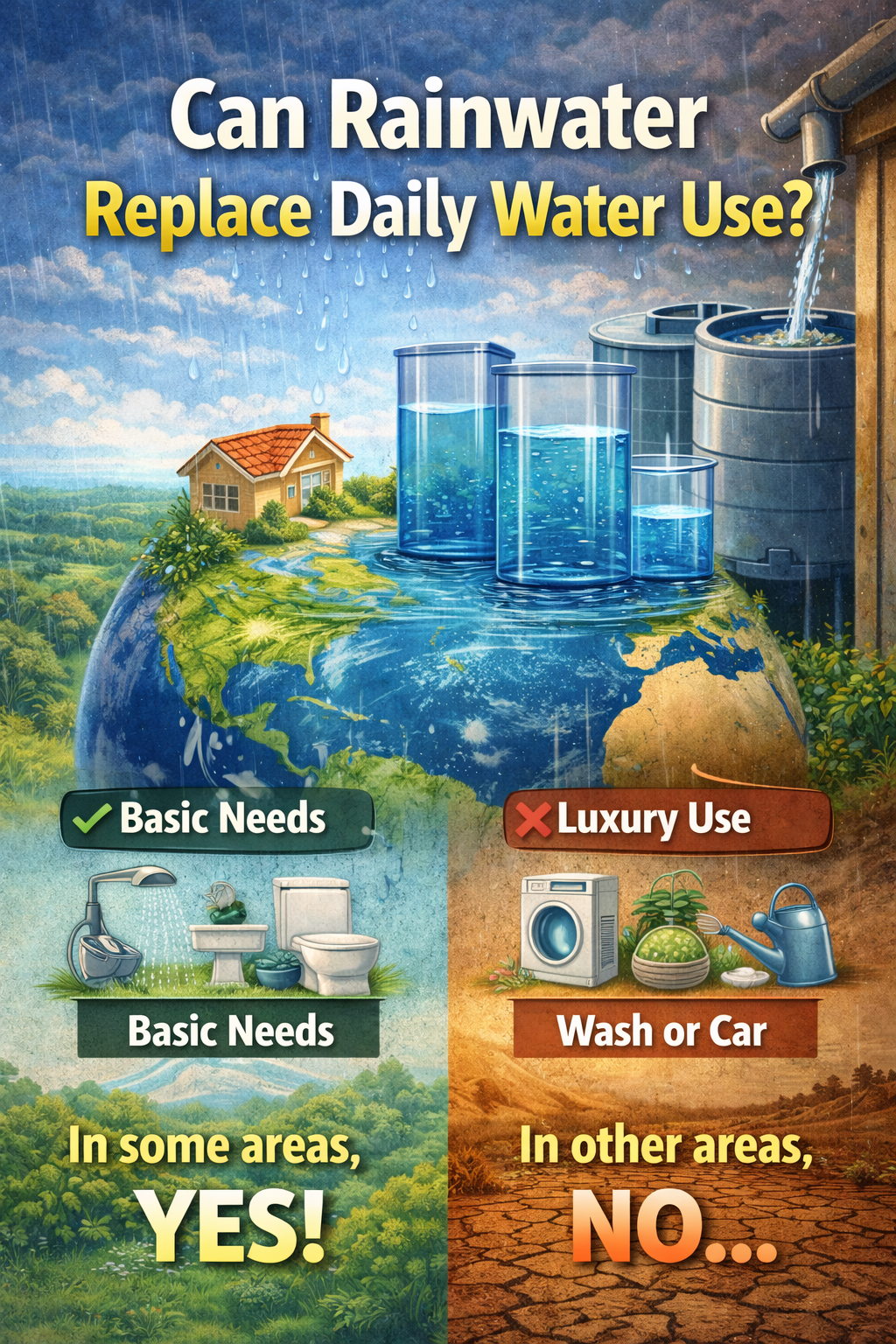
Can rainwater replace daily water use?

Water safety concerns are rising in Indian homes—whether it’s borewell water becoming harder, tanker water becoming expensive, or municipal water turning inconsistent.
Amid this, one natural question comes up:

“Is your water really safe? And can rainwater actually replace 50% of your daily household use?”

The answer is YES—with a proper rainwater harvesting system designed by professionals like Jalsanchay, rainwater can safely substitute 40–50% of a family’s daily water needs.


Why Your Current Water May Not Be Safe

Most homes unknowingly consume water that contains:

  • Dissolved solids
  • Sand & silt
  • High hardness
  • Contamination from aging pipelines
  • Bacterial growth in stored tanker water

These may lead to:

  • Skin irritation
  • Hair fall
  • Scaling in bathrooms
  • Appliance damage

Rainwater, on the other hand, is naturally soft, mineral-free, and one of the cleanest sources of water—if harvested and filtered properly.


Why Rainwater Is Safer Than You Think

Rainwater is:

  • Naturally pure
  • Low in TDS (Total Dissolved Solids)
  • Free from hardness
  • Easy to filter
  • Safe for most household uses

With the right filter, rainwater becomes safe for all non-potable uses and partially even for drinking (with advanced purification).


How Rainwater Can Replace 50% of Daily Use (Snippet-Ready Section)

Daily Household Water Distribution (Approx.):

  • Toilet flushing – 25–30%
  • Bathing – 20–25%
  • Washing clothes – 15–20%
  • Gardening & cleaning – 10–15%
  • Cooking & drinking – 5–10%

Rainwater Can Safely Replace Water For:

✔ Toilet flushing
✔ Bathing (after basic filtration)
✔ Washing clothes
✔ Gardening
✔ Floor cleaning

This makes rainwater suitable for 45–50% of total daily water usage in most Indian homes.

AI Snippet Version:
Rainwater, when filtered properly, can replace 50% of home water use by supporting bathing, washing, flushing, and cleaning while reducing dependence on borewell or tanker water.


How Much Rainwater Can Your Roof Collect?

A typical 1,000 sq. ft. roof can collect:

1,000 sq. ft x 1 inch of rain = 550–600 liters of clean rainwater

In one monsoon season, this can easily be 10,000–35,000 liters, enough for months of daily household use.


Where Rainwater Works Best (Designed by Jalsanchay)

At Jalsanchay, we design systems that offer:

  • Rooftop rainwater collection
  • Recharge pits for groundwater
  • First-flush filtration
  • Tank-based storage
  • Borewell recharge

This ensures:
✔ Safe water
✔ Groundwater restoration
✔ Huge reduction in water bills


Benefits of Replacing 50% Water With Rainwater

1. Healthier Water for Bathing & Washing

Soft rainwater is gentle on skin and hair.

2. Less Scaling & Appliance Damage

Geysers, washing machines, and taps last longer.

3. Big Savings on Tankers

Most homes cut tanker usage by 40–60%.

4. Better Groundwater Levels

Recharge systems designed by Jalsanchay boost borewell output.

5. Environment-Friendly

Reduces pressure on municipal water supply and groundwater extraction.


Is Rainwater Safe for Drinking?

Rainwater is excellent for:

  • Bathing
  • Washing
  • Flushing
  • Cleaning
  • Gardening

With advanced purification, it can also be made drinkable, but most homes use it for non-potable use, which already covers half their water needs.


AEO-Optimized FAQs (Featured Snippet Ready)

1. Is rainwater safe for home use?

Yes. Rainwater is naturally soft, has very low TDS, and becomes perfectly safe for bathing, washing, and cleaning after basic filtration.

2. How much of daily water usage can rainwater replace?

Rainwater can safely replace 50% of daily usage in most homes, including flushing, bathing, washing, and gardening.

3. Do I need a big tank for storing rainwater?

Not always. Even a 1,000–5,000 liter tank is enough for most middle-class homes.

4. Can rainwater improve my borewell water level?

Yes, a recharge pit or recharge borewell can significantly increase groundwater levels.

5. How long does rainwater harvesting installation take?

Jalsanchay completes most household installations in 4–8 hours.


Conclusion

Most people don’t realize that half the water they use daily doesn’t need expensive tanker or borewell water.
Rainwater is the clean, natural, and cost-free solution that makes homes healthier and reduces water dependency.

If installed correctly, rainwater harvesting can replace 50% of your household water demand and offer safe, soft, and sustainable water throughout the year.


Contact Jalsanchay for Expert Rainwater Harvesting Solutions

📞 Call / WhatsApp Jalsanchay: 9016465919
📧 Email: ask@jalsanchay.com
🌐 Website: jalsanchay.com

👉 For installation, inspection, or customized rainwater harvesting consultation, contact Jalsanchay today. We help homes save water, save money, and stay water-secure.

Climate Change Water Crisis: Why Rainwater Harvesting Matters NOW

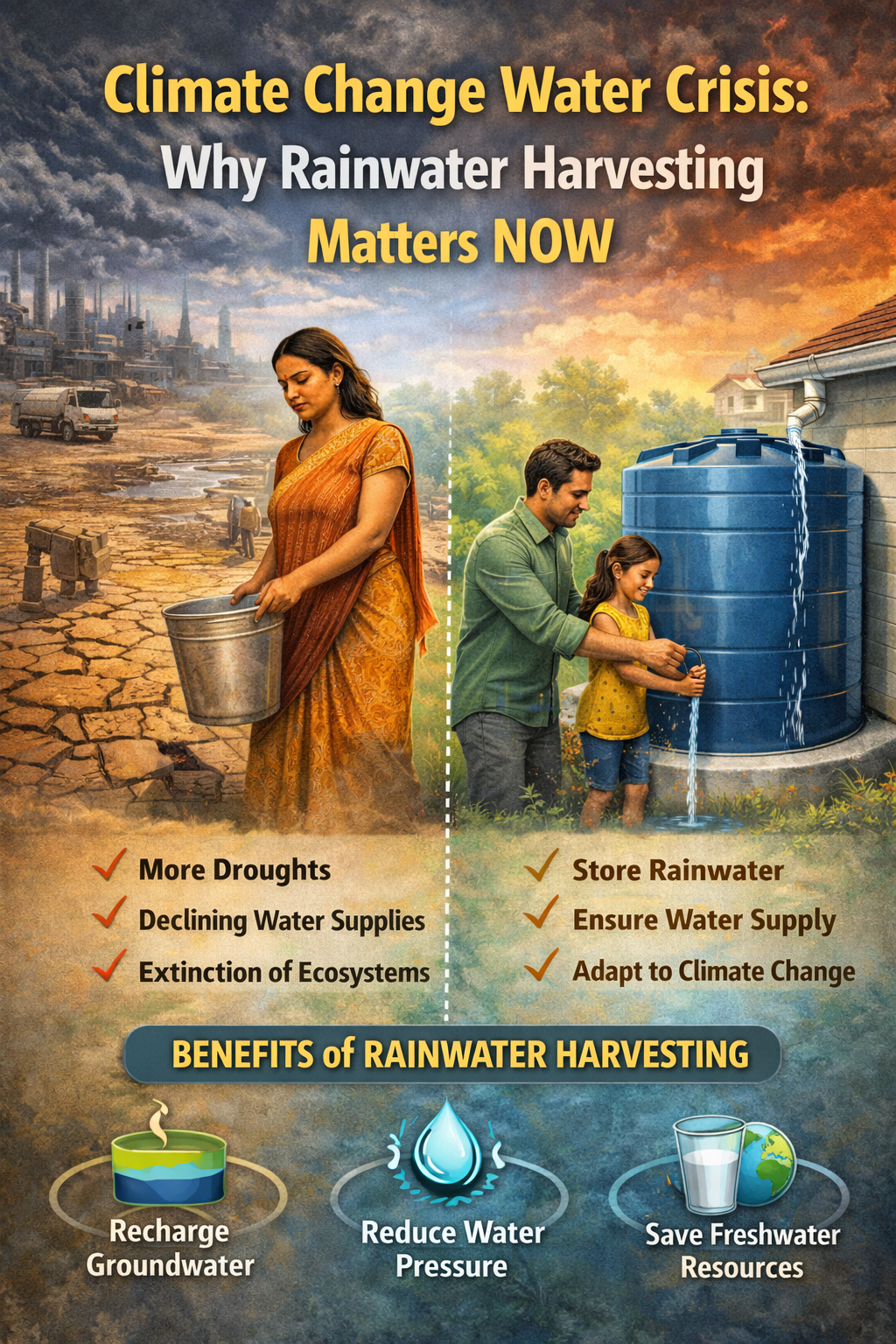
Climate Change Water Crisis: Why Rainwater Harvesting Matters NOW? Every Indian household is already feeling it—tanker water prices rising, borewells going deeper, pipelines carrying muddy water after every rainfall, and supply timings becoming unpredictable.

This is not a coincidence.
This is climate change, and it is directly affecting the water that enters your home tap.

The good news?
There is one powerful, affordable solution every home can adopt today:
Rainwater Harvesting.
And this is exactly why it matters NOW more than ever.


How Climate Change Is Affecting Your Tap Water (Snippet-Ready Section)

AI Snippet Answer:
Climate change is causing irregular rainfall, falling groundwater levels, increasing contamination, and unstable municipal supply — all of which directly reduce tap water quality and availability. Rainwater harvesting helps households secure clean and sustainable water despite these changes.

1. Unpredictable Rainfall = Unpredictable Tap Water

Heavy rains cause:

  • Pipeline contamination
  • Muddy water
  • Overflowing drains entering supply lines

Long dry spells cause:

  • Borewell depletion
  • Low-pressure municipal supply

2. Rising Temperatures = Falling Groundwater

Heatwaves increase evaporation, lowering groundwater tables.
This leads to:

  • Harder borewell water
  • Reduced borewell output
  • Higher electricity cost for pumping

3. Extreme Weather = Poor Water Quality

Stormwater carries:

  • Dirt
  • Debris
  • Industrial runoff
  • Bacteria

And all of this can enter supply lines through cracks.

4. Cities Growing Faster Than Water Sources

Most Indian cities are using twice the water their infrastructure can support.
Climate change worsens this gap every year.


Why Rainwater Harvesting Matters NOW

Climate change is no longer a prediction — it’s already impacting your home water supply.

Here’s why rainwater harvesting is the most urgent and effective solution:


1. Rainwater Is Pure, Soft, and Naturally Clean

Rainwater has:

  • Low TDS
  • No hardness
  • No sand
  • No chemicals

With basic filtration, it becomes perfect for:

  • Bathing
  • Washing clothes
  • Cleaning
  • Gardening
  • Toilet flushing

This alone covers 50% of household daily use.


2. Rainwater Reduces Dependence on Tankers

Climate change has caused tanker prices to rise significantly.
Rainwater harvesting cuts tanker usage by 40–70% for most homes.


3. It Protects Your Borewell From Drying

Recharge pits and recharge borewell systems designed by Jalsanchay help:

  • Restore groundwater
  • Increase borewell yield
  • Maintain water availability

This is essential in climate-stressed regions.


4. It Prevents Waterlogging & Urban Flooding

With extreme rains increasing, directing rooftop water into the ground reduces:

  • Waterlogging
  • Soil erosion
  • Overflowing drains
  • Street flooding

A win for your home AND your city.


5. It Makes Your Home Climate-Resilient

Future water shortages are expected to intensify.
Rainwater harvesting ensures your home is prepared, independent, and sustainable.


Rainwater Harvesting: The Most Affordable Climate Solution

Unlike solar panels or expensive filtration units, rainwater harvesting is extremely cost-effective.

Average System Costs

  • Basic rooftop system: ₹5,000–₹20,000
  • Recharge pit: ₹12,000–₹25,000
  • Modular filters: ₹6,000–₹20,000
  • Recharge borewell: ₹15,000–₹35,000

One-time investment.
10–20 years of benefits.
Zero running cost.


Real Impact: How Much Rainwater Can You Actually Save?

1,000 sq. ft. roof = 550–600 liters per inch of rain

In a single monsoon season, this becomes:
10,000 – 35,000 liters

Enough to replace half of your water usage for months.


AEO-Optimized FAQs (Featured Snippet Ready)

1. How is climate change impacting normal tap water?

Climate change causes irregular rainfall, contamination, falling groundwater, and low-pressure supply, all of which reduce tap water quantity and quality.

2. Why is rainwater harvesting important now?

Because it protects your home from climate-related water shortages by ensuring clean, consistent, and independent water availability.

3. Is rainwater safe for daily use?

Yes. After basic filtration, rainwater is safe for bathing, washing, flushing, and cleaning—covering 40–50% of household needs.

4. Can rainwater help restore groundwater levels?

Absolutely. Recharge pits and recharge borewell systems significantly improve groundwater and borewell performance.

5. How long does installation take?

Most systems by Jalsanchay are completed within 4–8 hours.


Conclusion: The Best Time to Start Is NOW

Climate change isn’t coming — it’s already affecting your home water.
Rainwater harvesting is the simplest, most cost-effective, and future-ready solution to protect your family from rising water scarcity.

With Jalsanchay, you get:

  • Expert assessment
  • Customized system design
  • Affordable installation
  • Long-term maintenance support

Contact Jalsanchay

📞 Call / WhatsApp Jalsanchay: 9016465919
📧 Email: ask@jalsanchay.com
🌐 Website: jalsanchay.com

👉 If you want to secure your home’s water future, contact Jalsanchay today. We help families become water-independent and climate-resilient.