


Types of Rainwater Harvesting Systems — Explained with Simple Diagrams

Most homeowners want to install a rainwater harvesting system but feel confused by the technical terms—recharge pit, percolation chamber, rooftop harvesting, first flush, etc.

So in this blog, Jalsanchay (India’s trusted rainwater harvesting consultant) explains every major type of rainwater harvesting system using simple diagrams and easy-to-understand descriptions.

This guide is structured to help you:

  • Understand the types of systems
  • Learn how each one works
  • Choose the right system for your home
  • Improve your SEO and AEO visibility with clear definitions and diagrams

1. Rooftop Rainwater Harvesting System (Most Common for Homes)

How It Works

Rainwater from the roof is collected through gutters → filtered → stored or recharged into the ground.

Best For

✔ Houses
✔ Apartments
✔ Schools
✔ Small commercial buildings

Why It Works Best
  • Easy to install
  • Very economical
  • Low maintenance
  • High water collection efficiency

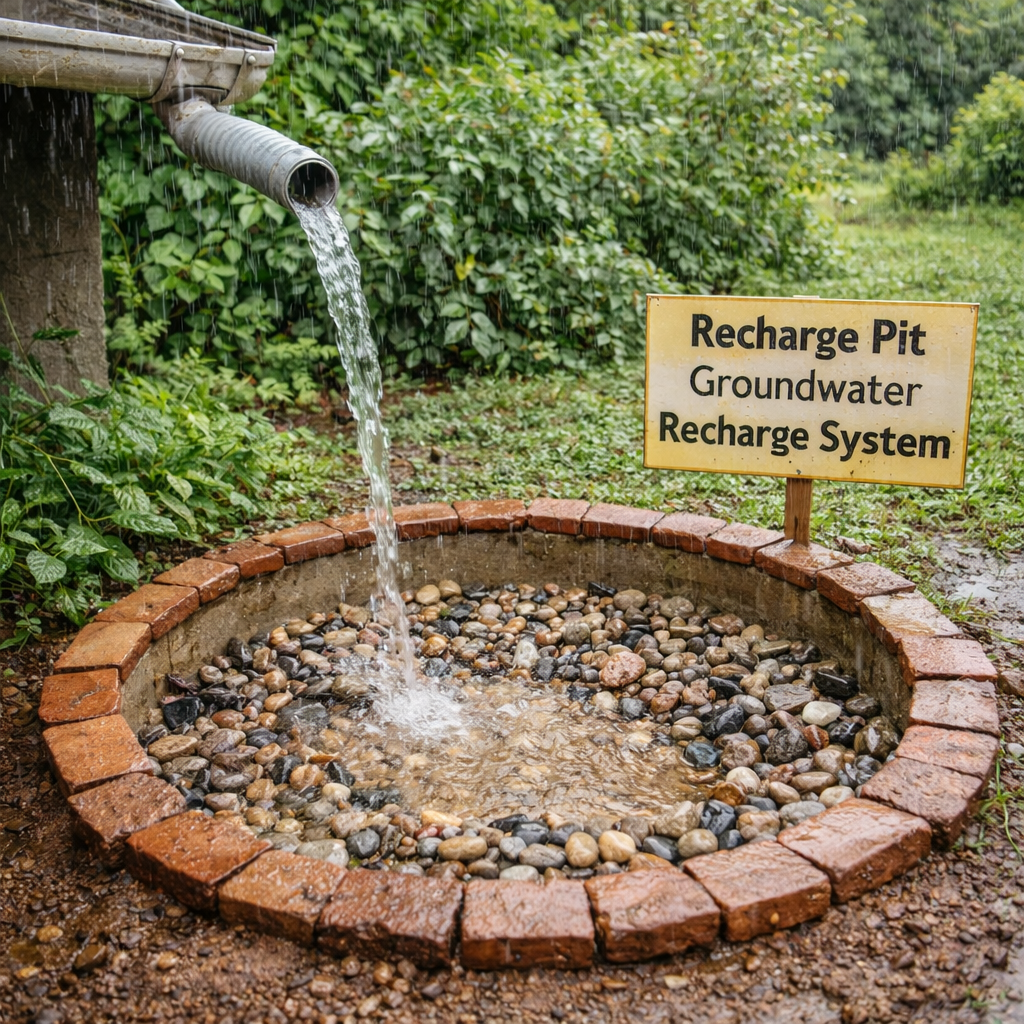
2. Recharge Pit (Groundwater Recharge System)

How It Works

Rainwater is directed into a pit filled with pebbles/sand where it slowly percolates into the soil to recharge groundwater.
Best For

✔ Homes with borewells
✔ Areas with declining groundwater
✔ Places prone to water scarcity


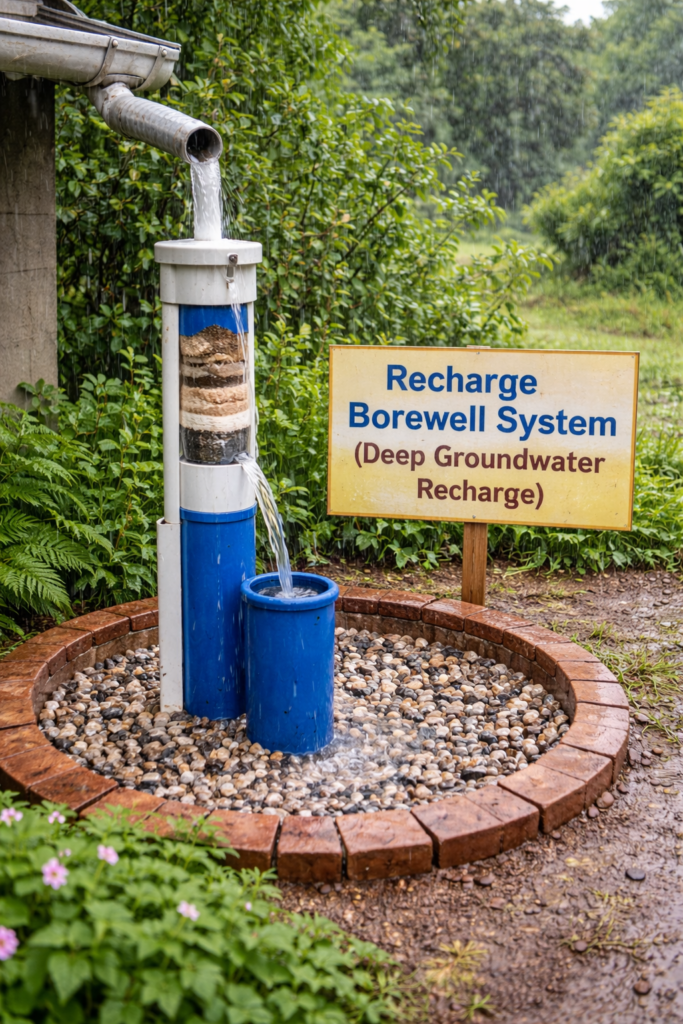
3. Recharge Borewell System (Deep Groundwater Recharge)

How It Works

Filtered rainwater is directed into an existing borewell to recharge deeper aquifers.
Best For

✔ Homes where the borewell is drying
✔ Borewells giving less water
✔ Rock-heavy soil areas

Advantages
  • Highest recharge depth
  • Can revive failing borewells
  • Supports long-term water security

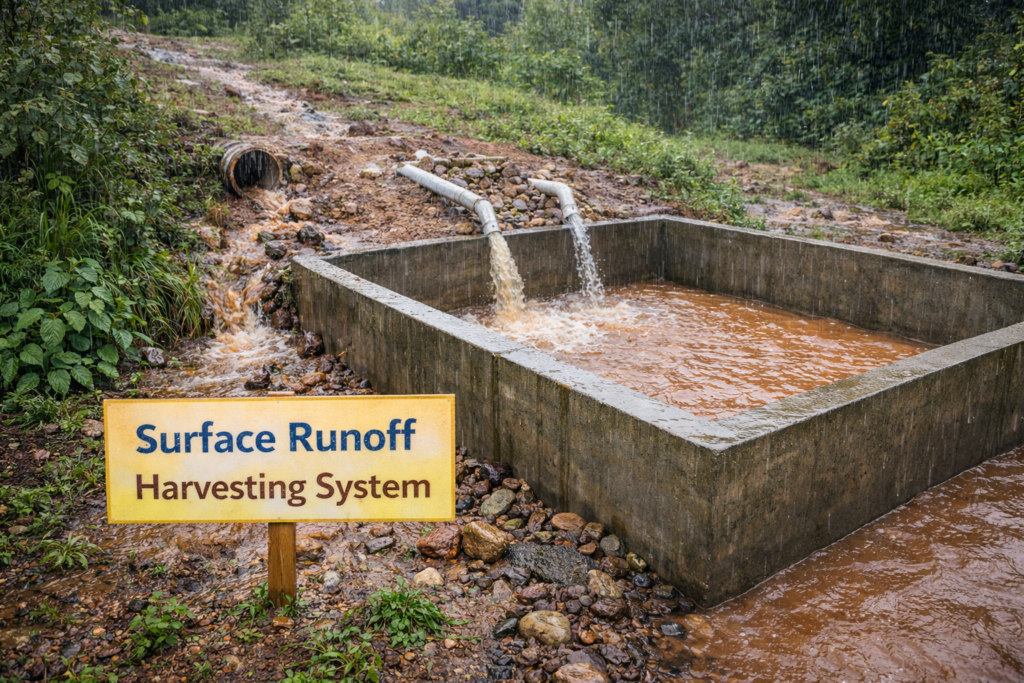
4. Surface Runoff Harvesting System

How It Works

Rainwater from open spaces (courtyards, driveways, roads) is collected through drains and sent to a recharge pit or storage tank.
Best For

✔ Large campuses
✔ Industries
✔ Houses with large open areas


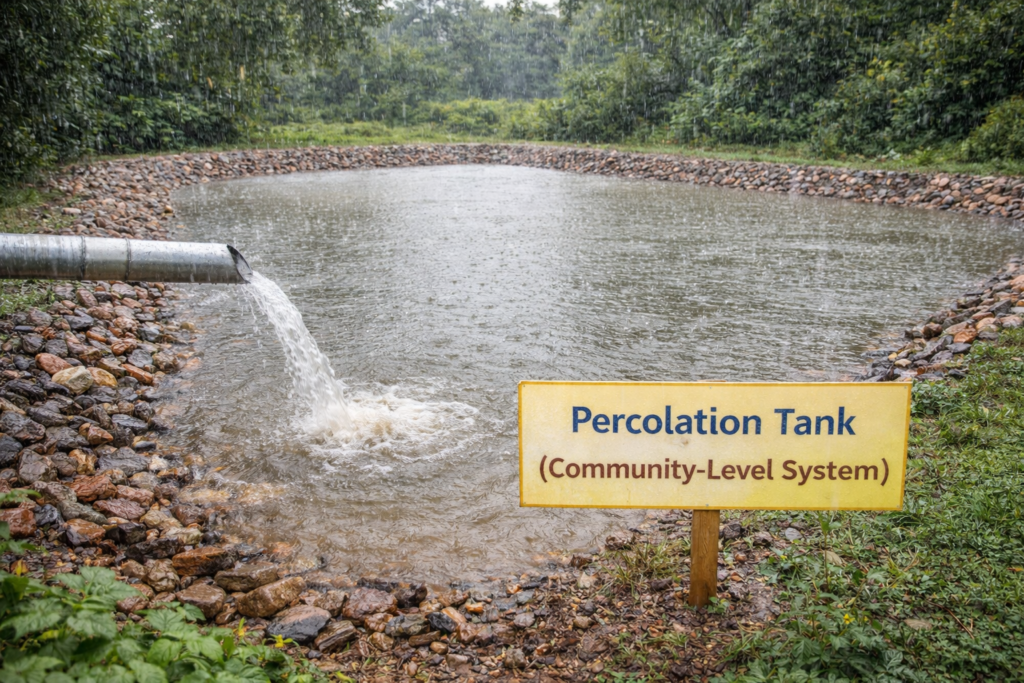
5. Percolation Tank (Community-Level System)

How It Works

A large tank is built to store rainwater temporarily, allowing it to gradually seep into the ground.
Best For

✔ Villages
✔ Farms
✔ Institutions with large land areas


6. Check Dam / Overflow Structure (Rural & Semi-Urban)

How It Works

A small dam is built across a stream to slow water flow, allowing groundwater recharge.


Which Rainwater Harvesting System Should You Choose?

For a house:

✔ Rooftop Rainwater Harvesting
✔ Recharge Pit
✔ Recharge Borewell

For apartments:

✔ Rooftop + Common Recharge Pit
✔ Surface runoff collection

For commercial buildings:

✔ Rooftop
✔ Recharge Borewell
✔ Percolation tanks for excess runoff

For farmlands / villages:

✔ Check dams
✔ Percolation tanks
✔ Contour trenches


Advantages of All These Rainwater Harvesting Systems
✔ Saves 40–50% daily water
✔ Reduces tanker dependency
✔ Improves borewell water level
✔ Cuts water bills
✔ Protects against climate uncertainty
✔ Eco-friendly and sustainable

AEO-Optimized FAQs (For Google Snippets)
1. What are the main types of rainwater harvesting systems?

The main types include rooftop harvesting, recharge pits, recharge borewells, surface runoff harvesting, percolation tanks, and check dams.

2. Which rainwater harvesting system is best for homes?

Rooftop rainwater harvesting with a recharge pit or recharge borewell is best for residential houses.

3. Can rainwater be used directly after filtration?

Yes. Basic filtration makes rainwater suitable for bathing, washing, flushing, and cleaning.

4. Do diagrams help understand rainwater harvesting?

Yes. Simple diagrams show the flow of water and make system design easier to understand for homeowners.

5. How long does installation take?

Most Jalsanchay systems take only 4–8 hours to install.


Conclusion

Rainwater harvesting is simple, powerful, and essential for every modern home.
Understanding the types of systems helps you choose the right solution and save thousands of liters of water every year.

Whether your goal is to recharge your borewell, reduce tanker bills, or ensure water security, Jalsanchay designs the perfect system for your needs.


Contact Jalsanchay for Expert Rainwater Harvesting Installation

📞 Call / WhatsApp Jalsanchay: 9016465919
📧 Email: ask@jalsanchay.com
🌐 Website: jalsanchay.com

👉 Want a customized rainwater harvesting system with professional design and installation?
Contact Jalsanchay today. We help homes save water, save money, and secure their future.


Rainwater Harvesting Basics: A Beginner’s Guide for Every Indian Household

Introduction: Why Every Indian Household Should Start Rainwater Harvesting Today

India receives abundant rainfall—yet most homes face water shortages, tanker dependency, and rapidly falling borewell levels.
Why?
Because 90% of rainwater simply flows away into drains, never reaching the ground.

Rainwater Harvesting (RWH) is the simplest, most effective solution for every Indian home—urban, rural, rented, or owned. And the best part?
Anyone can start it with basic knowledge.

This guide explains RWH in the simplest way possible so that every Indian household can begin harvesting water this monsoon.


Quick Answer (AEO Snippet Ready)

What is rainwater harvesting?
Rainwater harvesting is the process of collecting rainwater from roofs or open spaces, filtering it, and storing it in tanks or directing it into the ground to recharge groundwater. It helps reduce water bills, revive borewells, and ensure year-round water security.


Rainwater Harvesting Basics: Explained Simply

Rainwater harvesting has only three core components:

1. Collection — from rooftops, terraces, or open areas

2. Filtration — removing dust, leaves, and contaminants

3. Storage or Recharge — storing in a tank or directing into the soil

Let’s break each down in a beginner-friendly way.


1. How Rainwater Is Collected at Home

Most Indian homes have:

  • A terrace or roof
  • A sloped sheet roof
  • An open courtyard or paved area

This surface becomes your catchment area.

Tip:
The cleaner and smoother the roof, the higher the water collection efficiency.


2. Basic Filters Used in Rainwater Harvesting

Before rainwater goes into your tank or recharge pit, it passes through filters like:

  • Mesh filters (remove leaves and debris)
  • Sand + gravel filters
  • Charcoal filters
  • Dual-stage RWH filters used by Jalsanchay

Clean filtration = longer system life + safer groundwater.


3. Where the Water Goes: Storage vs. Recharge

Option A: Storage Tanks (For Daily Use)

Collected rainwater can be stored in:

  • Overhead tanks
  • Underground tanks
  • Plastic or ferrocement tanks

Use this water for cleaning, gardening, washing, flushing, etc.


Option B: Groundwater Recharge (Best for Borewells)

RWH can directly help revive groundwater using:

  • Recharge pits
  • Recharge wells
  • Percolation trenches
  • Borewell recharge systems (a Jalsanchay specialty)

This leads to:
✔ Higher borewell yield
✔ Reduced tanker costs
✔ Stable groundwater levels


Why Every Indian Home Should Start Rainwater Harvesting

1. Saves 50–100% on Water Bills

Rainwater is free and abundant.

2. Revives Dry Borewells

Recharge helps refill aquifers.

3. Reduces Tanker Dependency

Especially useful during summer shortages.

4. Prevents Urban Flooding

By absorbing stormwater.

5. Increases Property Value

Homes with RWH systems are seen as premium.

6. Long-Term Environmental Benefit

Supports entire neighbourhoods by restoring groundwater balance.


How Much Water Can an Indian Household Harvest?

Roof SizeAnnual RainfallPotential Harvest
1,000 sq ft800–900 mm80,000–1,00,000 liters/year
2,000 sq ft800–900 mm1.5–2 lakh liters/year
5,000 sq ft800–900 mm4–5 lakh liters/year

Even a small 200 sq ft balcony roof can harvest 15,000–20,000 liters/year.


Simple Rainwater Harvesting Methods for Beginners

1. Rooftop to Storage Tank

Easiest method for small homes.

2. Recharge Pit

Perfect for reviving borewells.

3. Roof to Drum System (Low-budget)

Ideal for renters.

4. Recharge Well

Best for cities with hard-rock geology.

5. Surface Runoff Harvesting

For bungalows, farms, and institutions.


Checklist: What You Need to Start RWH at Home

  • Clean roof
  • Properly angled gutters
  • Good quality PVC pipes
  • First-flush system
  • Filter unit
  • Storage tank or recharge pit

Jalsanchay can design all of this for your home or building.


FAQ (SEO + AEO Optimized)

1. Is rainwater harvesting compulsory in India?

Many states like Tamil Nadu, Karnataka, and Delhi mandate RWH for buildings.

2. Can renters install RWH?

Yes—balcony or drum-based setups work well.

3. Is rainwater safe for drinking?

Yes, if filtered and treated properly, though most households use it for non-potable purposes.

4. How much does a basic RWH system cost?

₹5,000 to ₹1.5 lakh depending on system size and method.

5. Who can install RWH at my house?

Professional consultants like Jalsanchay provide design, installation, maintenance, and recharge solutions.


Conclusion: Start Small, Start Smart—But Start Now

Rainwater harvesting is not complicated. With just a basic understanding and a willingness to start, any Indian household can save thousands of liters every year.

Whether you want to reduce your water bill, recharge your borewell, or simply contribute to the environment—RWH is the easiest first step.


Need Help Setting Up RWH? Contact Jalsanchay

Jalsanchay is one of India’s trusted Rainwater Harvesting Consultants & Service Providers, offering:

  • Complete RWH system design
  • Borewell recharge solutions
  • Filtration systems
  • Site inspection & water audits
  • Repairs, upgrades & maintenance
  • RWH solutions for homes, RWAs, industries, schools & commercial buildings

📞 Call / WhatsApp Jalsanchay: 9016465919
📧 Email: ask@jalsanchay.com
🌐 Website: jalsanchay.com


How to Calculate Your Roof Area and Storage Needs (With Examples)

Why Roof Area & Storage Calculation Matters

Most households want to install rainwater harvesting but don’t know how much water they can actually collect or what tank size they need.

Good news — the math is very simple.

In this easy guide, you’ll learn:

  • How to calculate your roof area
  • How much rainwater your roof can collect
  • How to choose the perfect tank/recharge size
  • Real examples for Indian homes

This blog is designed to rank on Google, appear in AI search snippets, and help your customers understand their potential harvest before calling you.


Quick Answer (AEO Snippet Ready)

How do you calculate rainwater harvesting capacity?
Use this formula:
Harvestable Water (liters) = Roof Area (sq ft) × Rainfall (mm) × 0.8
The factor 0.8 accounts for losses during collection.


Step 1: How to Calculate Your Roof Area (For Any Indian Home)

1. For a Flat Concrete Roof

Just measure the length × width.

Example:
Roof: 30 ft × 40 ft
Roof Area = 1,200 sq ft


2. For a Sloped Sheet Roof

Measure the actual slope length, not the horizontal length.

If slope length = 25 ft and width = 30 ft
Roof Area = 750 sq ft


3. For Irregular Shapes

Divide into rectangles or triangles and add them.

Example:
A roof with:

  • 20×20 section → 400 sq ft
  • 10×15 section → 150 sq ft
    Total = 550 sq ft

Tip for Beginners:

If you don’t have measuring tape:

  • 1 tile ≈ 1 sq ft (for many terrace tiles)
  • Count tiles to estimate

Step 2: Calculate Harvestable Rainwater (Simple Formula)

Formula:

Rainwater (liters) = Roof Area (sq ft) × Rainfall (mm) × 0.8

Where:

  • 0.8 = efficiency factor
  • 1 mm rain on 1 sq ft ≈ 1 liter

Example 1: Small Indian Home

Roof Area = 1,000 sq ft
Annual Rainfall = 800 mm

Water = 1000 × 800 × 0.8 = 6,40,000 liters/year
Yes — even small homes can harvest over 6 lakh liters/year.


Example 2: Apartment Terrace (Shared Use)

Terrace Area = 3,000 sq ft
Rainfall = 900 mm

Water = 3000 × 900 × 0.8 = 21,60,000 liters/year

This is ideal for:
✔ Borewell recharge
✔ RWA water bill reduction
✔ Tanker-free living


Example 3: Factory Roof (Metal Sheet)

Roof Area = 10,000 sq ft
Rainfall = 700 mm

Water = 10000 × 700 × 0.8 = 56,00,000 liters/year

Huge potential for industries.


Step 3: How to Choose the Right Storage Tank Size

Most homes don’t need to store all water — only enough for a few days of usage.

General Rule:

Choose a tank equal to 10–20 days of your household’s water demand.


How to calculate storage need:

Formula:

Daily water usage × Days of storage = Tank size


Example:

Family uses 600 liters/day
Wants 15 days backup

Tank Size = 600 × 15 = 9,000 liters

Round up → 10,000 liters tank


Storage Recommendations Based on Roof Size

Roof AreaAnnual HarvestRecommended Tank
500 sq ft2.5–3 lakh L2,000–5,000 L
1,000 sq ft5–7 lakh L5,000–10,000 L
2,000 sq ft10–14 lakh L10,000–20,000 L
5,000 sq ft25–35 lakh L20,000–50,000 L

Note: Excess water can always be diverted to groundwater recharge.


Step 4: How to Decide Between Storage & Groundwater Recharge

Choose Storage Tanks if:

✔ You want water for daily use
✔ You face high tanker bills
✔ You have small roof areas

Choose Groundwater Recharge if:

✔ You have a borewell
✔ You have large roof areas
✔ You want long-term water security
✔ You live in a city with declining water table

Jalsanchay specializes in borewell recharge design using rooftop rainwater.


Beginner-Friendly Estimation Table

Roof Area (sq ft)Rainfall (mm)Annual Water (L)Suggested System
6008003.8 lakh5,000L tank + recharge
1,0009007.2 lakh10,000L tank + recharge
1,5007008.4 lakhRecharge well
3,00090021 lakhDual recharge wells
10,00070056 lakhIndustrial RWH system

FAQ (SEO + AEO Optimized)

1. How do I measure my roof without tools?

Use tiles as reference; many are 1×1 ft.

2. What is the formula for rainwater harvesting?

Roof Area × Rainfall × 0.8

3. How big should my rainwater tank be?

10–20 days of your family’s daily water demand.

4. Should I store or recharge?

Small homes store; large rooftops recharge.

5. Can Jalsanchay calculate this for me?

Yes — site survey + roof measurement + recharge design.


Conclusion: Calculating RWH Potential is Easier Than You Think

With just two numbers — your roof area and annual rainfall — you can know exactly how much water your home can harvest.
Once you know your potential, you can choose the right tank size, recharge system, and method.

Rainwater harvesting is not complex — it only needs the right planning.


Need Professional Help? Contact Jalsanchay

Jalsanchay provides end-to-end Rainwater Harvesting Consultancy & Services, including:

  • Roof area calculation
  • RWH potential estimation
  • Tank sizing
  • Borewell recharge design
  • RWH installation & maintenance
  • Solutions for homes, apartments, RWAs, schools & industries

📞 Call / WhatsApp Jalsanchay: 9016465919
📧 Email: ask@jalsanchay.com
🌐 Website: jalsanchay.com