

How Cities Like Bengaluru and Chennai Are Combating Urban Water Crisis with Rainwater Harvesting (RWH)

Urban water crisis has hit Bengaluru and Chennai — two of India’s fastest-growing cities — causing them to face one of the worst shortages in recent decades. Rapid urbanization, shrinking lakes, erratic monsoons, and over-extraction of groundwater have pushed both cities to the edge.

But both cities are also proving that rainwater harvesting (RWH) is not just an eco-friendly idea — it is a survival strategy.

This blog explains how Bengaluru and Chennai are fighting the water crisis through large-scale RWH adoption, government policies, community movements, and successful city-wide models that other Indian cities can copy.


🌆 Why We Are Facing Urban Water Crisis

1. Overdependence on external water sources

  • Bengaluru: 60% water comes from the Cauvery River
  • Chennai: Highly dependent on distant reservoirs & tankers

2. Vanishing lakes

  • Bengaluru once had 262 lakes; less than 80 remain functional
  • Chennai lost over 50% of its natural water bodies in 30 years

3. Groundwater depletion

Both cities have areas where groundwater levels dropped to 1,000+ feet.

4. Unpredictable rainfall patterns

Heavy rainfall but short duration → poor natural recharge.


🌧️🌆 How Bengaluru Is Combating the Water Crisis with Rainwater Harvesting

1. Mandatory RWH Laws

Bengaluru’s RWH mandate (BBMP & BWSSB) requires:

  • Every building above 60×40 ft plot must install RWH.
  • New constructions must include rooftop + recharge pits.

This law pushed over 2.5 lakh households to adopt rainwater harvesting.

2. Apartment-Level RWH Revolution

Large apartment complexes now install:

  • Rooftop RWH tanks
  • Recharge wells
  • Stormwater diversion systems

Many apartments report:
➡ Reduction of tanker use by 50–70%
➡ Reduction in maintenance costs
➡ Year-round water availability

3. Revival of Bengaluru Lakes Through RWH

Citizen groups like Jal Mitra, Namma Lake, and Paani Panchayat work with BBMP to:

  • Desilt lakes
  • Create recharge wells
  • Install percolation trenches
  • Reconnect natural stormwater channels

Examples:

  • Kaikondrahalli Lake
  • Puttenahalli Lake
  • Jakkur Lake
    These lakes now recharge millions of liters into groundwater every monsoon.

4. The “Recharge Wells” Bengaluru Model

Bengaluru is the only Indian city with a community-driven “Million Wells Campaign”, reviving the ancient tradition of Mannuvaddars (well diggers).

Over 30,000 recharge wells were dug, significantly improving groundwater levels in areas like:

  • Koramangala
  • Whitefield
  • Indiranagar
  • Malleshwaram

🌧️🌇 How Chennai Is Combating the Water Crisis with Rainwater Harvesting

1. The Most Successful RWH Law in India (Tamil Nadu 2003 Act)

Tamil Nadu was the first state in India to make RWH compulsory for all buildings.
Result?
Chennai’s groundwater levels rose by 50% in just six years.

This is considered India’s most successful water management story.

2. Chennai’s Rooftop RWH Model

Buildings are required to:

  • Channel rooftop water into underground tanks
  • Install percolation pits & recharge wells

Many homes store 20,000–50,000 liters per monsoon.

3. Restoration of Temple Tanks & Lakes

Chennai revived dozens of ancient water bodies like:

  • Mylapore Tank
  • Madhavaram Lake
  • Villivakkam Lake

These act as massive natural recharge structures.

4. Community-Led RWH Projects

Residents Welfare Associations across:

  • Anna Nagar
  • Velachery
  • Tambaram
  • Porur

…have built shared community RWH systems that provide free water for:

  • Gardening
  • Cleaning
  • Recharge
  • Drinking (after filtration)

⚖️ Bengaluru vs Chennai: A Quick Comparison

FeatureBengaluru ModelChennai Model
Mandate Year20092003
RWH StyleRecharge wells + RooftopRooftop + Community Tanks
Success RateHigh in apartmentsHighest in India
Key ChallengeUnplanned growthFrequent drought cycles
Unique FeatureMillion Wells CampaignRecharged ancient temple tanks

💧 How Rainwater Harvesting Helps Cities Solve Water Crises

✔ Boosts groundwater levels

✔ Reduces dependency on tankers

✔ Cuts water bills

✔ Prevents flooding (excess rain is redirected into earth)

✔ Increases water security for future generations

✔ Supports sustainable urban development


🧰 How Citizens Can Contribute (Simple Steps)

🏡 For Homeowners

  • Install a rooftop RWH system (₹8,000–₹40,000).
  • Create a 3×3 ft recharge pit.
  • Maintain filters & mesh screens.

🏢 For Apartments

  • Build a common storage tank (10,000–50,000 liters).
  • Divert terrace water into recharge wells.
  • Monitor water quality every 6 months.

🏙️ For Communities

  • Revive lakes & ponds.
  • Adopt stormwater recharge programs.
  • Support local RWH volunteers & NGOs.

🧩 FAQs

How is Bengaluru solving its water crisis?

Bengaluru solves its water crisis through mandatory RWH laws, widespread recharge wells, apartment-level systems, and large-scale lake revival projects.

How is Chennai combating water shortage?

Chennai uses the strongest RWH mandate in India, rooftop RWH systems in almost every building, revival of temple tanks, and community rainwater programs.

Which Indian city has the best rainwater harvesting model?

Chennai is widely considered the most successful city due to the 2003 mandatory RWH law and significant groundwater recovery.

Does rainwater harvesting reduce tanker dependence?

Yes. Most apartments report a 50–70% reduction in tanker usage after installing proper RWH systems.


🏁 Conclusion

Bengaluru and Chennai prove that rainwater harvesting is not optional — it is essential for urban survival in India. Their models show that with the right policies, community participation, and consistent maintenance, any city can overcome water scarcity.

Whether you are a homeowner, builder, RWA member, policymaker, or citizen —
you have the power to contribute to water security starting today.

Why RWAs Should Make Rainwater Harvesting Mandatory?

India’s cities are struggling with water shortages, tanker dependency, and falling groundwater levels. As urban populations continue rising, water scarcity is becoming a daily struggle — especially in apartments and gated societies.

This is why Resident Welfare Associations (RWAs) are now stepping up and making Rainwater Harvesting (RWH) mandatory. And the results are remarkable: reduced water bills, stable supply, healthier groundwater tables, and long-term sustainability.

This blog explains why every RWA should enforce mandatory RWH — and how doing so benefits the entire community.


🏙️ Why RWAs Need to Take the Lead on Water Management

1️⃣ Growing Dependency on Tankers

Most urban societies rely heavily on expensive water tankers.
RWH reduces tanker demand by 50–70%, saving lakhs annually.

2️⃣ Rapid Groundwater Depletion

Borewells are drying up because societies extract more water than nature can recharge.
Rainwater harvesting reverses this trend by refilling aquifers naturally.

3️⃣ Rising Maintenance Costs

Water tankers, borewell repairs, and filtration systems increase RWA expenses.
RWH significantly brings down monthly maintenance fees.

4️⃣ Government Regulations

Many states including Tamil Nadu, Karnataka, Maharashtra, and Delhi NCR have:
✔ Mandatory RWH laws for new buildings
✔ Penalties for non-compliance
✔ Incentives/subsidies for societies

RWAs that adopt RWH avoid legal issues and stay aligned with sustainable building norms.


🌧️ Top Benefits of Making RWH Mandatory in Your RWA


🌟 1. Huge Savings on Water Bills

Societies spend ₹20,000–₹3,00,000 monthly on tankers.
After RWH installation:
✔ Tanker bills drop by 40–70%
✔ Long-term water independence increases
✔ Annual savings run into lakhs


🌟 2. Improved Groundwater Levels

Recharge wells + percolation pits store rainwater under the society’s land.
Benefits include:
✔ Stronger borewell yield
✔ Reduced pump running time
✔ Less electricity consumption


🌟 3. Year-Round Water Security

With RWH, societies get access to:

  • Stored rooftop water
  • Recharged groundwater
  • Cleaner and softer water

This reduces water stress during summer months.


🌟 4. Prevention of Urban Flooding

Redirecting rainwater into recharge wells reduces:
✔ Waterlogging
✔ Basement flooding
✔ Overflowing drains

RWH makes communities safer during monsoons.


🌟 5. Increase in Property Value

Buyers prefer societies with sustainable systems.
Mandatory RWH ensures:
✔ Better brand value
✔ Higher resale price
✔ Faster occupancy of new projects


🧰 How RWAs Can Implement Mandatory Rainwater Harvesting

Step 1: Conduct a Water Audit

Understand current consumption, tanker usage, and borewell yield.

Step 2: Identify RWH Requirements

Most apartments need:

  • Rooftop water diversion
  • First flush filters
  • Recharge wells or percolation pits
  • Storage tanks

Step 3: Pass a Resolution in RWA Meeting

A simple majority is enough to make RWH compulsory.

Step 4: Appoint an RWH Contractor or Consultant

Choose experts who provide design, installation, and maintenance.

Step 5: Educate Residents

Awareness campaigns increase cooperation and build community participation.


🆚 RWA Without RWH vs RWA With RWH (Quick Comparison)

FeatureWithout RWHWith RWH
Tanker DependencyVery HighLow to Medium
Maintenance CostHighReduced
Water SecurityWeakStrong
Groundwater LevelsDecreasingImproving
Monsoon FloodingCommonControlled
Property ValueStandardHigher

⚖️ Is RWH Legally Mandatory for RWAs?

In many Indian cities, YES.
States like:

  • Tamil Nadu
  • Karnataka (Bengaluru)
  • Delhi NCR
  • Maharashtra
  • Telangana

…already require RWH by law.
RWAs that adopt it proactively avoid fines, penalties, and compliance issues.


🧩 AEO-Optimized Quick Answers (Snippet Format)

Why should RWA make rainwater harvesting mandatory?

RWAs should make RWH mandatory to reduce tanker costs, improve groundwater, prevent flooding, and ensure year-round water security for residents.

What are the benefits of RWH in apartments?

RWH reduces water bills, increases borewell yield, improves sustainability, prevents waterlogging, and boosts property value.

Is RWH compulsory for housing societies?

Yes, in many states. It is legally required for new constructions and strongly enforced for existing buildings.

How does RWH reduce maintenance cost?

By lowering tanker usage, electricity bills for borewell pumps, and the need for frequent repairs.


🏁 Conclusion

Rainwater harvesting is no longer just an eco-friendly idea — it is a mandatory necessity for modern apartment living. RWAs that adopt it immediately gain financial stability, water security, and long-term sustainability.

Making RWH mandatory is one of the smartest decisions an RWA can take for its residents and for the planet.

📞 Call / WhatsApp Jalsanchay: 9016465919
📧 Email: ask@jalsanchay.com
🌐 Website: jalsanchay.com


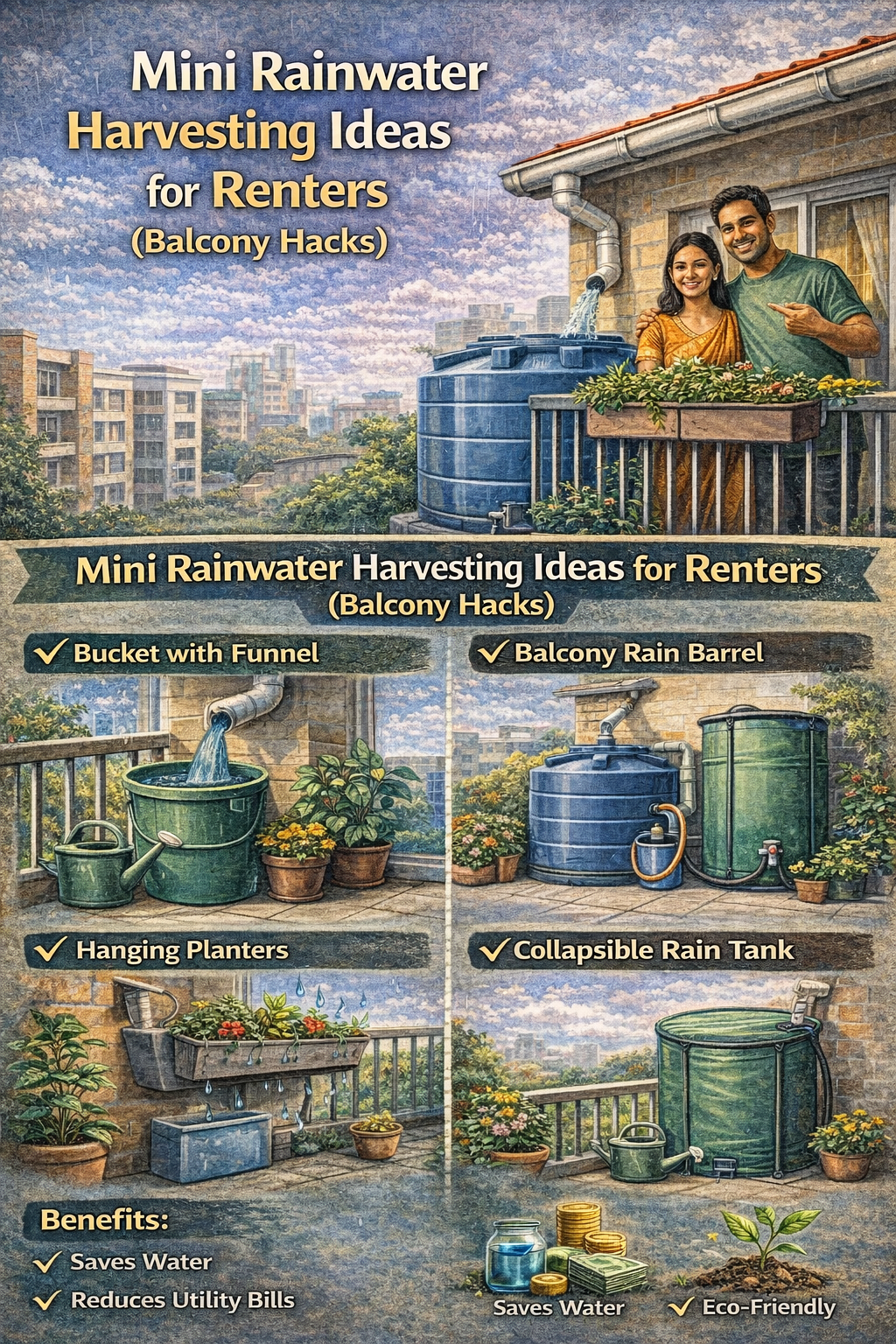
Mini Rainwater Harvesting Ideas for Renters (Balcony Hacks)

Big cities like Mumbai, Bengaluru, Delhi, and Chennai face frequent water shortages — but not everyone owns a house or controls their building terrace. Renters often feel they cannot implement rainwater harvesting (RWH) because they lack space or permission.

The truth is:
YOU CAN harvest rainwater right from your balcony, without drilling walls, changing pipelines, or violating rental rules.

This blog gives you practical mini RWH hacks for balconies, portable setups, DIY ideas, and renter-friendly solutions you can install in minutes.


🌿 Why Renters Should Consider Mini Rainwater Harvesting

✔ Reduce dependency on purchased cans and tank water

✔ Save money on daily water usage

✔ Use harvested water for plants, cleaning, mopping, and emergencies

✔ Reduce stress during municipal water cuts

✔ Contribute to urban sustainability — even from a small apartment

Renters CAN make a real impact without modifying the building structure.


🪴 Urban Balcony Hacks: Mini Rainwater Harvesting Ideas for Renters


💡 1. Balcony Rainwater Collector Using a Funnel & Storage Container

A simple large funnel + cloth mesh + 20–50 L container is enough.

How it works:

  • Place the funnel under balcony grill runoff
  • Use a cloth/mesh filter on top
  • Collect water in a storage can or drum

Uses:

  • Plant watering
  • Floor cleaning
  • Toilet flushing (manual)

Zero installation. 100% renter-friendly.


💧 2. Flexible PVC Sheet Canopy (Temporary Catchment Surface)

If your balcony doesn’t collect direct rain, create a portable catchment surface.

Steps:

  • Attach a PVC sheet like a tent
  • Let water flow toward one corner
  • Direct the flow into a bucket or pipe

It’s foldable, removable, and doesn’t damage walls.


🌧️ 3. Renter-Friendly Rainwater Barrel Systems

Available in collapsible models (150–250 L tanks).
Just place under balcony runoff points.

Benefits:

  • No drilling
  • Ready-made filters
  • Easy to fold and carry when shifting homes

Great for renters who want a neat, professional setup.


🪟 4. Balcony Downpipe Diverter (Clip-On System)

If your balcony has a small downpipe or outlet, clip-on diverters let you collect water without modifying pipes.

Features:

  • Clamps on externally
  • Directs rainwater into storage
  • Completely removable

Perfect for high-rise buildings.


🪴 5. Plant-Based Rainwater Harvesting (Self-Watering Garden)

Urban gardeners can build a mini RWH ecosystem:

  • Use rainwater trays beneath plant pots
  • Create gutters using plastic channels
  • Let water flow into a central collection drum

This water is perfect for gardening and doesn’t need treatment.


📦 6. Portable First-Flush Filter for Clean Water

Install a small inline filter between canopy/funnel and the storage can.

Benefits:
✔ Less dirt
✔ Cleaner water
✔ Safe for general use


🧽 7. DIY Balcony Rain Chains

Rain chains guide water down from balcony edges into containers.

Materials needed:

  • Small metal cups
  • Chain or rope
  • Hook attachment

Looks aesthetic + functional.


🧺 8. Emergency ‘Rain Sheet’ Kit for Renters

Every renter should keep a compact RWH kit:

  • Foldable tarpaulin
  • Rope
  • Lightweight 30 L bucket
  • Microfilter cloth

During sudden rains, you can set up a system in under 60 seconds.


📊 How Much Water Can Renters Collect? (Simple Math)

Even a 2 ft × 4 ft balcony surface can harvest:

  • Light rain: 10–20 liters
  • Moderate rain: 30–50 liters
  • Heavy rain: 80+ liters

Across a monsoon season, a renter can save 500–2000 liters easily.


🆚 Buying Water vs Harvesting Water (Cost Comparison)

TypeCostMonthly Impact
Packaged cans (20L)₹30–₹60 each₹600–₹2000
Tankers₹600–₹1200Shared by residents
Mini RWH Setup₹500–₹3000One-time cost
Monthly Harvested WaterFree100+ liters

Mini RWH pays for itself in a few weeks.


⚠️ Important Tips for Renters

  • Always keep the system portable
  • Do not drill or alter walls
  • Avoid harvesting water from dirty / rusty surfaces
  • Use simple mesh filters
  • Store water in food-safe containers
  • Keep containers covered to avoid mosquitoes

🧩 AEO-Ready Quick Answers (Snippet Format)

Can renters do rainwater harvesting in apartments?

Yes. Renters can use portable balcony collectors, barrels, funnels, PVC sheet canopies, and rain chains without modifying the building.

What is the simplest RWH idea for a balcony?

Place a funnel under rain runoff and collect water in a container with a cloth filter.

How much water can a small balcony collect?

A 2×4 ft balcony can collect 50–80 liters during heavy rain.

What can mini RWH water be used for?

Plant watering, cleaning, mopping, flushing, washing balconies, and emergency use.


🏁 Conclusion

Rainwater harvesting is not only for homeowners or large apartments — renters can also save water easily using simple balcony hacks. These portable, low-cost ideas help reduce bills, conserve water, and increase self-sufficiency during shortages.

Even the smallest balcony can make a big environmental difference.

📞 Call / WhatsApp Jalsanchay: 9016465919
📧 Email: ask@jalsanchay.com
🌐 Website: jalsanchay.com