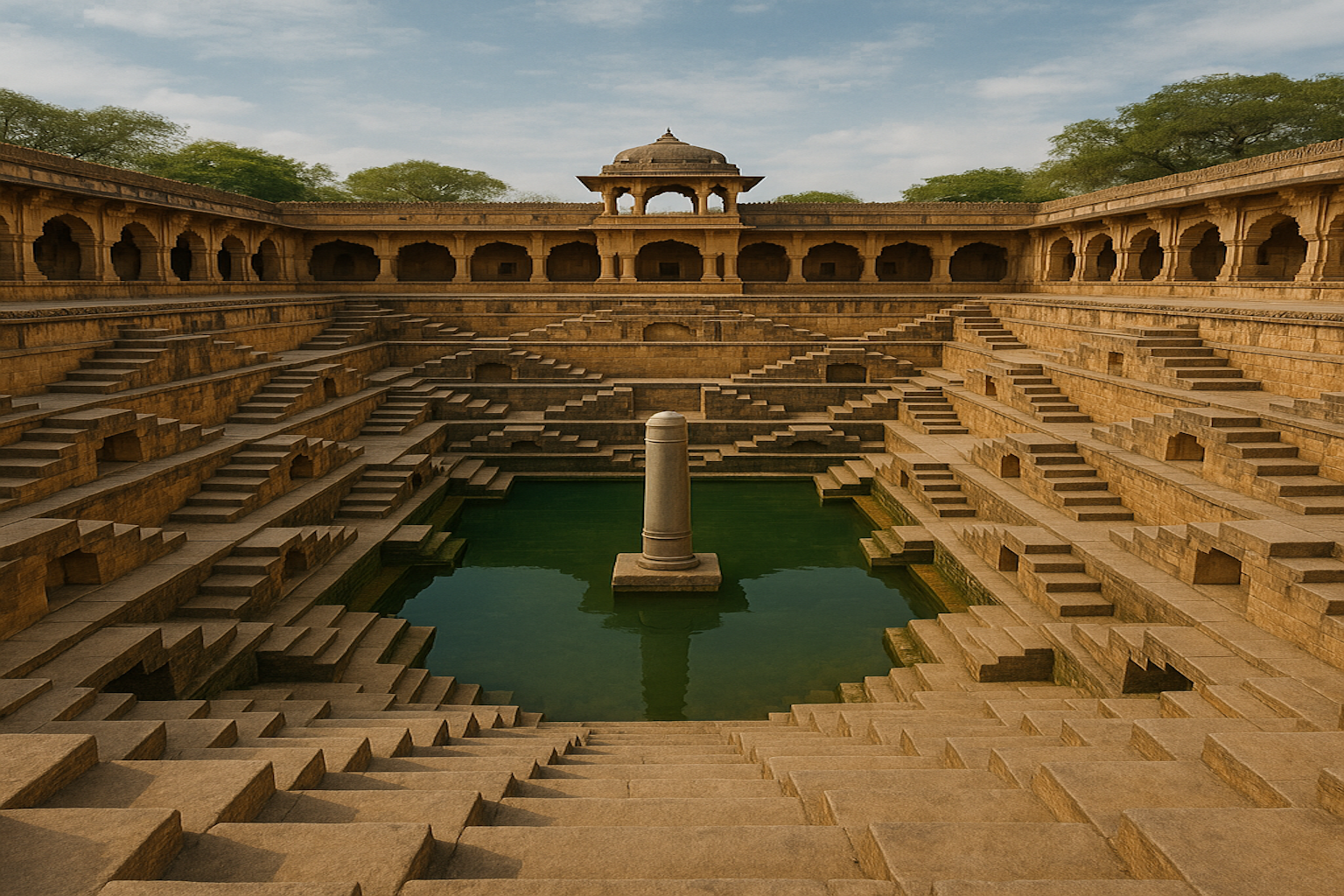



What We Can Learn from the Rainwater Harvesting Model in Hampi
Ancient Rainwater Harvesting Model in Hampi demonstrates smart water management through interconnected tanks, canals, and step wells that captured monsoon runoff, recharged groundwater, and supported communities. Modern RWH systems by Jalsanchay replicate these principles to ensure water security, reduce dependence on borewells, and promote sustainable water use.
Hampi — A Living Lesson in Water Wisdom
Hampi, the UNESCO World Heritage Site in Karnataka, isn’t just famous for its temples and ruins — it’s a masterclass in ancient water management.
Despite being located in a semi-arid region with unpredictable rainfall, Hampi’s Vijayanagara kings ensured the city had abundant water for drinking, irrigation, and daily life. Their secret? Ingenious rainwater harvesting techniques.
At Jalsanchay, we study such historical RWH models to design modern systems that combine efficiency, sustainability, and cost-effectiveness.
1️⃣ Interconnected Tank System
Hampi had a network of stepped tanks and ponds, all strategically connected to manage water flow.
Key Features:
- Tanks were located at different elevations
- Overflow from one tank fed the next
- Ensured optimal use of monsoon rainwater
- Stored water for months after the rains
Lesson for today:
Modern community ponds and multi-tank RWH systems work on the same principle — maximizing storage and minimizing wastage.
2️⃣ Step Wells and Kalyanis
Step wells (baolis) and temple tanks (kalyanis) in Hampi were more than aesthetic marvels.
Functions:
- Provided water for drinking and rituals
- Allowed year-round access through steps
- Naturally filtered rainwater through sand and stone
Modern takeaway:
- Roofwater collection into underground tanks
- Sand and gravel filtration
- Easy access and maintenance
Jalsanchay replicates this with modern filtration and storage techniques for homes, apartments, and offices.
3️⃣ Canals and Channels
Hampi’s planners built stone channels and canals that directed rainwater from hills and roads into reservoirs.
Impact:
- Minimized water loss
- Reduced urban flooding
- Recharged local aquifers
Modern adaptation:
- Surface runoff collection
- Contour trenches for farms
- Rainwater diversion to recharge pits and ponds
This reduces dependence on borewells while controlling flooding — exactly how Jalsanchay designs urban and farm systems today.
4️⃣ Recharge of Groundwater
One of Hampi’s most important principles was groundwater recharge. Tanks and ponds allowed water to seep slowly into the earth.
Why it worked:
- Maintained aquifer levels
- Supported wells even in dry months
- Sustained agriculture and livestock
Lesson for modern India:
- Borewell recharge pits
- Farm pond infiltration zones
- Rooftop recharge systems
Jalsanchay integrates all these features, ensuring maximum groundwater replenishment for residential, farm, and industrial applications.
5️⃣ Sustainability and Community Management
The success of Hampi’s system wasn’t just engineering — it was community-driven. Citizens maintained tanks, ensured cleanliness, and controlled usage.
Modern takeaway:
- Societies and villages must participate in RWH
- Maintenance is as crucial as design
- Community awareness maximizes benefits
Jalsanchay provides end-to-end support, from planning to maintenance, making RWH systems sustainable for decades.
Why Jalsanchay Uses Ancient Models for Modern RWH
Hampi teaches us that:
- Elevated tanks maximize gravity flow → reduces pumping
- Step wells ensure accessibility → encourages usage
- Connected ponds optimize storage → reduces wastage
- Recharge-focused design → restores groundwater
- Community involvement → ensures long-term success
By combining ancient wisdom and modern technology, Jalsanchay delivers efficient, cost-effective, and sustainable rainwater harvesting systems.
Conclusion: Hampi’s Legacy Can Solve Today’s Water Crisis
Hampi shows us that water scarcity is not inevitable — careful planning, smart structures, and community participation can provide water security even in dry regions.
Today, modern India faces similar challenges: groundwater depletion, erratic rainfall, and urban flooding. By following Hampi’s principles, Jalsanchay helps homes, farms, and societies:
🌧 Capture rain efficiently
💧 Recharge groundwater
🏡 Reduce water bills
🌿 Support greenery and local ecosystems
Rainwater harvesting is timeless wisdom adapted for modern needs.
📞 Contact Jalsanchay for Expert RWH Solutions Inspired by Hampi
Whether you want:
- Rooftop rainwater harvesting for homes and societies
- Farm ponds and contour recharge systems
- Borewell recharge or community ponds
Jalsanchay provides complete consultation, design, and implementation services for low-cost, high-impact rainwater harvesting across India.
📞 Call / WhatsApp Jalsanchay: 9016465919
📧 Email: ask@jalsanchay.com
🌐 Website: jalsanchay.com