

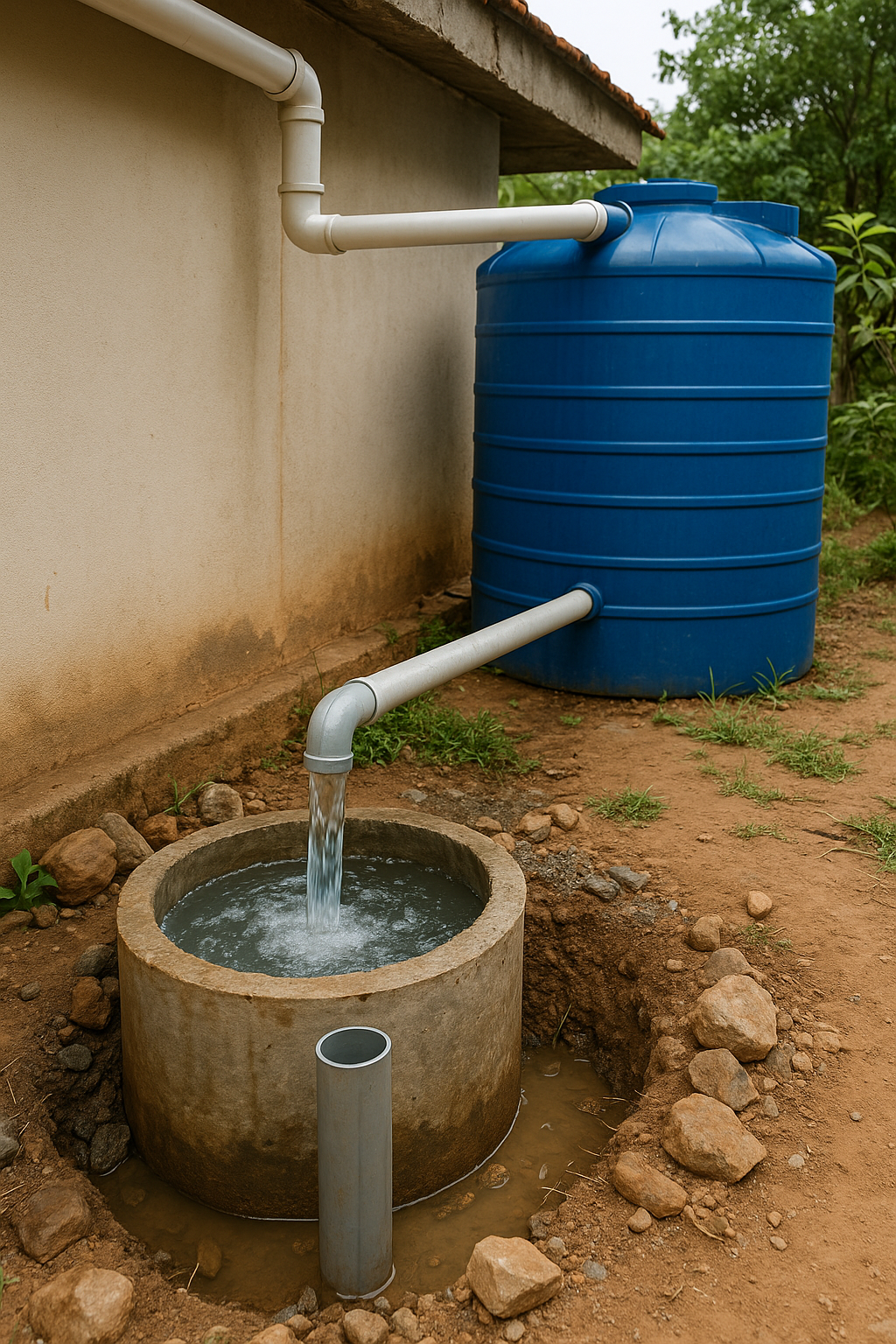

How Rainwater Harvesting Helps Recharge Groundwater
Why Groundwater is Drying Up Faster Than We Realize and Rainwater Harvesting Helps Recharge Groundwater?
Indian cities like Bengaluru, Delhi, Pune, and Chennai are witnessing rapidly falling groundwater levels. Borewells are drying, tanker prices are rising, and monsoon rainfall is becoming unpredictable.
But here’s the good news: the solution is beneath our feet.
And rainwater harvesting (RWH) is the quickest, simplest way to recharge groundwater naturally.
In this blog, we break down—in the simplest way—how rainwater harvesting actually helps groundwater recharge, and why every home, RWA, school, and commercial building should adopt it.
How does rainwater harvesting help recharge groundwater?
Rainwater harvesting directs clean rooftop or surface runoff into the soil through recharge pits, recharge wells, percolation trenches, and injection systems. This water slowly seeps down through soil layers and refills underground aquifers, increasing groundwater levels and boosting borewell yield.
How Rainwater Harvesting Helps Recharge Groundwater
Instead of letting rainwater escape into drains, RWH captures, filters, and channels it into the ground.
Here’s how it works step-by-step:
1. Rainwater Is Collected From Rooftops or Open Areas
Roofs, terraces, paved areas, and open grounds receive clean rainwater.
This runoff is naturally soft, low in minerals, and perfect for recharge.
2. The Water Is Filtered to Remove Dust & Debris
Basic filters such as:
- Mesh filters
- Sand + gravel filters
- Charcoal filters
- Jalsanchay’s dual-stage recharge filters
These ensure only clean water enters the ground.
3. The Water Is Directed Into Recharge Structures
Depending on the property type, the harvested rainwater flows into:
- Recharge pits
- Recharge wells
- Percolation trenches
- Injection wells (for deep aquifers)
- Borewell recharge systems
These structures hold water long enough for the soil to absorb it.
4. Water Slowly Percolates Through the Soil
This natural filtration is powerful. As water moves downward:
- Soil traps impurities
- Bacteria neutralize contaminants
- Pebbles and sand layers filter out solids
By the time the water reaches deeper layers, it becomes clean and safe.
5. Aquifers Get Refilled Naturally
This is where the magic happens.
Rainwater recharges:
- Shallow aquifers (used by handpumps)
- Deeper aquifers (used by borewells)
- Fractured rock layers in hard-rock regions like Karnataka, Telangana, Maharashtra
This increases the overall groundwater table of the area.
Why Groundwater Recharge Through Rainwater Harvesting Is So Important
- ✔ Helps revive dry borewells
- ✔ Reduces dependency on tankers
- ✔ Prevents flooding by absorbing excess rain
- ✔ Improves soil health
- ✔ Restores natural water cycles
- ✔ Saves lakhs on water bills
- ✔ Supports long-term water security
When done correctly, one good RWH system can recharge 1–3 lakh liters every year—sometimes even more.
Different RWH Methods to Recharge Groundwater (Explained Simply)
1. Recharge Pits
Best for homes, villas & small buildings.
They allow water to seep into shallow aquifers.
2. Recharge Wells
Deep cylindrical wells (20–40 ft) that push water deep into rock fractures.
3. Percolation Trenches
Long trenches filled with gravel—ideal for schools, parks, industries.
4. Borewell Recharge
A method Jalsanchay specializes in.
Filtered rainwater is directly sent to an old or active borewell to revive yield.
5. Injection Wells
For commercial buildings and large RWAs, especially where aquifers are deep.
How Much Water Can You Recharge?
| Roof Size | Rainfall | Recharge Potential |
|---|---|---|
| 1,000 sq ft | 600–900 mm | 75,000–1,00,000 liters/year |
| 5,000 sq ft | 600–900 mm | 4–6 lakh liters/year |
| 1 acre plot | 600–900 mm | 12–18 lakh liters/year |
(These are typical figures; actual recharge varies based on soil type and geology.)
Signs That Groundwater Recharge Is Working
- Borewell water volume increases
- Water level rises in nearby wells
- Soil becomes moist even in dry months
- Reduced flooding during monsoons
- Tanker demand drops
FAQs
1. How much water can rainwater harvesting recharge?
From 1 lakh liters (homes) to 20 lakh+ liters (large campuses) annually.
2. Does RWH really increase borewell water?
Yes — when filtration & soil conditions are correct, borewell yield improves significantly.
3. Do all soils support groundwater recharge?
Most do, but sandy and gravelly soils recharge fastest. Hard-rock areas require recharge wells.
4. How long does recharge take to show results?
Usually within one monsoon season; deep aquifers may take longer.
5. Can recharge fail?
Yes — if filters clog, pits fill with silt, or design is incorrect. Jalsanchay provides auditing and correction.
Groundwater Recharge Is the Most Powerful Benefit of RWH
When rainwater harvesting is designed correctly, it transforms the way water behaves beneath our homes, cities, and communities. It revives borewells, strengthens aquifers, and ensures long-term water security.
Groundwater recharge through RWH is not just a sustainability practice—
it’s a survival necessity for India.
Need Expert Help? Contact Jalsanchay
Jalsanchay is a dedicated Rainwater Harvesting Consultancy & Service Provider offering:
- RWH design & installation
- Borewell recharge systems
- Site inspection & water audits
- RWH repair & optimization
- End-to-end recharge solutions for homes, RWAs, industries, schools & commercial buildings
📞 Call / WhatsApp Jalsanchay: 9016465919
📧 Email: ask@jalsanchay.com
🌐 Website: jalsanchay.com