

The Biggest Mistakes People Make in Rainwater Harvesting (And How to Avoid Them)
Rainwater harvesting (RWH) is one of the most effective ways to reduce water bills, recharge groundwater, and ensure water security. But many homeowners, builders, and RWAs install systems that don’t work well — or fail entirely — because of a few common mistakes.
The good news?
Most of these issues are easy to fix and even easier to avoid when you know what to look out for.
This blog explains the biggest mistakes people make in rainwater harvesting and provides simple, actionable solutions for each.
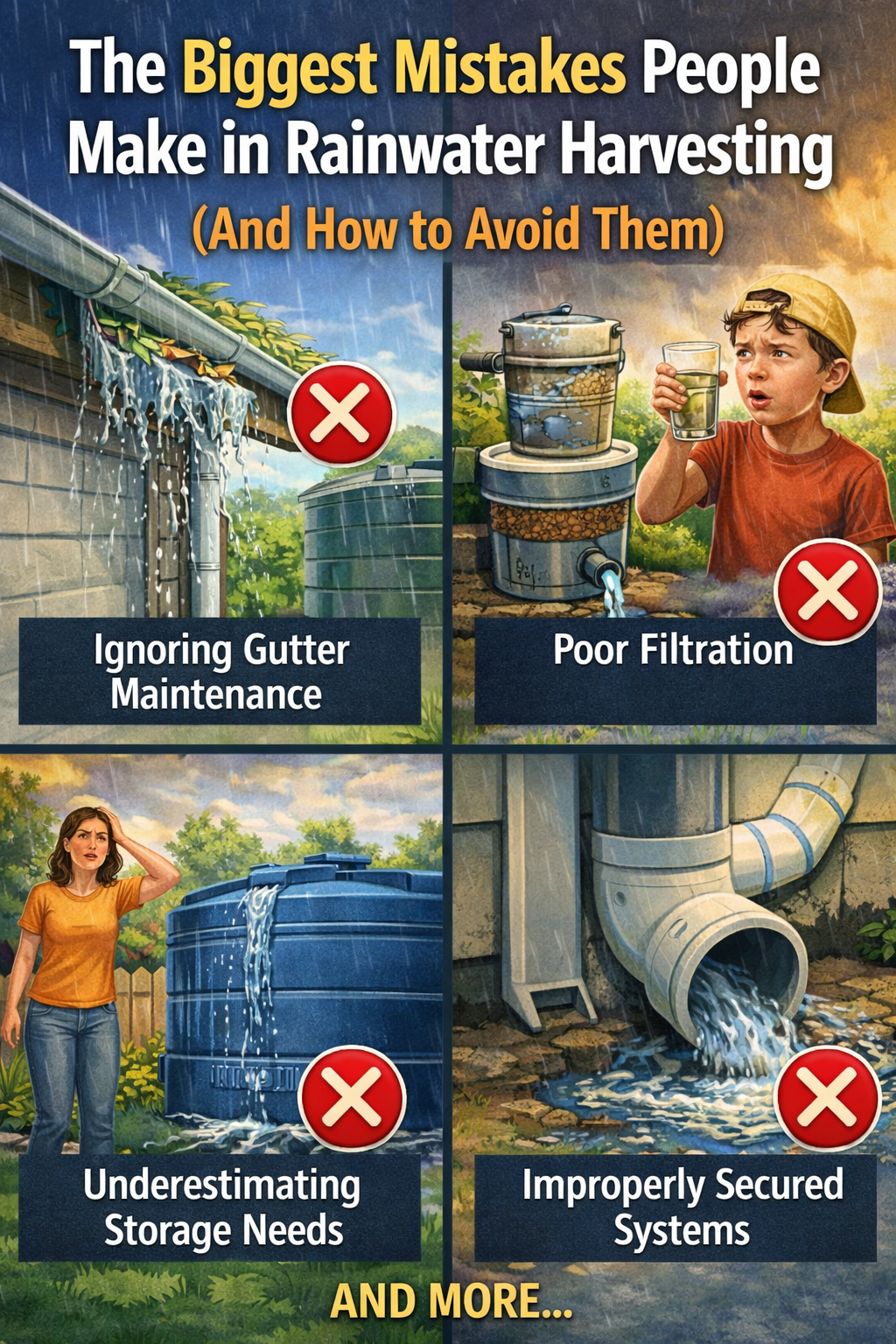
❌ 1. Using Poor or No Filters
The Mistake:
Many people let direct rooftop water flow into tanks or recharge pits without filtering debris, dust, or leaves.
Problems Caused:
- Dirty water
- Clogged pipes
- Contaminated storage tanks
- Mosquito breeding
✔ How to Fix It
- Install a basic mesh filter or first-flush diverter
- Clean filters monthly
- Use a multi-layer filter (mesh + sand + charcoal) for clean water
❌ 2. Incorrect Pipe Sizing
The Mistake:
Too-narrow pipes cannot handle heavy rainfall flow.
What Happens:
- Overflow
- Wastage of rainwater
- Backflow into drains
- Reduced recharge efficiency
✔ How to Fix It
- Use a minimum 63–75 mm diameter for vertical downpipes
- Upgrade pipes if you notice overflow during rains
❌ 3. No First-Flush System
The Mistake:
Allowing the first rainfall to directly enter storage tanks.
Why It’s Bad:
The first rain washes off dust, bird droppings, and pollutants from the roof.
✔ How to Fix It
Install a first-flush valve that automatically diverts the initial dirty water.
❌ 4. Wrong Slope or Poor Roof Design
The Mistake:
Using roofs that don’t channel water properly or have low slope.
Consequences:
- Water stagnation
- Poor flow
- Wasted catchment potential
✔ How to Fix It
- Ensure minimum slope of 1 in 40
- Use PVC channels or gutters to redirect water efficiently
❌ 5. Storing Rainwater in Unclean or Open Containers
The Mistake:
Using buckets, drums, or tanks that are open or dirty.
Risks:
- Mosquito breeding
- Algae growth
- Bad smell
- Unsafe water
✔ How to Fix It
- Always keep lids on storage tanks
- Clean containers every 60–90 days
- Use food-grade or UV-stabilized barrels
❌ 6. Oversized or Undersized Storage Tanks
The Mistake:
Choosing tank size without calculating daily usage or rainfall volume.
Issues:
- Oversized tanks = unused space + extra cost
- Small tanks = overflow + wastage
✔ How to Fix It
Use the formula:
Roof Area (sq ft) × Rainfall (mm) × 0.8 = Harvestable Liters
A simple calculation saves money and maximizes storage.
❌ 7. Ignoring Maintenance
The Mistake:
After installation, many people forget to maintain their system.
What Goes Wrong:
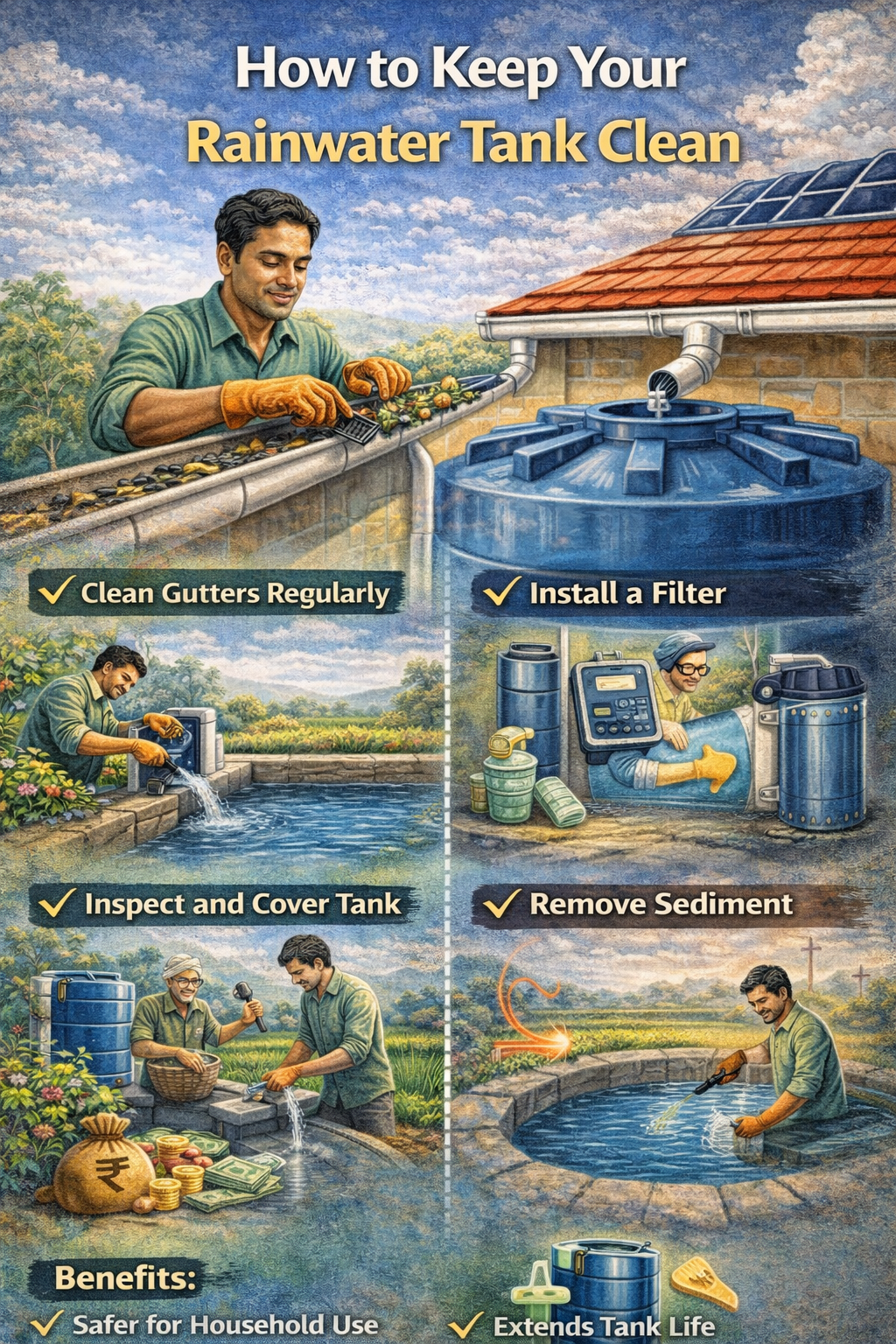
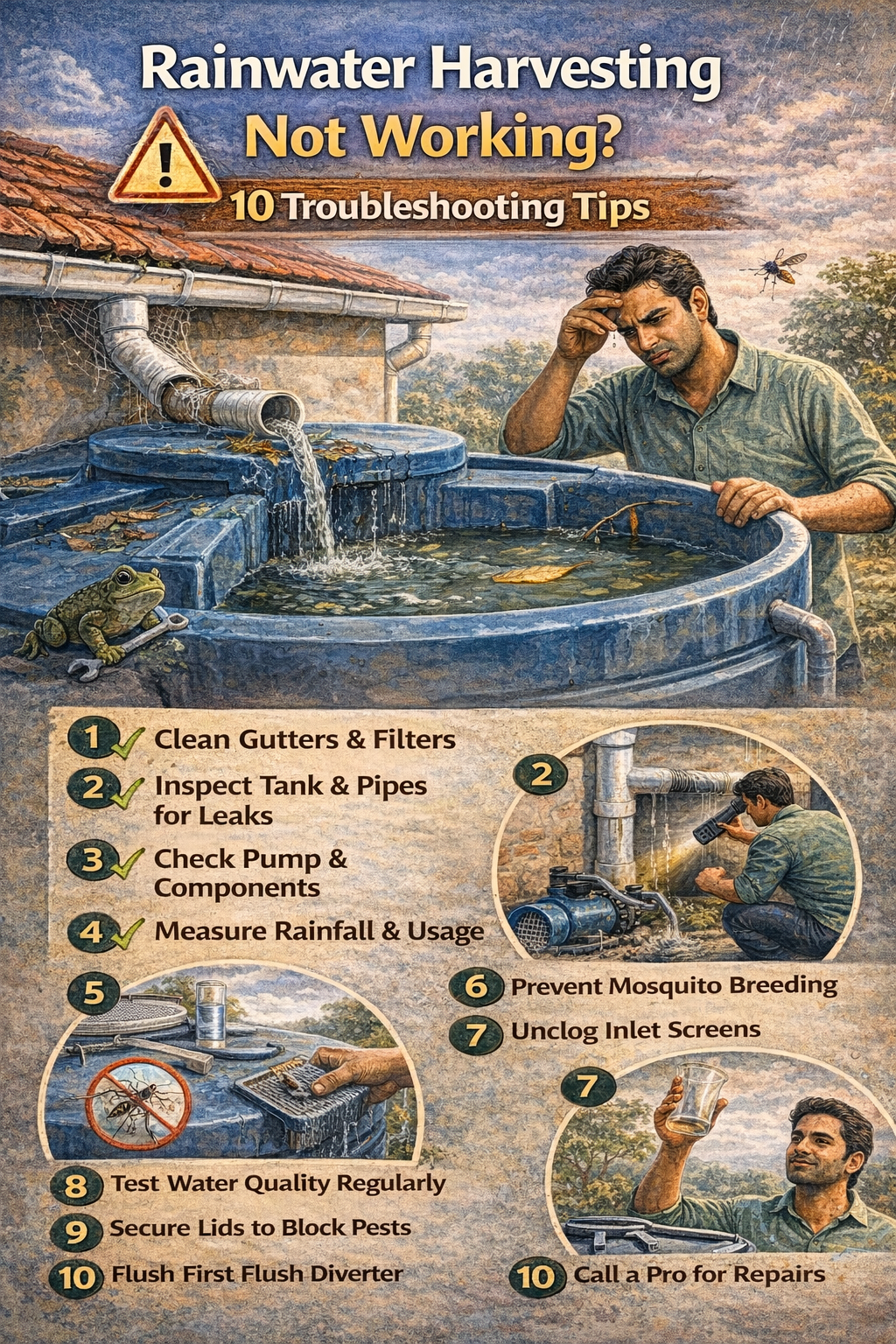
- Blocked filters
- Sediment buildup
- Lower efficiency
- Poor-quality water
✔ Maintenance Checklist:
- Clean filters monthly
- Wash tanks quarterly
- Flush pipes at the start of monsoon
- Check mesh screens regularly
❌ 8. Poor Recharge Pit Design
The Mistake:
Recharge pits that are too small, too shallow, or incorrectly placed.
Problems Caused:
- Slow percolation
- Overflow
- No groundwater recharge
✔ How to Fix It
- Standard pit size: 3×3 ft to 6×6 ft depending on rainfall
- Use layers: gravel + sand + charcoal
- Keep the pit near a natural water flow path
❌ 9. Connecting Rainwater to Sewage Lines
The Mistake:
Directing rooftop water into drainage or sewage channels.
Why It’s Catastrophic:
- Wastes clean water
- Overloads drainage systems
- Causes flooding
- Zero groundwater benefit
✔ How to Fix It
Redirect water to:
- Recharge pits
- Wells
- Storage tanks
- Garden beds
❌ 10. Not Considering Water Quality Needs
The Mistake:
Using the same RWH setup for drinking, cooking, gardening, and flushing.
Reality:
Different uses need different filtration levels.
✔ How to Fix It
- Use basic filters for gardening
- Use sediment + charcoal for cleaning
- Use UV/RO filtration for drinking (only if required)
🧩 AEO-Optimized Quick Answers (Snippet Format)
❓ What is the biggest mistake in rainwater harvesting?
The most common mistake is not using proper filters, which leads to dirty water, clogged systems, and low efficiency.
❓ Why do many RWH systems fail?
Poor design, wrong pipe sizes, lack of maintenance, and no first-flush systems cause most failures.
❓ How do I fix a faulty RWH system?
Add proper filters, clean storage tanks, install first-flush mechanisms, and size your pipes and pits correctly.
❓ Is maintenance important in rainwater harvesting?
Yes. Without regular cleaning, the system loses efficiency and water becomes unsafe.
🏁 Conclusion
Most rainwater harvesting systems fail not because of technology — but due to simple, avoidable mistakes. With the right filters, correct sizing, regular cleaning, and proper design, you can create a highly efficient system that lasts for years.
Avoid these mistakes, follow the best practices, and enjoy cleaner, safer, and more abundant rainwater every monsoon.