
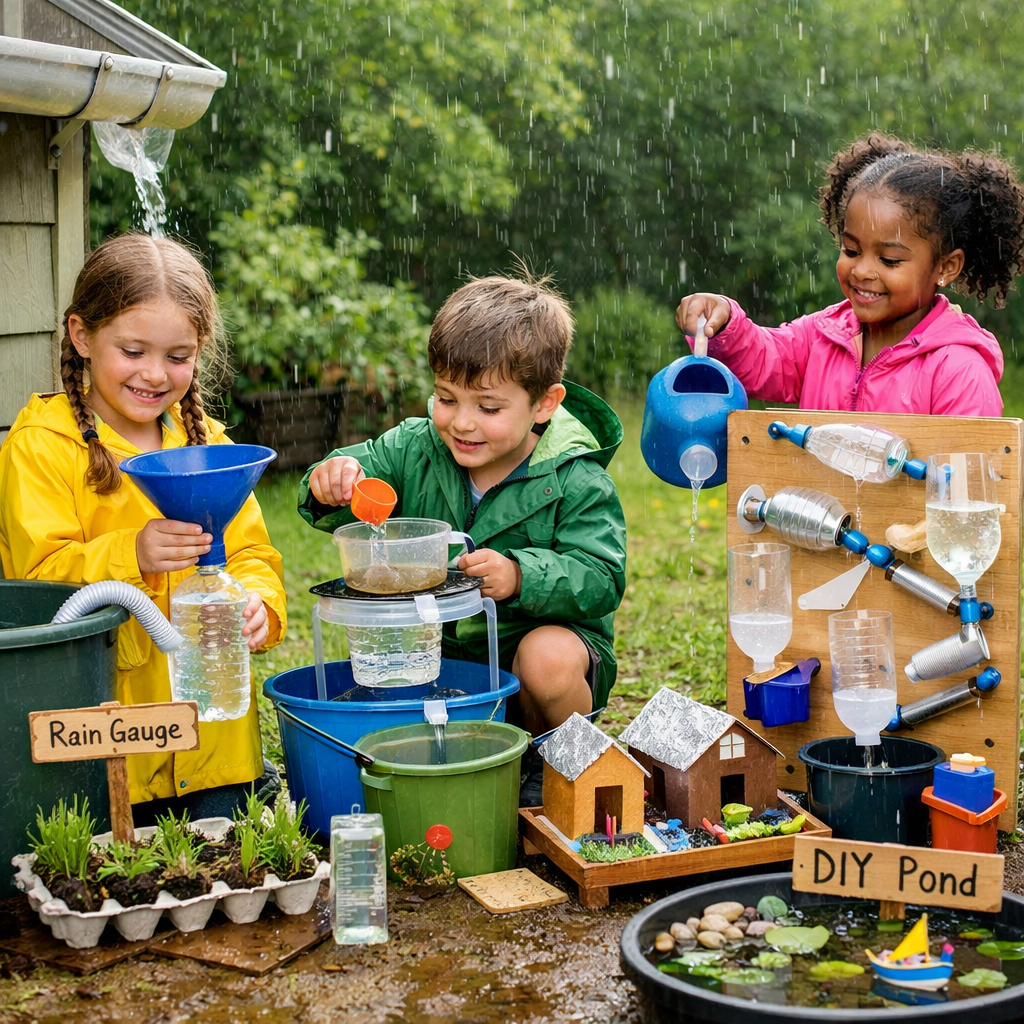
Fun Rainwater Harvesting Projects Kids Can Do at Home

🌧️ Teach Your Kids Rainwater Harvesting the Fun Way!

Kids love hands-on activities — and rainwater harvesting (RWH) is a perfect mix of fun + science + sustainability.
With climate change, rising water bills, and depleting groundwater, teaching children water conservation early is one of the best gifts a parent can give.

This guide shares easy, safe, zero-cost projects kids can try at home using household items… and all of them help them understand how rainwater harvesting works in real life.


🧒🌱 Why Kids Should Learn About Rainwater Harvesting

Rainwater harvesting is not “just for adults or RWAs.”
Kids who experience it young:

  • Develop lifelong water-saving habits
  • Become more environmentally aware
  • Understand science concepts like filtration, storage, and evaporation
  • Feel excited about sustainability

And the best part?
These projects require no tools, no plumbing, and no expertise.


🎉 10 Fun Rainwater Harvesting Projects Kids Can Do at Home

Below are child-safe, easy-to-build, real educational RWH activities.


1️⃣ Make a Mini Rain Collector Using a Plastic Bottle

Material Required:

  • 1-litre plastic bottle
  • Marker
  • Measuring scale
  • Funnel (optional)

Steps:

  1. Cut the top of the bottle.
  2. Invert it like a funnel.
  3. Place it outside before rain.
  4. Mark water levels—20 ml, 50 ml, 100 ml.

What Kids Learn:

  • Rain intensity
  • Measuring rainfall
  • Basic harvesting concept

2️⃣ Build a Mini Sand-Charcoal Filter Model (Kid-Friendly Version)

Material Required:

  • Transparent jar
  • Clean sand
  • Pebbles
  • Cotton
  • Activated charcoal (optional)

Steps:

  1. Add cotton at the bottom.
  2. Add charcoal.
  3. Add sand.
  4. Add pebbles.
  5. Pour rainwater and watch it filter.

What Kids Learn:

  • Layers of filtration
  • How real RWH filters work

3️⃣ Create a “Rain Garden in a Bottle”

Material Required:

  • Plastic bottle
  • Soil
  • Small plant
  • Pebbles

Steps:

  1. Cut bottle in half.
  2. Fill bottom part with soil + plant.
  3. Add pebbles on top.
  4. Place outdoors to catch rain.

What Kids Learn:

  • Groundwater recharge
  • Soil absorption

4️⃣ Test How Much Water a Roof Can Collect (Paper Model Roof)

Material Required:

  • Cardboard
  • Glue
  • Mug
  • Measuring cup

Steps:

  1. Create a slanted mini-roof.
  2. Pour water to mimic rainfall.
  3. Collect and measure runoff.

What Kids Learn:

  • Roof catchment concepts
  • Runoff vs absorption

5️⃣ DIY Water Flow Channels Using LEGO

Kids LOVE this.
They can build channels that carry “rainwater” (tap water) from roof to tank.

What Kids Learn:

  • Flow direction
  • Pipe-like structures

6️⃣ Super Easy Sponge Rain Absorption Experiment

Material Required:

  • Sponges
  • Bowl
  • Water

Kids dip sponges and learn how soil absorbs rainwater.


7️⃣ Map the “Water Journey” in Your Home

Kids draw:
rain → rooftop → pipes → ground/tank.

This helps them understand real RWH systems.


8️⃣ Decorate a Mini Storage Drum (Healthy Habit Formation)

Give kids a small jar, and label it:
“Rainwater Saved Today.”

This builds habit awareness.


9️⃣ Make a Water-Saving Poster About Rainwater Harvesting

Kids create their own posters to understand:

  • Why saving water matters
  • How RWH helps India
  • Their role in change

🔟 Build a Toy-Scale Recharge Pit Model (Safe & Creative)

Using clay + stones + sand, kids can recreate a recharge pit in a bowl.

What Kids Learn:

  • How groundwater recharge works
  • How percolation happens

🎁 Bonus Activity: 7-Day Water Savings Challenge for Kids

Each day assign:

DayActivityGoal
1Collect and measure rainwaterObservation
2Build a mini filterUnderstanding purification
3Make a posterCreativity
4Identify leakage points at homeAwareness
5Water plants with collected waterHabits
6Reduce water wasteBehavior
7Teach a friendImpact

Completing all 7 days earns them a “Water Warrior Certificate.”


🌧️💡 What This Teaches Your Child Long-Term

These activities help children develop:

  • Environmental responsibility
  • Measuring, observing, and scientific thinking
  • Understanding of sustainability
  • Interest in STEM concepts
  • A sense of achievement

And more importantly…

They grow up valuing water — something India needs urgently.


📞 **Need Help Setting Up a Real Rainwater Harvesting System?

Contact Jalsanchay.**

Whether you live in an apartment, independent house, bungalow, or manage an RWA — Jalsanchay provides:

  • Rainwater harvesting consultancy
  • End-to-end installation
  • Groundwater recharge solutions
  • Maintenance & troubleshooting

👉 We help Indian homes save lakhs of litres of water every monsoon.

📲 Contact Jalsanchay today to start your RWH journey.


FAQs About Kids’ Rainwater Harvesting Projects

1. Are these projects safe for children?

Yes — all activities listed are simple, safe, and supervised.

2. Can kids actually learn real RWH concepts through these?

Absolutely. These projects simplify filtration, storage, runoff, and recharge principles.

3. Can I implement these in apartments?

Yes, all activities need minimal space.

4. Is rainwater safe for kids to touch?

Yes, but not for drinking in raw form.

5. Can these projects be done even without rain?

Yes, you can simulate rainfall using cups or mugs.
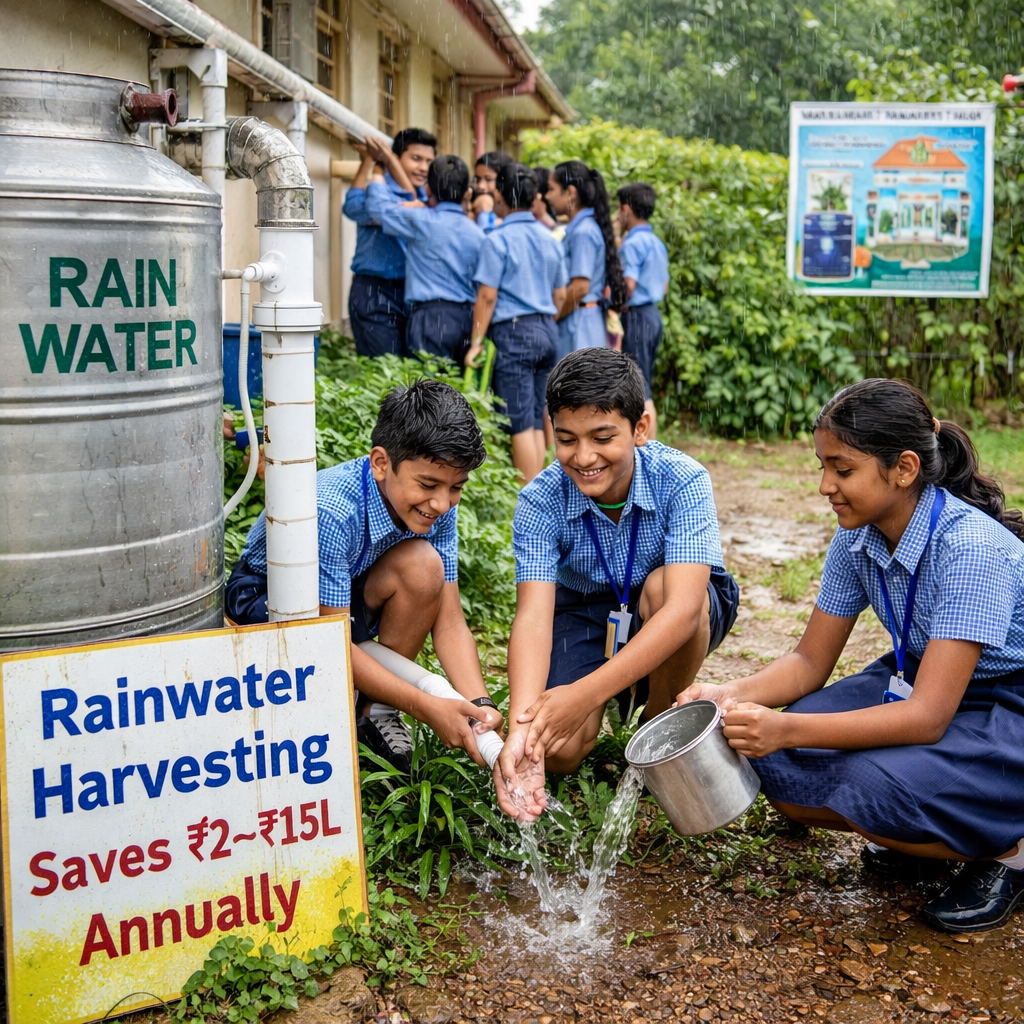

How Rainwater Harvesting For Schools Save ₹2–₹15L Annually.

Explain how Rainwater Harvesting For Schools can reduce water bills and tanker costs by ₹2–₹15L Annually, with practical steps, examples, and savings calculations.


🏫💧 How Schools Can Save Lakhs Every Year Using Rainwater Harvesting

Schools across India face a constant challenge:
high water bills, unreliable supply, and increasing tanker dependency.

A typical school in India uses 10,000–1,00,000 litres of water every day for:

  • Toilets
  • Handwashing
  • Drinking water (after purification)
  • Gardening
  • Cleaning
  • Cooking (mid-day meals)

When municipal supply fails, tanker costs shoot up:

💸 ₹30,000 to ₹3,00,000 per month

But here’s the good news:

👉 Schools can save lakhs every single year by installing Rainwater Harvesting (RWH).

This blog explains exactly how.


🌧️ Why Schools Are the BEST Places for Rainwater Harvesting

Schools have two major advantages:

1. Large Rooftops

Schools often have 1,000–20,000 sq ft rooftops → perfect catchment areas.

2. High Daily Water Demand

This means every drop harvested directly reduces tanker bills.

Even a 5,000 sq ft school roof can harvest:

💧 20–30 lakh litres per year (depending on rainfall)

That alone can cover up to 60–90% of a school’s total water needs.


📉 How Rainwater Harvesting Helps Schools Save Lakhs

Let’s break down the yearly savings:


1️⃣ Reduced Tanker Dependency (The Biggest Saving)

Example:

A medium-sized school using tankers spends:

  • ₹1,000–₹2,000 per tanker
  • 2–10 tankers per day in summer
  • Yearly expense: ₹8–₹20 lakhs

With RWH:

✔ Tankers reduce by 50–90%
✔ Annual savings: ₹4–₹15 lakhs


2️⃣ Lower Borewell Electricity Costs

Pumping groundwater from deep borewells costs:

  • High electricity
  • Frequent motor repairs
  • Unpredictable yield

RWH recharges borewells, increasing their output.

Result:
✔ Higher water availability
✔ Lower electricity costs
✔ Extended motor lifespan

Estimated savings: ₹50,000–₹2,00,000 per year


3️⃣ Free Supply of Soft, Low-TDS Water

Rainwater is naturally:

  • Soft
  • Low in minerals
  • Ideal for washing, cleaning, gardening

This improves plumbing health and reduces maintenance.

Savings: ₹30,000–₹1,00,000 per year


4️⃣ Recharge Pits Reduce Flooding & Waterlogging

Schools often face:

  • Playground flooding
  • Basement seepage
  • Building damage during monsoon

RWH recharge pits solve this.

Savings in maintenance: ₹50,000–₹3,00,000 per year


5️⃣ Long-Term Water Independence

Municipal supply fails?
Tanker strike?
Borewell dry?

No problem.

A school with RWH becomes water-secure for decades, not just seasons.


🌧️📊 Sample Savings: What a 5,000 sq ft School Can Save

Rainfall (Indian average): 800 mm
Catchable rain:
5,000 × 0.623 × 800 ≈ 24,92,000 litres per year

Estimated Realistic Savings

Expense TypeWithout RWHWith RWHSavings
Tankers₹12,00,000₹3,00,000₹9,00,000
Electricity₹1,50,000₹80,000₹70,000
Maintenance₹1,00,000₹50,000₹50,000
Flooding Repairs₹1,50,000₹20,000₹1,30,000

Total Savings:

👉 ₹11.5 lakh per year

One-time installation cost?
₹2–₹10 lakhs depending on school size.

ROI recovered within 3–6 months.


🛠️ What a Rainwater Harvesting System in a School Includes

A complete RWH setup for schools involves:

✔ Rooftop catchment

Large flat roofs channel rainwater efficiently.

✔ First rain separator

To remove initial dust and contaminants.

✔ Multi-layer filtration unit

Sand + charcoal + gravel layers.

✔ Storage tanks (5,000–50,000 litres)

Depending on consumption.

✔ Recharge pits or shafts

To revive groundwater.

✔ Network of downpipes & PVC channels

Connecting roof to filtration points.

✔ Overflow safety & maintenance access

Schools usually require big storage + big recharge, and both are fully feasible.


📝 Additional Benefits for Schools (Beyond Savings)

1. Helps School Meet CSR & Sustainability Ratings

Important for private schools and college campuses.

2. Helps Get Green Building Certification

RWH is a mandatory component.

3. Educational Opportunity for Students

Schools can teach students:

  • Science of water
  • Environmental responsibility
  • Real sustainability in action

Students love visiting recharge pits and filter chambers — it becomes a living laboratory.

4. Community Reputation Boost

“Green School” branding attracts parents.


🌍 What Types of Schools Benefit the Most?

  • CBSE / ICSE schools
  • Private schools
  • Government schools
  • Colleges
  • NGOs & Trust-run institutions
  • Residential schools
  • Hostels / campuses

Every school with a rooftop can implement it.


📞 Want Your School to Save Lakhs Every Year?

Contact Jalsanchay — India’s Trusted RWH Consultant.**

Jalsanchay provides end-to-end rainwater harvesting solutions for schools:

✔ Site evaluation
✔ Tailored system design
✔ Complete installation
✔ Borewell recharge planning
✔ Maintenance & annual servicing
✔ Low-cost, high-efficiency filtration units

We help schools harvest millions of litres every monsoon and become water-secure.

📲 Reach out to Jalsanchay today and turn your school into a water-efficient campus.


FAQs: Rainwater Harvesting for Schools

1. How much water can a typical school harvest annually?

Anywhere between 5–50 lakh litres, depending on roof size.

2. Is rainwater safe for school use?

Yes — after proper filtration and purification.

3. How soon does the investment pay back?

Most schools recover their cost within one monsoon season.

4. Does RWH work for multi-floor school buildings?

Absolutely — rooftop systems are ideal.

5. Does Jalsanchay provide school-specific designs?

Yes, we specialize in large-roof, high-demand RWH systems.


Community Rainwater Projects That Brought Neighbors Together

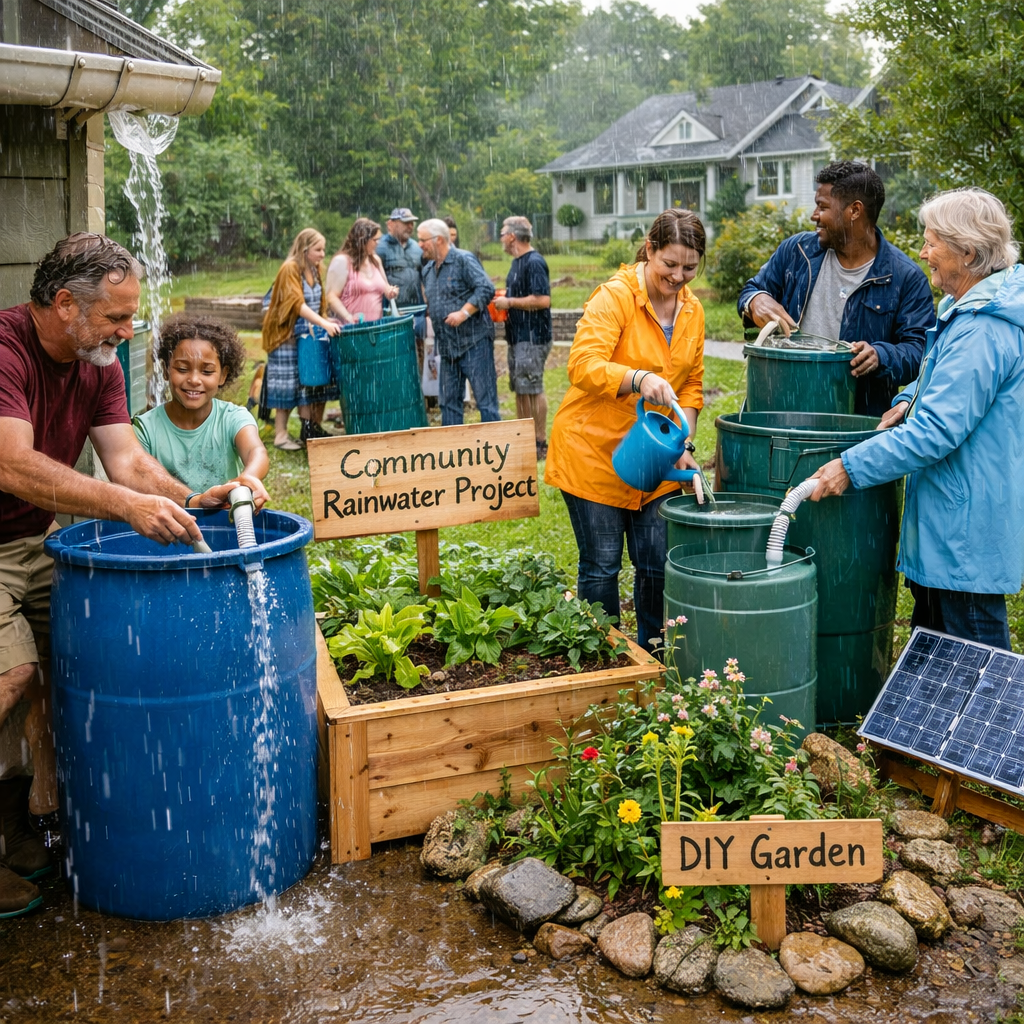
How Community Rainwater Projects Bring Neighbors Together?

Community rainwater harvesting projects help neighbors collect and store rainwater collectively, reducing water bills and solving shortages. From shared recharge pits to society-level storage systems, these projects build unity, save lakhs, and recharge groundwater. Jalsanchay helps communities design, install and maintain RWH systems professionally.


Community Rainwater Projects That Brought Neighbors Together

Rainwater harvesting has always been a powerful solution for India’s water crisis — but something even more powerful is happening today:
communities are coming together to solve water problems collectively.

Across India, neighbors, RWAs, resident groups, and local volunteers are teaming up to build simple but impactful rainwater harvesting (RWH) structures. The results?
✔ Reduced tanker dependence
✔ Lower water bills
✔ Better groundwater levels
✔ A stronger, united community

In this blog, you’ll discover real examples, practical ideas, and how your community can start its own RWH project with Jalsanchay.


1. The Bengaluru Layout That Eliminated Tankers in 6 Months

A mid-sized layout in East Bengaluru suffered severe summer shortages, requiring 3–4 tankers daily. Residents jointly funded a large recharge pit + roofwater collection system for all common buildings.

Impact:

  • Tanker requirement dropped by 80%
  • Borewell yield improved
  • Maintenance costs reduced
  • Residents now organize an annual “Water Day” together

What made it special?
It was not a technical project — it was a community movement.


2. The Chennai Apartment Where Children Led the RWH Drive

In a 60-unit apartment, it was actually kids who convinced residents to build a rainwater harvesting system after learning about water conservation in school.

They collected signatures, made posters, and even measured their terrace area with help from parents!

System Installed:

  • First flush
  • Filter
  • Storage tank for gardening
  • Recharge well for excess water

Impact:

  • Garden maintained without any municipal water
  • Children became “Water Champions”
  • Other apartments in the neighborhood followed their model

3. Delhi Colony That Built 3 Recharge Pits in One Weekend

With recurring summer shortages, a West Delhi colony decided to create recharge structures together.

Residents contributed:

  • Labour (digging)
  • Tools
  • Pebbles and sand
  • Food and chai for volunteers

A professional consultant handled:

  • Design
  • Dimensions
  • Safety
  • Slope planning

Outcome:

  • Rainwater absorption improved dramatically
  • Monsoon flooding reduced
  • People bonded like never before

This project became a “community festival” — something housing colonies still talk about.


4. Pune RWA That Turned Its Parking Area Into a Recharge Zone

Instead of wasting runoff water near parking lots, a smart RWA converted the entire zone into a stormwater recharge system.

Today, their system captures over 1 lakh litres every monsoon.

Benefits:

  • No waterlogging
  • Higher borewell levels
  • Lower society expenses
  • Pride and unity among residents

5. Why RWH Works Better as a Community Project

✔ Costs reduce significantly

Shared systems lower per-household cost.

✔ Groundwater recharge is more effective

Collective catchment → larger volume → better aquifer recharge.

✔ Maintenance becomes easier

Communities schedule periodic cleaning and checks.

✔ Promotes social bonding

Water challenges create a shared purpose — people work together.

✔ Encourages long-term sustainability

When everyone participates, the initiative lasts.


6. Simple Community RWH Projects Any Neighborhood Can Start

1️⃣ Common Recharge Pit Near Gate / Parking

Captures stormwater from internal roads.

2️⃣ Roofwater Harvesting for Clubhouse / Community Hall

Easy and low-cost; great for societies with common buildings.

3️⃣ Rainwater Storage Tanks for Gardening

Reduces freshwater use significantly.

4️⃣ Borewell Recharge Units

Revives old or low-yield borewells.

5️⃣ Shared Filtration System for Multi-Block Apartments

Central filtration → multiple pipelines → simplified maintenance.

6️⃣ Kids-Driven Awareness Campaigns

Art, posters, competitions — helps build a culture of saving water.


7. Steps to Start a Community Rainwater Harvesting Project

Step 1: Conduct a Water Audit

Understand consumption, losses, supply challenges.

Step 2: Identify Catchment Areas

Roofs, roads, parking lots, open spaces.

Step 3: Consult a Professional (Jalsanchay)

Every society has different soil, roof, slope, rainfall — so expert system design is crucial.

Step 4: Estimate Budget + Share Cost

RWAs can collect funds gradually or via maintenance charges.

Step 5: Build with Skilled Technicians

Correct installation = high recharge + long system life.

Step 6: Maintain Every 3–6 Months

A clean system can work for 25+ years.


8. Why Your Community Should Choose Jalsanchay

Jalsanchay is a trusted rainwater harvesting consultant and service provider helping homes, societies, schools, and industries become water independent.

What We Offer:

✔ Professional site audit
✔ Custom RWH design
✔ Recharge pit / borewell recharge / filtration system installation
✔ Low-maintenance, long-life setups
✔ End-to-end support

If your society or neighborhood wants to save lakhs and secure water for the future, Jalsanchay is here to guide you.


FAQ

Q1. Can a community rainwater harvesting project work in small societies?
Yes. Even 10–20 houses can build shared systems like recharge pits or terrace-based harvesting.

Q2. How much does a community RWH project cost?
Costs depend on area, soil, system type, and water goals. Jalsanchay provides free initial guidance.

Q3. What is the easiest community RWH structure?
A recharge pit or borewell recharge — low cost, high impact.

Q4. How much water can a society collect?
A typical apartment with 10,000 sq ft terrace can collect 2–3 lakh litres per monsoon.

Q5. Who maintains the system?
The RWA and Jalsanchay’s yearly maintenance support.


Need Help Starting a Community RWH Project?

If your RWA, colony, or apartment wants to start a rainwater harvesting initiative, Jalsanchay will design the perfect solution for you.

📞 Contact Jalsanchay – Your Trusted Rainwater Harvesting Partner. Let’s build a water-secure community together.