


Do You Know About Ancient Indian Rainwater Harvesting Practices?
Indians have been practicing rainwater harvesting for thousands of years, using step wells, tanks, ponds, and rooftop collection methods. Ancient Indian Rainwater Harvesting Practices conserved water for drinking, irrigation, and livestock, while also recharging groundwater. Today, Jalsanchay modernizes these traditional techniques with scientific designs for homes, societies, farms, and industries.
Ancient Indian Rainwater Harvesting Practices
Water scarcity is not new to India. Long before modern technology, Indian civilizations devised ingenious methods to conserve and use rainwater efficiently. From the Harappan era to the medieval kingdoms, water harvesting was a cornerstone of survival.
At Jalsanchay, we study these ancient practices to design modern, efficient rainwater harvesting (RWH) systems that honor tradition while solving today’s water crisis.
Let’s explore how our ancestors managed water — and how we can adapt it today.
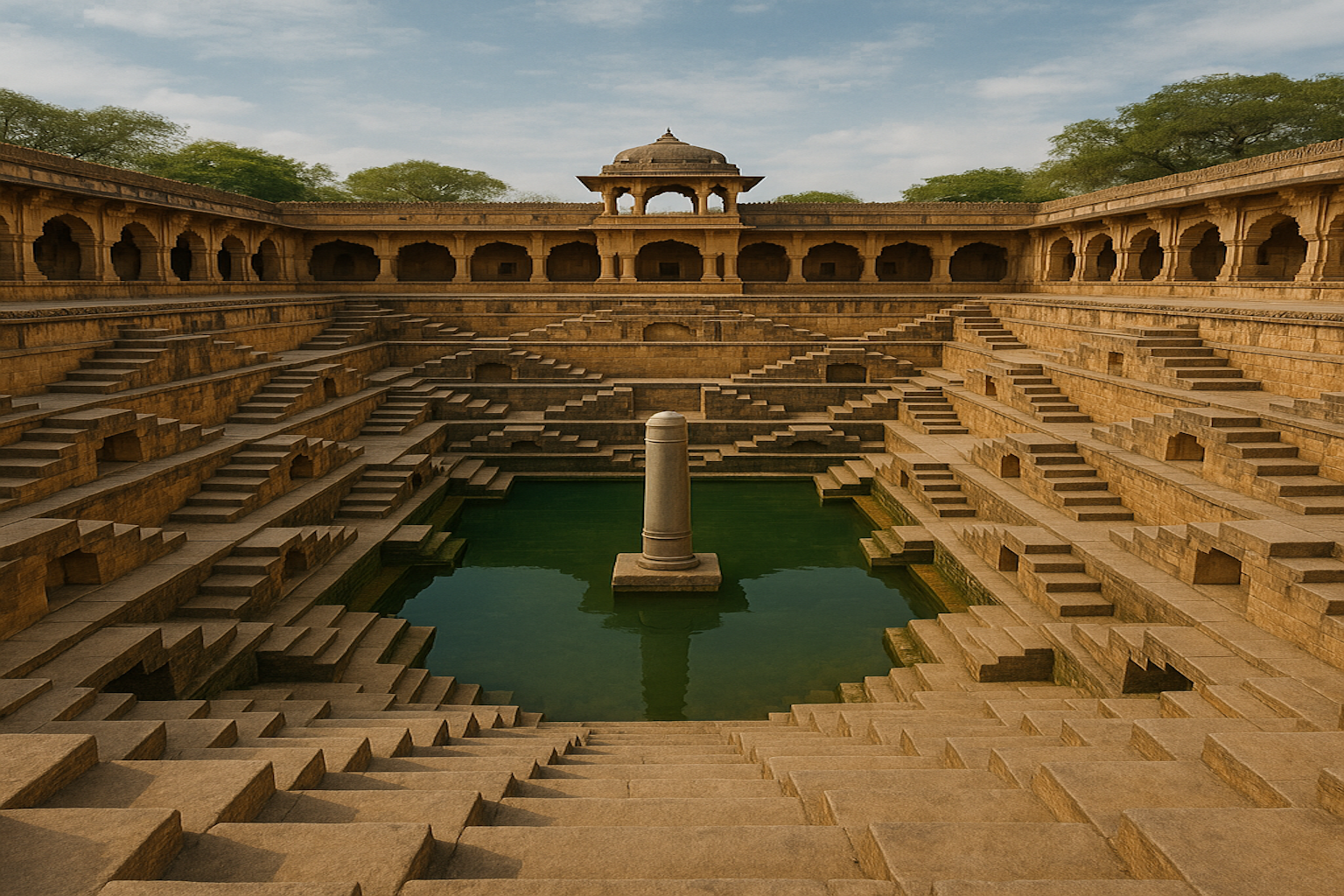
1️⃣ Step Wells (Baolis and Vavs)
Step wells were common in Rajasthan, Gujarat, and Maharashtra. These multi-level wells collected and stored rainwater in underground chambers.
Why it mattered:
- Provided water year-round in arid regions
- Stored clean water for domestic use
- Allowed community access to water even during dry seasons
Modern takeaway:
Step wells inspired modern underground storage tanks and borewell recharge systems that Jalsanchay implements today.
2️⃣ Temple Tanks and Community Ponds
Temples across India often had large water tanks that served communities. Similarly, villages built common ponds to store rainwater for:
- Drinking
- Irrigation
- Livestock
Impact:
- Promoted social cooperation
- Recharged groundwater
- Reduced dependency on rivers
Modern version:
- Roofwater collection into storage tanks
- Community rainwater recharge systems
- Farm ponds linked to rooftop runoff
3️⃣ Rainwater Storage in Forts and Palaces
Historical forts like Amber Fort (Rajasthan) and Golconda Fort (Telangana) had intricate rainwater collection systems:
- Channels directing rain to cisterns
- Step-down reservoirs
- Stone gutters capturing runoff
Lesson for today:
Even high-traffic areas can harvest rainwater efficiently. Modern society-level RWH systems follow the same principles, designed by Jalsanchay.
4️⃣ Terraced Farming and Contour Bunding
In hilly regions like Himachal Pradesh and Uttarakhand:
- Farmers built terraces
- Created small bunds to trap water
- Reduced soil erosion
Modern adaptation:
These methods inspire today’s contour trenches, check dams, and soil moisture retention systems — efficient ways to conserve rainwater and recharge aquifers.
5️⃣ Rooftop Harvesting in Ancient Homes
Even ordinary homes in medieval towns had sloping roofs and storage tanks:
- Rainwater from roofs was collected in underground tanks
- Used for cooking, drinking, and washing
Modern Jalsanchay systems:
- Roofwater harvesting for homes and societies
- Filtration and storage tanks
- Integration with gardens and irrigation systems
Why Ancient RWH Still Works Today
| Ancient Practice | Modern Jalsanchay Solution | Benefit |
|---|---|---|
| Step wells | Underground storage tanks, borewell recharge | Water available year-round |
| Temple tanks / ponds | Community ponds & farm ponds | Groundwater recharge, irrigation |
| Fort reservoirs | Society and industrial RWH | Large capacity, multiple users |
| Terracing & bunding | Contour trenches, check dams | Soil moisture retention, erosion control |
| Roof collection | Modern roofwater harvesting | Clean, low-cost water for daily use |
The Environmental and Economic Benefits
- Reduces dependency on groundwater and tankers
- Lowers electricity use for pumping → reduces carbon emissions
- Promotes greenery and soil conservation
- Prevents flooding and water wastage
- Saves money for households and communities
Rainwater harvesting isn’t just history — it’s a modern climate-smart solution.
Why Jalsanchay Is Your Modern RWH Partner
At Jalsanchay, we bridge ancient wisdom and modern technology:
✔ Home & society rooftop RWH systems
✔ Farm ponds and contour-based harvesting
✔ Community and industrial water solutions
✔ Borewell recharge and underground tanks
✔ Customized design, installation, and maintenance
We turn historical knowledge into practical, cost-effective, and efficient systems for every Indian home and farm.
Conclusion: From Ancient Wisdom to Modern Water Security
India’s ancestors knew the value of rain. They didn’t let it go to waste — and neither should we.
With scientific RWH systems by Jalsanchay, we can:
🌧 Capture every drop
🌿 Recharge groundwater
💧 Secure water for future generations
⚡ Save energy and reduce carbon footprint
The legacy of rainwater harvesting lives on — let’s continue it with modern solutions.
📞 Contact Jalsanchay for Expert Rainwater Harvesting Solutions
Whether you want:
- Rooftop rainwater harvesting for your home or society
- Farm ponds or contour recharge systems
- Borewell recharge or community water projects
📞 Call / WhatsApp Jalsanchay: 9016465919
📧 Email: ask@jalsanchay.com
🌐 Website: jalsanchay.com
Jalsanchay is your trusted partner for low-cost, high-impact rainwater harvesting across India.