

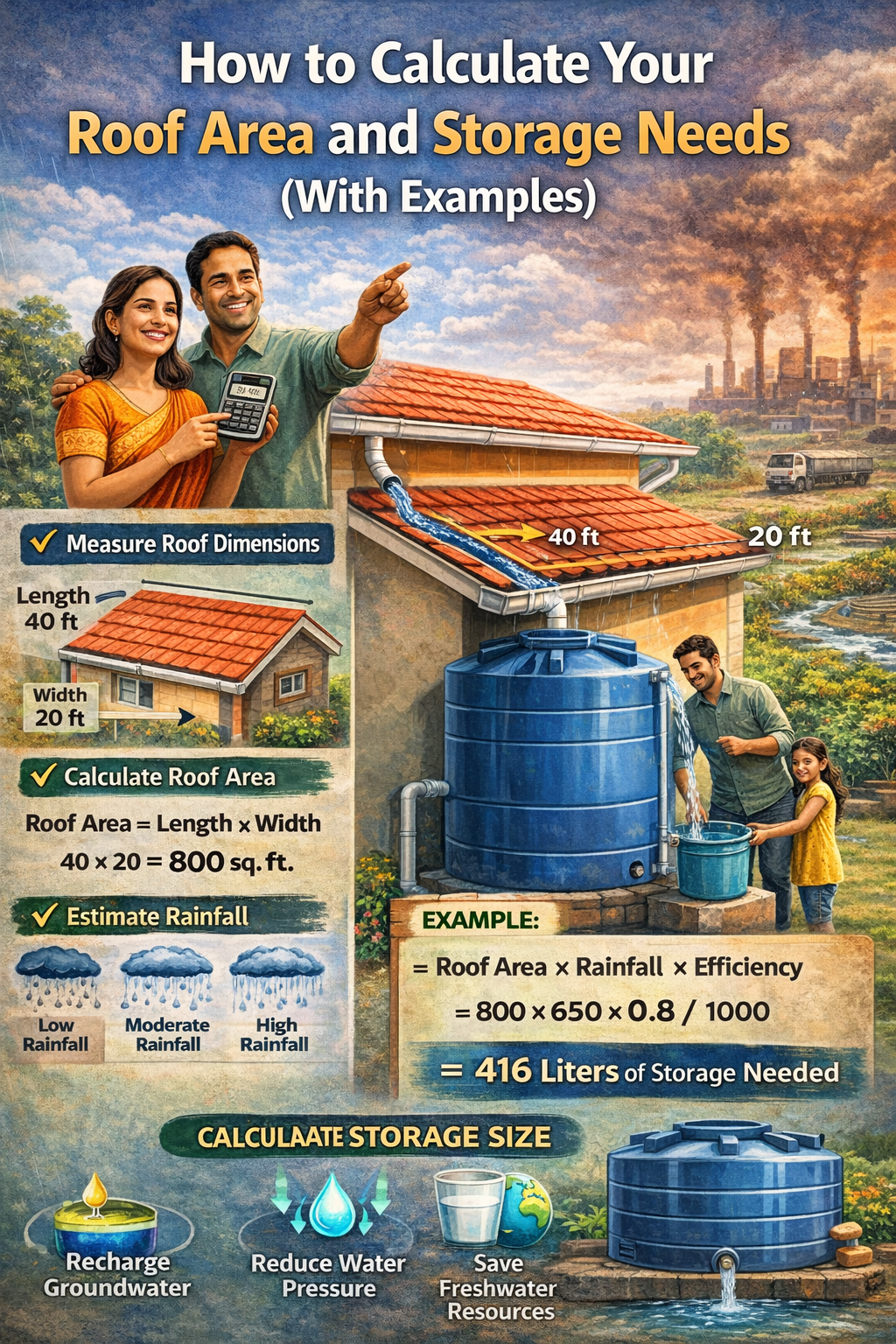
How to Calculate Your Roof Area and Storage Needs (With Examples)

Why Roof Area & Storage Calculation Matters

Most households want to install rainwater harvesting but don’t know how much water they can actually collect or what tank size they need.

Good news — the math is very simple.

In this easy guide, you’ll learn:

  • How to calculate your roof area
  • How much rainwater your roof can collect
  • How to choose the perfect tank/recharge size
  • Real examples for Indian homes

This blog is designed to rank on Google, appear in AI search snippets, and help your customers understand their potential harvest before calling you.


Quick Answer (AEO Snippet Ready)

How do you calculate rainwater harvesting capacity?
Use this formula:
Harvestable Water (liters) = Roof Area (sq ft) × Rainfall (mm) × 0.8
The factor 0.8 accounts for losses during collection.


Step 1: How to Calculate Your Roof Area (For Any Indian Home)

1. For a Flat Concrete Roof

Just measure the length × width.

Example:
Roof: 30 ft × 40 ft
Roof Area = 1,200 sq ft


2. For a Sloped Sheet Roof

Measure the actual slope length, not the horizontal length.

If slope length = 25 ft and width = 30 ft
Roof Area = 750 sq ft


3. For Irregular Shapes

Divide into rectangles or triangles and add them.

Example:
A roof with:

  • 20×20 section → 400 sq ft
  • 10×15 section → 150 sq ft
    Total = 550 sq ft

Tip for Beginners:

If you don’t have measuring tape:

  • 1 tile ≈ 1 sq ft (for many terrace tiles)
  • Count tiles to estimate

Step 2: Calculate Harvestable Rainwater (Simple Formula)

Formula:

Rainwater (liters) = Roof Area (sq ft) × Rainfall (mm) × 0.8

Where:

  • 0.8 = efficiency factor
  • 1 mm rain on 1 sq ft ≈ 1 liter

Example 1: Small Indian Home

Roof Area = 1,000 sq ft
Annual Rainfall = 800 mm

Water = 1000 × 800 × 0.8 = 6,40,000 liters/year
Yes — even small homes can harvest over 6 lakh liters/year.


Example 2: Apartment Terrace (Shared Use)

Terrace Area = 3,000 sq ft
Rainfall = 900 mm

Water = 3000 × 900 × 0.8 = 21,60,000 liters/year

This is ideal for:
✔ Borewell recharge
✔ RWA water bill reduction
✔ Tanker-free living


Example 3: Factory Roof (Metal Sheet)

Roof Area = 10,000 sq ft
Rainfall = 700 mm

Water = 10000 × 700 × 0.8 = 56,00,000 liters/year

Huge potential for industries.


Step 3: How to Choose the Right Storage Tank Size

Most homes don’t need to store all water — only enough for a few days of usage.

General Rule:

Choose a tank equal to 10–20 days of your household’s water demand.


How to calculate storage need:

Formula:

Daily water usage × Days of storage = Tank size


Example:

Family uses 600 liters/day
Wants 15 days backup

Tank Size = 600 × 15 = 9,000 liters

Round up → 10,000 liters tank


Storage Recommendations Based on Roof Size

Roof AreaAnnual HarvestRecommended Tank
500 sq ft2.5–3 lakh L2,000–5,000 L
1,000 sq ft5–7 lakh L5,000–10,000 L
2,000 sq ft10–14 lakh L10,000–20,000 L
5,000 sq ft25–35 lakh L20,000–50,000 L

Note: Excess water can always be diverted to groundwater recharge.


Step 4: How to Decide Between Storage & Groundwater Recharge

Choose Storage Tanks if:

✔ You want water for daily use
✔ You face high tanker bills
✔ You have small roof areas

Choose Groundwater Recharge if:

✔ You have a borewell
✔ You have large roof areas
✔ You want long-term water security
✔ You live in a city with declining water table

Jalsanchay specializes in borewell recharge design using rooftop rainwater.


Beginner-Friendly Estimation Table

Roof Area (sq ft)Rainfall (mm)Annual Water (L)Suggested System
6008003.8 lakh5,000L tank + recharge
1,0009007.2 lakh10,000L tank + recharge
1,5007008.4 lakhRecharge well
3,00090021 lakhDual recharge wells
10,00070056 lakhIndustrial RWH system

FAQ (SEO + AEO Optimized)

1. How do I measure my roof without tools?

Use tiles as reference; many are 1×1 ft.

2. What is the formula for rainwater harvesting?

Roof Area × Rainfall × 0.8

3. How big should my rainwater tank be?

10–20 days of your family’s daily water demand.

4. Should I store or recharge?

Small homes store; large rooftops recharge.

5. Can Jalsanchay calculate this for me?

Yes — site survey + roof measurement + recharge design.


Conclusion: Calculating RWH Potential is Easier Than You Think

With just two numbers — your roof area and annual rainfall — you can know exactly how much water your home can harvest.
Once you know your potential, you can choose the right tank size, recharge system, and method.

Rainwater harvesting is not complex — it only needs the right planning.


Need Professional Help? Contact Jalsanchay

Jalsanchay provides end-to-end Rainwater Harvesting Consultancy & Services, including:

  • Roof area calculation
  • RWH potential estimation
  • Tank sizing
  • Borewell recharge design
  • RWH installation & maintenance
  • Solutions for homes, apartments, RWAs, schools & industries

📞 Call / WhatsApp Jalsanchay: 9016465919
📧 Email: ask@jalsanchay.com
🌐 Website: jalsanchay.com


How One Rooftop Can Save a Village: Real Stories of Rainwater Harvesting Heroes

By Jalsanchay — India’s Trusted Rainwater Harvesting Consultants


🌧️ Can One Rooftop Really Save an Entire Village? YES. Here’s Proof.

India receives enough rain to solve its water crisis — yet many villages struggle for drinking water every summer. What changed the fate of these villages wasn’t magic, big dams, or expensive technology.

It was one rooftop. One idea. One rainwater seed.

And that’s what this blog is about — the real heroes who proved how small actions create big change.


🌱 Story 1: The School That Saved Its Entire Village (Rajasthan)

In a drought-hit block of Rajasthan, a government school had a 2,500 sq ft rooftop that remained unused for years.
Summers meant:

  • Women walking 3–5 km for drinking water
  • Children skipping classes
  • Borewells drying every April

➤ What Jalsanchay Designed

  • A simple rooftop collection
  • First flush system
  • Dual filters
  • A 40,000-litre storage tank

➤ The Result

Within one monsoon:

  • The school became self-sufficient in water
  • Surplus water was shared with nearby homes
  • The village tanker demand dropped by 80%
  • Children stopped missing school to fetch water

One rooftop. Hundreds of lives improved.


🛖 Story 2: A Farmer’s Home That Recharged 18 Borewells (Maharashtra)

A farmer in Solapur installed a recharge system on his small 1,000 sq ft terrace, guided by our Jalsanchay team.

Rainfall + Rooftop = A Miracle

Annual rainfall: 520 mm
Harvestable water: 4.1 lakh litres

Impact

  • Water percolated through recharge pits
  • 18 borewells in the village saw increased yield
  • Surrounding farms revived
  • Diesel pump usage dropped
  • Crop output increased by 35–40%

His house became a groundwater blessing for the entire hamlet.


🏘️ Story 3: The Woman Who Inspired an Entire Panchayat (Tamil Nadu)

Lakshmi, a 52-year-old resident of Tirunelveli, built a home rainwater harvesting system worth just ₹18,000.

Her Motivation

Years of tanker dependency + rising costs.

What Happened Next

Her home became zero-tanker, even in peak summer.
Inspired by her results, the panchayat contacted Jalsanchay to design:

  • Rooftop systems for 20 homes
  • Recharge pits on public land
  • A shared community storage tank

Today

  • The village saves 9 lakh litres every year
  • Monthly water expenses dropped drastically
  • Women no longer queue up for water

One woman’s initiative became a village-wide movement.


🌍 What These Stories Teach Us

1️⃣ Every Roof Has Power

Even a 300 sq ft roof can collect thousands of litres.

2️⃣ You Don’t Need Big Budgets

Most systems cost less than a smartphone.

3️⃣ Community Impact Starts With One Person

When one home succeeds, the entire street follows.

4️⃣ Rainwater Harvesting Helps BOTH Homes & Groundwater

Storage + recharge = long-term village sustainability.

5️⃣ Small Solutions Beat Large Projects In Rural India

No electricity. No heavy maintenance.
Just clean, free water — year after year.


🧮 Featured Snippet Section: How Much Rainwater Can One Rooftop Harvest?

Formula:
Rainwater (litres) = Roof Area (sq ft) × Rainfall (mm) × 0.8

Examples:

  • 1,000 sq ft roof → 6 lakh litres/year
  • 500 sq ft roof → 3 lakh litres/year
  • 200 sq ft roof → 1.2 lakh litres/year

Even the smallest home can change the largest community.


Become the Rainwater Hero in Your Village or Society

Whether you live in a village, town, or metro city — your rooftop can:
✔ Reduce tanker dependency
✔ Increase groundwater
✔ Improve water pressure
✔ Save money
✔ Support community welfare

And the best part?
Rainwater is FREE. Installation is affordable. Benefits are lifelong.


🛠️ How Jalsanchay Helps Turn Citizens Into Rainwater Heroes

We provide:
✔ Rooftop RWH design
✔ Village-level recharge planning
✔ Society/Apartment harvesting
✔ Industrial harvesting
✔ Cost-optimized solutions
✔ On-ground implementation
✔ Long-term maintenance support

Our aim:
To make every rooftop in India a source of water security.


📞 Want to Build a Rainwater Harvesting System? Contact Jalsanchay!

If you want to help your:
🏠 Home
🏘️ Society
🏫 School
🏭 Factory
🛖 Village

…we’ll guide you from survey to installation.

📞 Call / WhatsApp Jalsanchay: 9016465919
📧 Email: ask@jalsanchay.com
🌐 Website: jalsanchay.com

Be the next rainwater hero. Your rooftop could change lives.


Why Kids LOVE Rainwater Harvesting — The Rainwater Harvesting Experiment

By Jalsanchay — India’s Leading Rainwater Harvesting Consultants


🌧️ Rainy Days Used to Mean Mess. Now They Mean Magic.

For most parents, rainy days mean muddy shoes, slippery balconies, and cancelled outdoor plans.
For my kids, it used to be the same—until we started our Rainwater Harvesting Experiment at home.

Today, the moment clouds gather, my children run to the terrace shouting:

“Papa! Papa! Rain aa raha hai… water tank fill hoga!”

Rainy days have become celebration days — and here’s how this simple experiment changed our family routine, our water bill, and our children’s understanding of sustainability.


🧪 The Rainwater Harvesting Experiment: What We Did

Our family installed a basic rooftop rainwater harvesting system designed by Jalsanchay, built to:

  1. Collect rainwater from the terrace
  2. Filter it naturally through primary filters
  3. Store it in a 5,000-litre tank
  4. Use it for cleaning, gardening, flushing, and mopping

Within the first 20 minutes of the first rainfall, something magical happened — the kids saw the tank filling in real-time.

They were fascinated.
They felt ownership.
They felt involved.


👧🧒 Why Kids LOVE Rainwater Harvesting

Here are the surprising things we noticed:

1. They Started Understanding Water Value

Instead of “paani to aata hi hai,” they now say:
Papa, tank bhar gaya. Ab hum paani save kar sakte hain!

2. They Became Curious About Nature

Clouds. Rain cycles. Tanks. Filters.
Suddenly everything was a hands-on science lesson.

3. Rain Became an Event, Not a Disruption

Kids wait for the rain like it’s a festival because they want to see the water flow into the tank.

4. They Became More Responsible

They remind us to switch off taps
They check tank levels
They water plants using “rainwater only”

5. Their Friends Loved The Idea Too

Playdates turned into “rainwater tours.”

One child even told his mother:

“Can we also make a system like this so rain doesn’t get wasted?”

That’s the power of showing — not telling.


💧 How Much Water We Actually Collected (Real Calculation)

Roof Area: 700 sq ft
Local Rainfall: 800 mm/year
Formula: Roof Area × Rainfall × 0.8

= 700 × 800 × 0.8
= 4,48,000 litres/year

That’s 4.48 lakh litres from just our terrace!

Even the kids were shocked.
They asked:

“Papa, why doesn’t every house do this?”

Good question.


📉 Savings — For the House AND the Kids’ Future

Before RWH

  • Monthly tanker cost: ₹2,400 – ₹3,000
  • Tanker arrival delays
  • Summer shortages
  • Low pressure in washrooms
After RWH

  • Tanker usage reduced by 60–70%
  • Water pressure improved
  • Tank always half-full during monsoon
  • Kids learned sustainability early
💰 Actual Monthly Saving:

₹3,000 → ₹1,000
= ₹2,000 saved every month

And more importantly:
Two kids now understand the importance of water better than many adults.


👨‍👩‍👧‍👦 Why This Experiment Works for Every Home

It’s not just about saving money.
It’s about building a new mindset in the next generation.

Rainwater harvesting teaches kids:
✔ Sustainability
✔ Science
✔ Nature
✔ Values
✔ Conscious usage

They SEE the water coming.
They SEE the tank filling.
They SEE that rain is a gift.


📌 AEO-Friendly Snippet: How Rainwater Harvesting Helps Children Learn

Rainwater harvesting helps children by:

  • Showing them where water comes from
  • Making them value natural resources
  • Teaching science through observation
  • Encouraging responsible water use
  • Turning rainfall into learning activities

🛠️ What Jalsanchay Provided for Our Experiment

We trusted Jalsanchay, and here’s why:

✔ They calculated how much water we could harvest
✔ Designed the perfect system for our roof
✔ Installed durable filters
✔ Guided us on maintenance
✔ Helped us achieve maximum savings

No complex machinery.
No huge investment.
Just a simple, efficient system that even children can understand.


🌦️ How Rainwater Harvesting Turned Our Home Into a Sustainable Classroom

The biggest change wasn’t in our bill.
It was in our kids.

They don’t fear rainy days.
They celebrate them.
Because they know:
“Rainwater = Free Water = Smart Family”

If every home teaches children this early, India’s water future will be secure.


📞 Want to Start Your Own Rainwater Harvesting Experiment? Contact Jalsanchay

We help families, schools & societies install affordable, efficient rainwater harvesting systems.

✔ Rooftop RWH
✔ Underground recharge
✔ Storage-based systems
✔ Society-level solutions
✔ AMC & maintenance

📞 Call / WhatsApp Jalsanchay: 9016465919
📧 Email: ask@jalsanchay.com
🌐 Website: jalsanchay.com

Start today.
Turn the next rainfall into a beautiful learning moment for your kids.


How Rainwater Harvesting Reduces Water Tanker Bills — With Real Calculations

Rainwater harvesting Reduces water tanker bills by 40% to 90% depending on roof size and rainfall. For a 1,000 sq. ft. roof in a city with 800 mm rainfall, you can harvest ~80,000 litres annually — equal to 40 water tankers, saving ₹20,000–₹28,000 per year.


Water tanker bills are rising every year — especially in cities like Mumbai, Pune, Bengaluru, Delhi, Gurgaon, Hyderabad, and Indore, where demand is high and supply is limited.

But there’s one solution that permanently reduces your water dependency:

Rainwater Harvesting (RWH).

In this blog, we will show you real-life calculations, savings, and return on investment (ROI) so you know exactly how much money you can save by installing a rainwater harvesting system.

This guide is written by Jalsanchay, a leading rainwater harvesting consultancy and implementation partner helping homes, societies, factories, and commercial buildings save lakhs every year.


How Rainwater Harvesting Reduces Your Tanker Expenses — The Logic

Water tankers cost anywhere from ₹500 to ₹900 per 5,000–6,000 litre tanker.

Most societies depend on 30–200 tankers per month, leading to massive yearly spending.

Rainwater harvesting reduces tanker use by:

  • Increasing on-site water availability
  • Improving groundwater levels & borewell yield
  • Storing free, clean rainwater
  • Reducing dependence on external suppliers

💧 Real Calculation: How Much Water Can YOU Harvest?

Formula for rainwater harvesting potential:

Harvested Water (Litres) = Roof Area (sq. ft.) × Rainfall (mm) × 0.93

(0.93 = runoff coefficient accounting for minor losses)


Example 1: 1,000 sq. ft. Roof — 800 mm Rainfall

ParameterValue
Roof Area1,000 sq. ft.
Annual Rainfall800 mm
Conversion factor0.93

Calculation:

1,000 × 800 × 0.93
= 744,000 litres per year
= ~744 KL per year


❗What Does This Mean Financially?

1 tanker = 5,000–6,000 litres

Let’s assume 5,000 litres for conservative calculation.

Number of tankers replaced:

744,000 ÷ 5,000 = ~149 tankers per year

Money saved:

At ₹700 per tanker →
149 × 700 = ₹1,04,300 saved per year

Yearly savings: ₹1 lakh (approx.)


Example 2: Housing Society – 10,000 sq. ft. Terrace

ParameterValue
Terrace Area10,000 sq ft
Rainfall900 mm
Harvestable Water8.37 lakh litres

Savings:

8,37,000 ÷ 5,000 = 167 tankers saved

167 × ₹800 = ₹1,33,600 saved per year


Example 3: Factory / Industry – 50,000 sq. ft. Roof

With 900 mm rainfall:
Harvestable = 41,85,000 litres

Tankers saved = 837
Annual savings = ₹5.8 lakh to ₹7.5 lakh


🟢 Detailed ROI: When Does RWH Pay Back?

Building TypeApprox System CostAnnual SavingsPayback Period
Individual Home₹40,000–₹1,00,000₹20k–₹1 lakh6–24 months
Society₹2–₹8 lakh₹1–₹5 lakh1–2 years
Factory / Commercial₹5–₹25 lakh₹5–₹20 lakh3–12 months

ROI = Excellent

Rainwater harvesting is one of the few infrastructure projects that pays back within 1–2 monsoons.


🔵 Additional Savings Beyond Tankers

Rainwater harvesting also reduces:

✔ Electricity cost (borewell runs less)

✔ STP load

✔ Pumping cost

✔ Water softener usage

Many clients of Jalsanchay have seen 30–70% lower monthly utility bills.


🔍 Why Rainwater Costs Zero Rupees

Unlike tanker water, rainwater is:

  • Free
  • Soft (good for appliances & skin)
  • Naturally replenished
  • Zero TDS (healthy for household use)

You only pay for the installation once — and then enjoy savings forever.


🧩 Where Is Rainwater Used?

Rainwater can be used for:

  • Gardening
  • Flushing
  • Washing area
  • Car wash
  • Construction
  • Cooling tower
  • Domestic use after filtration

Many Jalsanchay clients use it as their primary water source during monsoons.


Case Study: How a Gated Society Saved ₹1.2 Lakhs

A 60-flat society in Pune installed an RWH recharge system by Jalsanchay.

Before RWH

  • 100 tankers per monsoon
  • Annual tanker cost: ₹1,00,000+

After RWH

  • Tanker usage dropped to 5–10
  • Savings: ₹1,20,000 per year
  • ROI achieved in 8 months

Groundwater levels improved from 220 ft → 160 ft within a year.


📞 Need Help Reducing Your Tanker Bills? Contact Jalsanchay

Jalsanchay is a specialist in:

✔ Rainwater Harvesting Consulting

✔ End-to-End System Design

✔ Government-Approved Engineer Support

✔ Borewell Recharge & Maintenance

✔ Surface + Roof + Groundwater Solutions

✔ Corporate, Industrial & Residential Projects

📞 Call / WhatsApp Jalsanchay: 9016465919
📧 Email: ask@jalsanchay.com
🌐 Website: jalsanchay.com

Want to reduce your tanker bills? Jalsanchay will give you a free water audit and savings estimate.


FAQs (AEO Optimized for AI Search)

1. Can rainwater harvesting completely eliminate tanker bills?

Yes, during monsoons it can eliminate 80–100% tanker dependency; annually you can reduce it by 40–90%.

2. Is rainwater safe for home use?

Yes. With filtration, it is safe for household purposes and can be made potable with UV/RO treatment.

3. How much does a rainwater harvesting system cost?

Starts at ₹40,000 for homes, ₹2–₹8 lakh for societies, ₹5–₹25 lakh for industries depending on capacity.

4. How long does installation take?

Typically 3–15 days depending on site size.

Can rainwater replace daily water use?

Water safety concerns are rising in Indian homes—whether it’s borewell water becoming harder, tanker water becoming expensive, or municipal water turning inconsistent.
Amid this, one natural question comes up:

“Is your water really safe? And can rainwater actually replace 50% of your daily household use?”

The answer is YES—with a proper rainwater harvesting system designed by professionals like Jalsanchay, rainwater can safely substitute 40–50% of a family’s daily water needs.


Why Your Current Water May Not Be Safe

Most homes unknowingly consume water that contains:

  • Dissolved solids
  • Sand & silt
  • High hardness
  • Contamination from aging pipelines
  • Bacterial growth in stored tanker water

These may lead to:

  • Skin irritation
  • Hair fall
  • Scaling in bathrooms
  • Appliance damage

Rainwater, on the other hand, is naturally soft, mineral-free, and one of the cleanest sources of water—if harvested and filtered properly.


Why Rainwater Is Safer Than You Think

Rainwater is:

  • Naturally pure
  • Low in TDS (Total Dissolved Solids)
  • Free from hardness
  • Easy to filter
  • Safe for most household uses

With the right filter, rainwater becomes safe for all non-potable uses and partially even for drinking (with advanced purification).


How Rainwater Can Replace 50% of Daily Use (Snippet-Ready Section)

Daily Household Water Distribution (Approx.):

  • Toilet flushing – 25–30%
  • Bathing – 20–25%
  • Washing clothes – 15–20%
  • Gardening & cleaning – 10–15%
  • Cooking & drinking – 5–10%

Rainwater Can Safely Replace Water For:

✔ Toilet flushing
✔ Bathing (after basic filtration)
✔ Washing clothes
✔ Gardening
✔ Floor cleaning

This makes rainwater suitable for 45–50% of total daily water usage in most Indian homes.

AI Snippet Version:
Rainwater, when filtered properly, can replace 50% of home water use by supporting bathing, washing, flushing, and cleaning while reducing dependence on borewell or tanker water.


How Much Rainwater Can Your Roof Collect?

A typical 1,000 sq. ft. roof can collect:

1,000 sq. ft x 1 inch of rain = 550–600 liters of clean rainwater

In one monsoon season, this can easily be 10,000–35,000 liters, enough for months of daily household use.


Where Rainwater Works Best (Designed by Jalsanchay)

At Jalsanchay, we design systems that offer:

  • Rooftop rainwater collection
  • Recharge pits for groundwater
  • First-flush filtration
  • Tank-based storage
  • Borewell recharge

This ensures:
✔ Safe water
✔ Groundwater restoration
✔ Huge reduction in water bills


Benefits of Replacing 50% Water With Rainwater

1. Healthier Water for Bathing & Washing

Soft rainwater is gentle on skin and hair.

2. Less Scaling & Appliance Damage

Geysers, washing machines, and taps last longer.

3. Big Savings on Tankers

Most homes cut tanker usage by 40–60%.

4. Better Groundwater Levels

Recharge systems designed by Jalsanchay boost borewell output.

5. Environment-Friendly

Reduces pressure on municipal water supply and groundwater extraction.


Is Rainwater Safe for Drinking?

Rainwater is excellent for:

  • Bathing
  • Washing
  • Flushing
  • Cleaning
  • Gardening

With advanced purification, it can also be made drinkable, but most homes use it for non-potable use, which already covers half their water needs.


AEO-Optimized FAQs (Featured Snippet Ready)

1. Is rainwater safe for home use?

Yes. Rainwater is naturally soft, has very low TDS, and becomes perfectly safe for bathing, washing, and cleaning after basic filtration.

2. How much of daily water usage can rainwater replace?

Rainwater can safely replace 50% of daily usage in most homes, including flushing, bathing, washing, and gardening.

3. Do I need a big tank for storing rainwater?

Not always. Even a 1,000–5,000 liter tank is enough for most middle-class homes.

4. Can rainwater improve my borewell water level?

Yes, a recharge pit or recharge borewell can significantly increase groundwater levels.

5. How long does rainwater harvesting installation take?

Jalsanchay completes most household installations in 4–8 hours.


Conclusion

Most people don’t realize that half the water they use daily doesn’t need expensive tanker or borewell water.
Rainwater is the clean, natural, and cost-free solution that makes homes healthier and reduces water dependency.

If installed correctly, rainwater harvesting can replace 50% of your household water demand and offer safe, soft, and sustainable water throughout the year.


Contact Jalsanchay for Expert Rainwater Harvesting Solutions

📞 Call / WhatsApp Jalsanchay: 9016465919
📧 Email: ask@jalsanchay.com
🌐 Website: jalsanchay.com
👉 For installation, inspection, or customized rainwater harvesting consultation, contact Jalsanchay today. We help homes save water, save money, and stay water-secure.

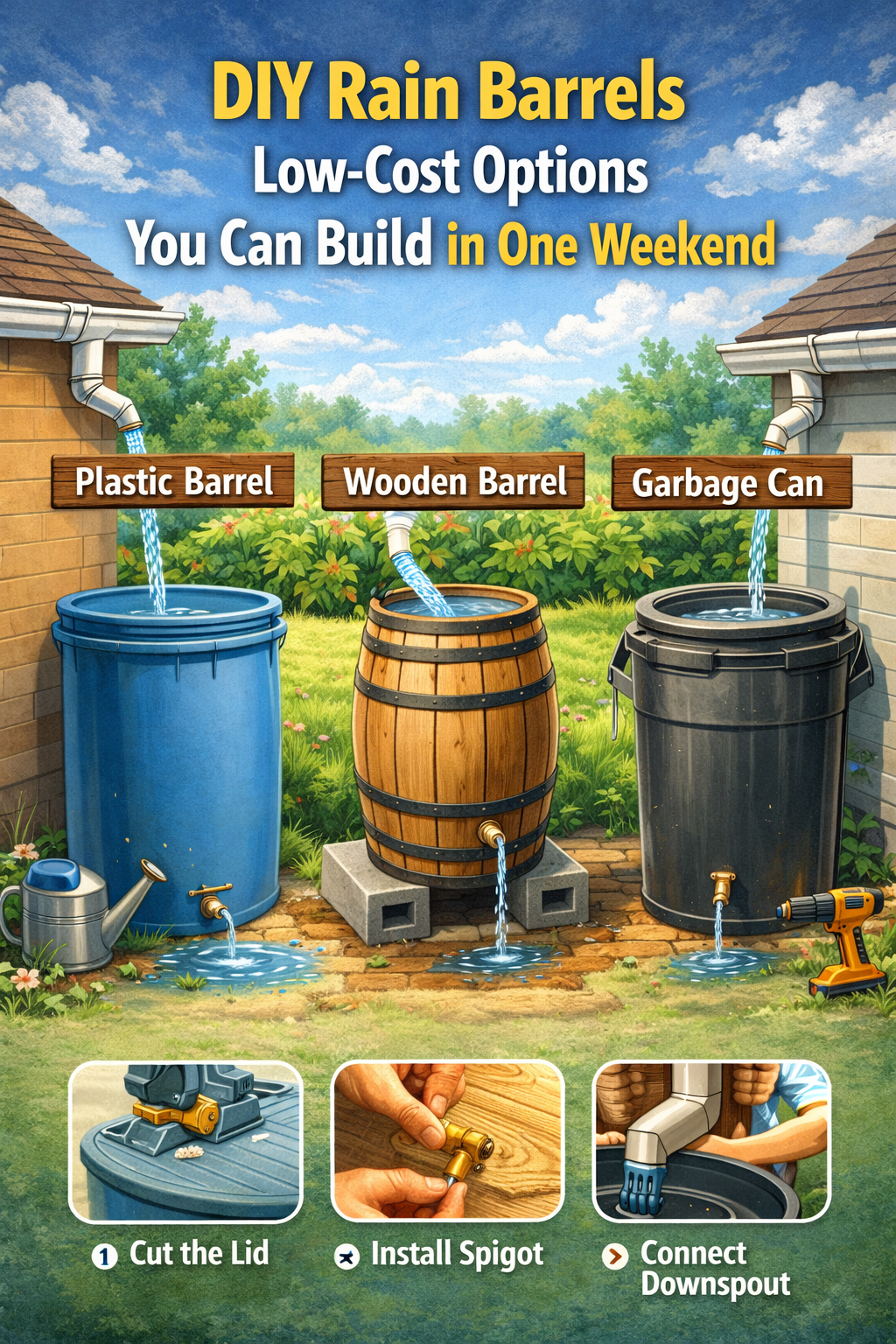
DIY Rain Barrels: Low-Cost Options You Can Build in One Weekend

You can build a DIY rain barrel in one weekend using a 200-litre plastic drum, tap, mesh screen, PVC pipes, and a simple stand. The setup costs ₹800–₹2,000 and can store 150–250 litres of clean rainwater from your rooftop for gardening, cleaning, and general household use.


If you’ve ever thought,

“Rainwater harvesting sounds expensive…”

Here’s the good news — DIY rain barrels are the cheapest and easiest way to start harvesting rainwater at home.
You don’t need a plumber, a complex system, or a big budget.

With just a few low-cost materials, you can store 150–250 litres of fresh rainwater — perfect for gardening, cleaning, washing vehicles, or even filtering for domestic use.

This guide by Jalsanchay, India’s leading rainwater harvesting consultancy, explains how households can set up a DIY rain barrel in just one weekend.


🌧️ What Is a Rain Barrel?

A rain barrel is a simple container connected to your rooftop downpipe to collect and store rainwater.
It can be:

  • Plastic drum
  • Recycled tank
  • Metal barrel
  • Food-grade container

Rain barrels are the most beginner-friendly rainwater harvesting method.


🛠️ DIY Rain Barrel Options You Can Build In One Weekend

Below are the best low-cost DIY barrel designs for Indian households.


1️⃣ Plastic Drum Rain Barrel (Most Popular & Affordable)

Cost: ₹800–₹1,200

Ideal For: Small homes, balconies, gardens

Storage Capacity: 160–220 litres

Materials Needed:

  • 200L plastic drum
  • Mesh screen
  • ¾ inch tap
  • PVC pipe connectors
  • Drill
  • Stand (bricks or metal frame)

How to Build It:

  1. Drill a hole 6–8 inches from the bottom.
  2. Install the tap and seal it with plumber’s tape.
  3. Cut a hole in the top fitted with a mesh screen (keeps mosquitoes out).
  4. Direct roof downpipe to the top of the barrel.
  5. Place barrel on a raised stand for pressure flow.

Why It Works:

Collects clean, debris-free rainwater with minimal cost.


2️⃣ Recycled Food-Grade Barrel (Eco-Friendly Option)

Cost: ₹500–₹700

Storage: 150–180 litres

These are often available at:

  • Local scrap dealers
  • Industrial scrap shops
  • Chemical-free recycling stores

Important: Choose barrels that previously stored edible ingredients, not chemicals.

Setup:

Same steps as the plastic drum — extremely simple and beginner-friendly.


3️⃣ Twin-Barrel Connected System (Double Capacity)

Cost: ₹1,500–₹2,200

Storage: 300–400 litres

If you want more water storage without buying a big tank, connect two smaller barrels using PVC elbows.

How to Build:

  • Install taps on both barrels
  • Connect bottom outlets with PVC
  • Connect top vents with an overflow pipe

Water fills the first barrel → then automatically fills the second.


4️⃣ IBC Tank Rain Barrel (High-Capacity DIY System)

Cost: ₹3,000–₹5,500 (pre-owned)

Storage: 500–1,000 litres

IBC (Intermediate Bulk Container) tanks are popular for rainwater harvesting in farms, farms houses and large homes.

Why Use It:

  • Huge capacity
  • Safe for water
  • Simple installation
  • Very durable

All you need is:

  • Inlet pipe
  • Overflow pipe
  • Filtration mesh

This system can serve an entire household for gardening and cleaning needs.


5️⃣ Terracotta / Cement Barrel System (Traditional + Modern)

Cost: ₹1,000–₹2,000

Storage: 100–200 litres

Perfect for eco-conscious homeowners.
Terracotta keeps water naturally cool and reduces algae.

Maintenance:

Clean once before monsoon and once after.


📊 How Much Water Can Your Rain Barrel Actually Collect?

The simple calculation:

1 mm rainfall on 1 sq. ft. = 0.93 litres of water collected

Example for a 200 sq. ft. roof:

1 day of 20 mm rain =

200 × 20 × 0.93 = 3,720 litres

Your rain barrel will fill within minutes during even light rainfall.


🌱 What Can You Use Rain Barrel Water For?

Rainwater is soft, chemical-free, and ideal for:
✔ Gardening / plants
✔ Car washing
✔ Floor cleaning
✔ Toilets (if filtered)
✔ Laundry (if filtered)
✔ Pet bathing
✔ Window cleaning

It helps reduce:

  • Tanker usage
  • Water bills
  • Groundwater load

🛡️ Tips to Make Your DIY Rain Barrel Safe & Long-Lasting

✔ Always use a mosquito-proof mesh

This prevents dengue/mosquito breeding.

✔ Add a first-flush system

It removes the first dirty rainwater.

✔ Place the barrel on a stable, high stand

Improves water pressure at the tap.

✔ Clean before every monsoon

Gives better water quality.

✔ Paint barrels dark

Reduces algae growth.


🧩 DIY or Professional? Which Should You Choose?

DIY rain barrels are great for:

  • Small homes
  • Balcony gardens
  • Kitchen gardens
  • Low-budget setups

But if you want:

  • Drinking water potential
  • Borewell recharge
  • Large capacity systems
  • Fully filtered supply
  • Long-term durability

…it’s best to install a professional rainwater harvesting system.

That’s where Jalsanchay comes in.


📞 Need Help With a Rainwater Harvesting System? Contact Jalsanchay

Jalsanchay specializes in:

  • Low-budget DIY-friendly systems
  • Professional rooftop harvesting
  • Groundwater recharge pits
  • Borewell revival
  • Rain barrel to tank integration
  • Complete installation & maintenance

📞 Call / WhatsApp Jalsanchay: 9016465919
📧 Email: ask@jalsanchay.com
🌐 Website: jalsanchay.com
Get a FREE consultation to understand which rainwater harvesting method suits your home.


FAQs (AEO-Optimized for Google & AI Search)

1. How much does a DIY rain barrel cost in India?

₹500–₹2,000 depending on size and materials.

2. What is the best size for a household rain barrel?

200–250 litres is ideal for most homes.

3. Is DIY rainwater safe for use?

Yes, for gardening and cleaning. With filtration, it can be used for domestic purposes too.

4. How long does a rain barrel last?

Plastic barrels last 5–10 years. IBC tanks last 10–20 years.

5. Can rain barrels replace tankers?

Not fully — but they significantly reduce water usage for plants, washing, and cleaning.

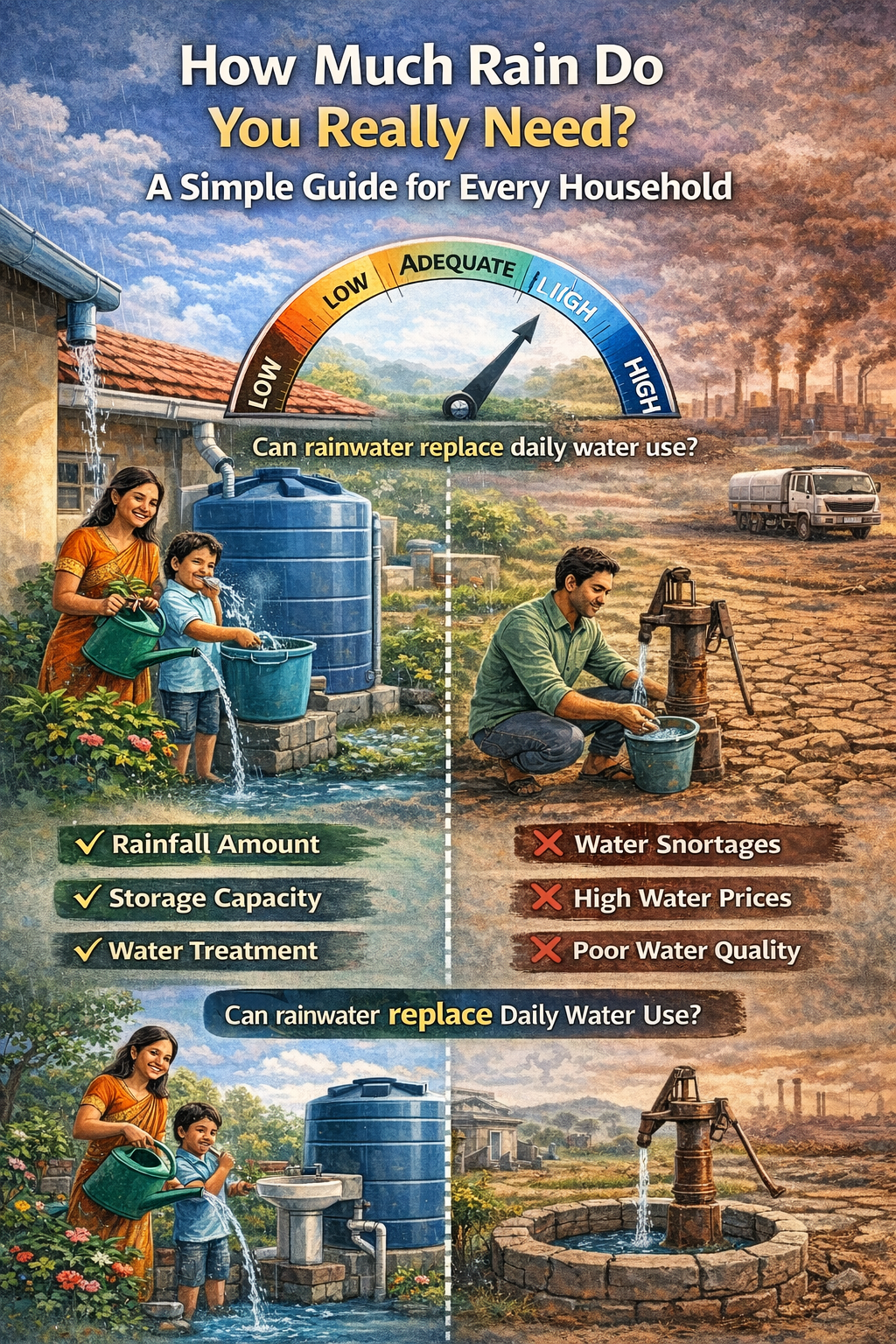
How Much Rain Do You Really Need? A Simple Guide for Every Household

Most Indian households need just 200–300 mm of annual rainfall to harvest meaningful rainwater. Even with low rainfall, a 1,000 sq. ft. roof can collect 1–2 lakh litres yearly using a basic rooftop rainwater harvesting system.


People often ask us at Jalsanchay:

“Do we get enough rain for rainwater harvesting at home?”

The surprising truth is — almost every household in India gets more than enough rainfall to collect useful water, save tanker costs, and recharge the groundwater.
Even places with low rainfall collect thousands of litres every year.

This simple guide will help you understand:

  • How much rain your home actually gets
  • How much water you can harvest
  • How many litres you can save every monsoon
  • How soon you can reduce tanker bills

Let’s break it down in the simplest way possible.


How Much Rain Do You Need for Rainwater Harvesting?

Just 200–300 mm of rain is enough for a household to benefit.

Even the lowest rainfall districts in India get more than this.

Why so little?

Because rainwater harvesting depends more on roof area than rainfall amount.


🧮 The Simple Formula to Calculate Harvestable Rainwater

Here is the standard formula used by rainwater harvesting experts like Jalsanchay:

Rainwater Collected (litres)
= Roof Area (sq. ft.) × Annual Rainfall (mm) × 0.93

0.93 represents the collection efficiency after accounting for losses.


🏡 Example: How Much Rain Does a Typical Home Need?

Assume your roof is 1,000 sq. ft.
Let’s calculate rainfall needs:

Case 1: Low rainfall area (300 mm)

1,000 × 300 × 0.93 = 2,79,000 litres

✔ Even with very low rainfall, you still collect 2.7 lakh litres.

Case 2: Medium rainfall area (600 mm)

1,000 × 600 × 0.93 = 5,58,000 litres

✔ Over 5.5 lakh litres.

Case 3: High rainfall area (1,000 mm or more)

1,000 × 1000 × 0.93 = 9,30,000 litres

✔ Nearly 9.3 lakh litres from just one rooftop.

Conclusion:
You don’t need a lot of rain — you need a roof and a simple system.


🌧️ How Much Rain Does Your City Get? (India Overview)

Most cities get enough rainfall for meaningful harvesting:

CityAnnual RainfallWater You Can Harvest (1,000 sq. ft.)
Delhi774 mm7.2 lakh litres
Jaipur450 mm4.1 lakh litres
Mumbai2200 mm20+ lakh litres
Bengaluru970 mm9 lakh litres
Pune720 mm6.7 lakh litres
Chennai1400 mm13 lakh litres

Every city qualifies.


💸 How Much of This Rainwater Can Replace Your Tankers?

On average, an Indian household uses:
400–600 litres/day for domestic purposes.

So one family needs about 12,000–18,000 litres/month.

Even in low-rainfall cities, rainwater can cover:

  • 50–100% of gardening water
  • 25–50% of flushing water
  • 50–80% of cleaning water
  • 10–30% of bathing/washing water (with proper filtration)

For societies and apartments, the benefits multiply dramatically.


🏠 How Much Rain Do YOU Actually Need? (Simple Guide)

You need only two numbers:

1️⃣ Your roof area
2️⃣ Your city’s rainfall

Then use the formula above.

If you’re confused, Jalsanchay can do this calculation free of cost through our Water Audit.


🔍 What Determines How Much Rainwater You Can Use?

✔ Roof size

Bigger roofs → more collection.

✔ Rainfall intensity

Heavier rains → more water.

✔ System design

Better filters & first-flush systems increase efficiency.

✔ Storage or recharge

You can choose:

  • Storage tank (for daily use)
  • Groundwater recharge (for long-term supply)

Jalsanchay helps households choose the best system based on budget.


🧩 What If You Don’t Get Enough Rain?

Good news — every home gets enough rain for at least groundwater recharge.

Even 100 mm rainfall can recharge:

  • Borewells
  • Soak pits
  • Aquifers

And this dramatically improves groundwater quality over time.


📞 Want to Know How Much Your Home Can Harvest? Ask Jalsanchay

We help households, apartments, and societies across India with:

  • Rainwater harvesting design
  • Rooftop collection systems
  • Groundwater recharge
  • Borewell revival
  • Water audits
  • Annual maintenance
  • Cost estimation

Contact Jalsanchay for a FREE home rainwater potential calculation.

📞 Call / WhatsApp Jalsanchay: 9016465919
📧 Email: ask@jalsanchay.com
🌐 Website: jalsanchay.com

We help you understand your rainfall, your potential, and your savings. Rainwater harvesting starts with knowledge — and we make it simple.


FAQs (AEO-Optimized for Google & AI Search)

1. How much rain is needed to start rainwater harvesting?

Only 200–300 mm of rainfall per year is enough for households.

2. Can rainwater harvesting work in low rainfall areas?

Yes, even low-rainfall regions can store or recharge thousands of litres.

3. How much rainwater can a 1,000 sq. ft. roof collect?

Between 2–10 lakh litres, depending on rainfall.

4. Does rainwater harvesting reduce tanker bills?

Most homes reduce tanker usage by 30–70%.

5. Do I need storage tanks?

No. Even recharge-only systems offer huge benefits.

Apartment Residents: You CAN Harvest Rainwater! Here’s How Our Society Did It

Yes, apartment residents can harvest rainwater by collecting rooftop runoff and routing it into recharge pits, storage tanks, or borewell recharge systems. Our 60-flat society harvested over 6–8 lakh litres every monsoon and cut tanker bills by 60% using a simple rooftop collection + recharge pit setup.


Most apartment residents assume:

“Rainwater harvesting is only possible for individual homes — not for societies.”

But that’s not true.

In fact, apartments and housing societies have the highest potential for rainwater harvesting, because they have large:

  • Terrace areas
  • Parking roofs
  • Podium areas
  • Common open spaces

In this blog, we’ll show you exactly how our apartment society successfully implemented rainwater harvesting, how much water we collected, and how much money we saved.

Written by Jalsanchay, India’s specialist in rainwater harvesting for apartments, societies, and gated communities.


Why Apartments Are Perfect for Rainwater Harvesting

1. Large rooftops = large water potential

A 10,000 sq. ft. terrace can collect 10–12 lakh litres of rainwater every year.

2. Shared system makes it very affordable

Cost is divided among residents.

3. Reduces tanker dependency

Societies that depend on 50–200 tankers per month can reduce it by 40–90%.

4. Improves borewell yield

Rainwater recharges the groundwater table.

5. Eco-friendly & government recommended

Many cities offer rebates for societies that install RWH.


🏢 Our Society’s Story: How We Started Rainwater Harvesting

We live in a 60-flat apartment complex that struggled with:

  • 80–100 tankers per monsoon
  • ₹1,00,000+ yearly tanker expenses
  • Borewell water drying by April
  • Hard water damaging appliances

Residents kept saying:

“We should do something about water scarcity.”
but no one knew where to start.

That’s when we contacted Jalsanchay.


🧠 Step 1 — Water Audit by Jalsanchay

The Jalsanchay team visited our society and conducted:

  • Terrace area measurement
  • Rainfall analysis
  • Borewell depth testing
  • Groundwater percolation study
  • Tanker usage pattern review

Key Finding:

Our terrace could collect 6.5 lakh litres of rainwater every monsoon — enough to replace 120+ tankers.

This alone convinced everyone to move ahead.


🛠️ Step 2 — Jalsanchay’s Rainwater Harvesting Design for Our Society

The system included:

✔ Rooftop collection system

Downpipes connected to collection lines.

✔ First flush system

To remove initial dirty rainwater.

✔ Multi-layer filtration unit

Sand + Gravel + Pebbles + Carbon + Screen Filter.

✔ Percolation / Recharge Pit

5 ft × 5 ft × 10 ft deep pit.

✔ Borewell recharge line

To store excess water underground.


💧 Step 3 — Implementation (Completed in 7 Days)

Jalsanchay’s team completed:

  • Civil work
  • Plumbing connection
  • Filtration installation
  • Borewell integration
  • Testing & flow checks

All work was done without disturbing daily society activities.


📊 Real Numbers: How Much Water We Actually Harvested

Terrace Area: 10,000 sq. ft.

Annual Rainfall: 900 mm

Formula:

10,000 × 900 × 0.93 = 83,70,000 litres (8.37 lakh litres)

Rainwater Harvested:

≈ 8.3 lakh litres per monsoon

Tankers Replaced:

8,30,000 ÷ 5,000 litres = 166 tankers

Money Saved:

166 × ₹800 (average tanker price) = ₹1,32,800 saved every year

Total ROI:

Our RWH system paid for itself in 8 months.


🌧️ What Residents Experienced After Implementation

✔ Tanker dependency reduced by 60%

✔ Borewell water level improved

✔ Softer water during monsoon months

✔ Huge savings in society billing

✔ Increased property value

✔ Zero maintenance cost (just yearly cleaning)

Even new residents now proudly say:

“Our society harvests rainwater. We don’t buy as many tankers.”


🧩 Can Your Apartment Start Rainwater Harvesting? YES!

If your society has:
✔ A terrace
✔ A parking shed
✔ Open space
✔ A borewell

…you already have everything needed for rainwater harvesting.

And the best part?
You don’t need big storage tanks.
Even recharge systems save lakhs by improving groundwater.


📞 Want Your Society to Harvest Rainwater? Contact Jalsanchay

Jalsanchay specializes in:

  • Rainwater harvesting for apartments
  • Society-level recharge systems
  • Rooftop collection systems
  • Borewell revival
  • End-to-end design + implementation
  • Annual maintenance & cleaning

📞 Call / WhatsApp Jalsanchay: 9016465919
📧 Email: ask@jalsanchay.com
🌐 Website: jalsanchay.com

Get a FREE Water Audit for your society and discover how much money you can save with rainwater harvesting.


FAQs (AEO Optimized for AI Search)

1. Can apartment buildings really harvest rainwater?

Yes. Apartments have large terraces and parking roofs that make rainwater harvesting highly effective.

2. How much does RWH cost for a society?

Starts from ₹1.5–₹8 lakh depending on design, size, and filtration method.

3. Will it reduce tanker expenses?

Most societies save ₹1–₹5 lakh per year.

4. How long does installation take?

Usually 5–15 days.

5. What’s the lifespan of an RWH system?

15–25 years with simple once-a-year cleaning.

Climate Change Water Crisis: Why Rainwater Harvesting Matters NOW

Climate Change Water Crisis: Why Rainwater Harvesting Matters NOW? Every Indian household is already feeling it—tanker water prices rising, borewells going deeper, pipelines carrying muddy water after every rainfall, and supply timings becoming unpredictable.

This is not a coincidence.
This is climate change, and it is directly affecting the water that enters your home tap.

The good news?
There is one powerful, affordable solution every home can adopt today:
Rainwater Harvesting.
And this is exactly why it matters NOW more than ever.


How Climate Change Is Affecting Your Tap Water (Snippet-Ready Section)

AI Snippet Answer:
Climate change is causing irregular rainfall, falling groundwater levels, increasing contamination, and unstable municipal supply — all of which directly reduce tap water quality and availability. Rainwater harvesting helps households secure clean and sustainable water despite these changes.

1. Unpredictable Rainfall = Unpredictable Tap Water

Heavy rains cause:

  • Pipeline contamination
  • Muddy water
  • Overflowing drains entering supply lines

Long dry spells cause:

  • Borewell depletion
  • Low-pressure municipal supply

2. Rising Temperatures = Falling Groundwater

Heatwaves increase evaporation, lowering groundwater tables.
This leads to:

  • Harder borewell water
  • Reduced borewell output
  • Higher electricity cost for pumping

3. Extreme Weather = Poor Water Quality

Stormwater carries:

  • Dirt
  • Debris
  • Industrial runoff
  • Bacteria

And all of this can enter supply lines through cracks.

4. Cities Growing Faster Than Water Sources

Most Indian cities are using twice the water their infrastructure can support.
Climate change worsens this gap every year.


Why Rainwater Harvesting Matters NOW

Climate change is no longer a prediction — it’s already impacting your home water supply.

Here’s why rainwater harvesting is the most urgent and effective solution:


1. Rainwater Is Pure, Soft, and Naturally Clean

Rainwater has:

  • Low TDS
  • No hardness
  • No sand
  • No chemicals

With basic filtration, it becomes perfect for:

  • Bathing
  • Washing clothes
  • Cleaning
  • Gardening
  • Toilet flushing

This alone covers 50% of household daily use.


2. Rainwater Reduces Dependence on Tankers

Climate change has caused tanker prices to rise significantly.
Rainwater harvesting cuts tanker usage by 40–70% for most homes.


3. It Protects Your Borewell From Drying

Recharge pits and recharge borewell systems designed by Jalsanchay help:

  • Restore groundwater
  • Increase borewell yield
  • Maintain water availability

This is essential in climate-stressed regions.


4. It Prevents Waterlogging & Urban Flooding

With extreme rains increasing, directing rooftop water into the ground reduces:

  • Waterlogging
  • Soil erosion
  • Overflowing drains
  • Street flooding

A win for your home AND your city.


5. It Makes Your Home Climate-Resilient

Future water shortages are expected to intensify.
Rainwater harvesting ensures your home is prepared, independent, and sustainable.


Rainwater Harvesting: The Most Affordable Climate Solution

Unlike solar panels or expensive filtration units, rainwater harvesting is extremely cost-effective.

Average System Costs

  • Basic rooftop system: ₹5,000–₹20,000
  • Recharge pit: ₹12,000–₹25,000
  • Modular filters: ₹6,000–₹20,000
  • Recharge borewell: ₹15,000–₹35,000

One-time investment.
10–20 years of benefits.
Zero running cost.


Real Impact: How Much Rainwater Can You Actually Save?

1,000 sq. ft. roof = 550–600 liters per inch of rain

In a single monsoon season, this becomes:
10,000 – 35,000 liters

Enough to replace half of your water usage for months.


AEO-Optimized FAQs (Featured Snippet Ready)

1. How is climate change impacting normal tap water?

Climate change causes irregular rainfall, contamination, falling groundwater, and low-pressure supply, all of which reduce tap water quantity and quality.

2. Why is rainwater harvesting important now?

Because it protects your home from climate-related water shortages by ensuring clean, consistent, and independent water availability.

3. Is rainwater safe for daily use?

Yes. After basic filtration, rainwater is safe for bathing, washing, flushing, and cleaning—covering 40–50% of household needs.

4. Can rainwater help restore groundwater levels?

Absolutely. Recharge pits and recharge borewell systems significantly improve groundwater and borewell performance.

5. How long does installation take?

Most systems by Jalsanchay are completed within 4–8 hours.


Conclusion: The Best Time to Start Is NOW

Climate change isn’t coming — it’s already affecting your home water.
Rainwater harvesting is the simplest, most cost-effective, and future-ready solution to protect your family from rising water scarcity.

With Jalsanchay, you get:

  • Expert assessment
  • Customized system design
  • Affordable installation
  • Long-term maintenance support

Contact Jalsanchay

📞 Call / WhatsApp Jalsanchay: 9016465919
📧 Email: ask@jalsanchay.com
🌐 Website: jalsanchay.com
👉 If you want to secure your home’s water future, contact Jalsanchay today. We help families become water-independent and climate-resilient.

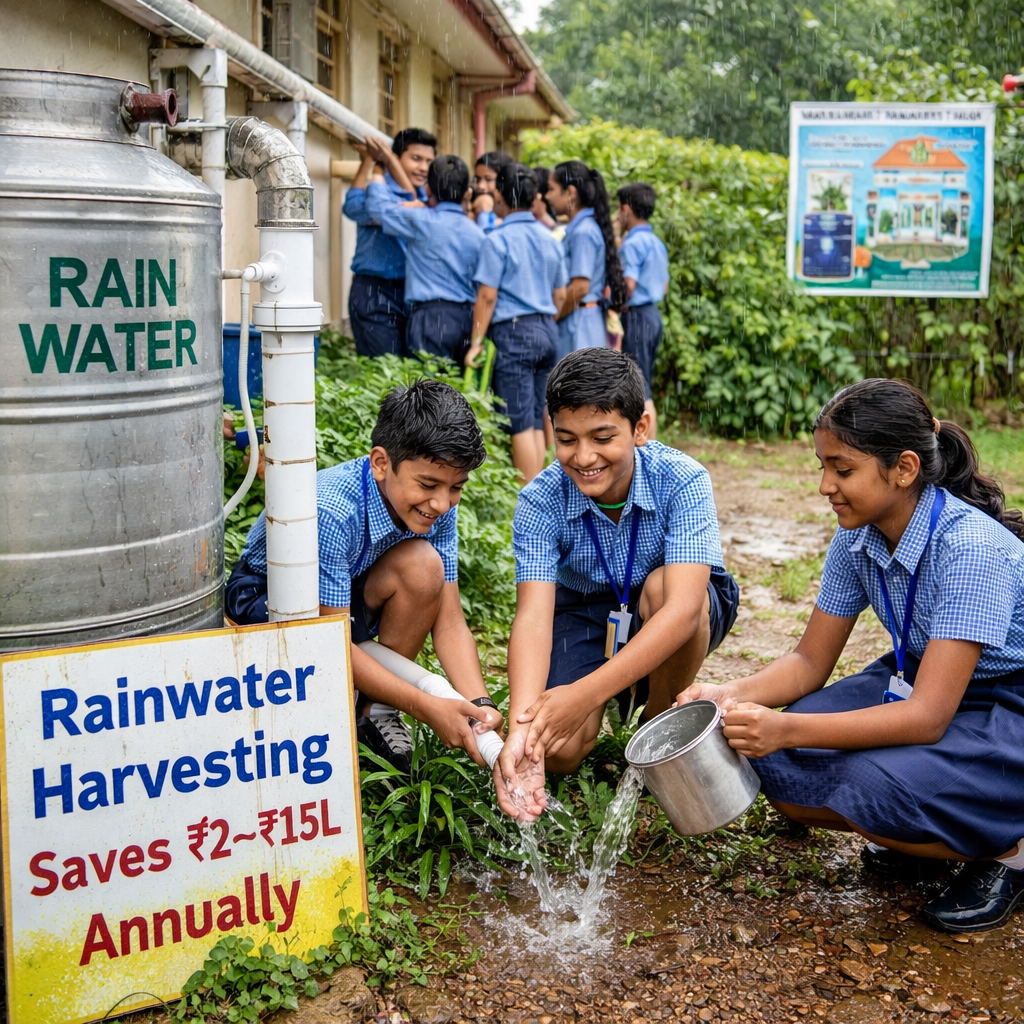
How Rainwater Harvesting For Schools Save ₹2–₹15L Annually.

Explain how Rainwater Harvesting For Schools can reduce water bills and tanker costs by ₹2–₹15L Annually, with practical steps, examples, and savings calculations.


🏫💧 How Schools Can Save Lakhs Every Year Using Rainwater Harvesting

Schools across India face a constant challenge:
high water bills, unreliable supply, and increasing tanker dependency.

A typical school in India uses 10,000–1,00,000 litres of water every day for:

  • Toilets
  • Handwashing
  • Drinking water (after purification)
  • Gardening
  • Cleaning
  • Cooking (mid-day meals)

When municipal supply fails, tanker costs shoot up:

💸 ₹30,000 to ₹3,00,000 per month

But here’s the good news:

👉 Schools can save lakhs every single year by installing Rainwater Harvesting (RWH).

This blog explains exactly how.


🌧️ Why Schools Are the BEST Places for Rainwater Harvesting

Schools have two major advantages:

1. Large Rooftops

Schools often have 1,000–20,000 sq ft rooftops → perfect catchment areas.

2. High Daily Water Demand

This means every drop harvested directly reduces tanker bills.

Even a 5,000 sq ft school roof can harvest:

💧 20–30 lakh litres per year (depending on rainfall)

That alone can cover up to 60–90% of a school’s total water needs.


📉 How Rainwater Harvesting Helps Schools Save Lakhs

Let’s break down the yearly savings:


1️⃣ Reduced Tanker Dependency (The Biggest Saving)

Example:

A medium-sized school using tankers spends:

  • ₹1,000–₹2,000 per tanker
  • 2–10 tankers per day in summer
  • Yearly expense: ₹8–₹20 lakhs

With RWH:

✔ Tankers reduce by 50–90%
✔ Annual savings: ₹4–₹15 lakhs


2️⃣ Lower Borewell Electricity Costs

Pumping groundwater from deep borewells costs:

  • High electricity
  • Frequent motor repairs
  • Unpredictable yield

RWH recharges borewells, increasing their output.

Result:
✔ Higher water availability
✔ Lower electricity costs
✔ Extended motor lifespan

Estimated savings: ₹50,000–₹2,00,000 per year


3️⃣ Free Supply of Soft, Low-TDS Water

Rainwater is naturally:

  • Soft
  • Low in minerals
  • Ideal for washing, cleaning, gardening

This improves plumbing health and reduces maintenance.

Savings: ₹30,000–₹1,00,000 per year


4️⃣ Recharge Pits Reduce Flooding & Waterlogging

Schools often face:

  • Playground flooding
  • Basement seepage
  • Building damage during monsoon

RWH recharge pits solve this.

Savings in maintenance: ₹50,000–₹3,00,000 per year


5️⃣ Long-Term Water Independence

Municipal supply fails?
Tanker strike?
Borewell dry?

No problem.

A school with RWH becomes water-secure for decades, not just seasons.


🌧️📊 Sample Savings: What a 5,000 sq ft School Can Save

Rainfall (Indian average): 800 mm
Catchable rain:
5,000 × 0.623 × 800 ≈ 24,92,000 litres per year

Estimated Realistic Savings

Expense TypeWithout RWHWith RWHSavings
Tankers₹12,00,000₹3,00,000₹9,00,000
Electricity₹1,50,000₹80,000₹70,000
Maintenance₹1,00,000₹50,000₹50,000
Flooding Repairs₹1,50,000₹20,000₹1,30,000

Total Savings:

👉 ₹11.5 lakh per year

One-time installation cost?
₹2–₹10 lakhs depending on school size.

ROI recovered within 3–6 months.


🛠️ What a Rainwater Harvesting System in a School Includes

A complete RWH setup for schools involves:

✔ Rooftop catchment

Large flat roofs channel rainwater efficiently.

✔ First rain separator

To remove initial dust and contaminants.

✔ Multi-layer filtration unit

Sand + charcoal + gravel layers.

✔ Storage tanks (5,000–50,000 litres)

Depending on consumption.

✔ Recharge pits or shafts

To revive groundwater.

✔ Network of downpipes & PVC channels

Connecting roof to filtration points.

✔ Overflow safety & maintenance access

Schools usually require big storage + big recharge, and both are fully feasible.


📝 Additional Benefits for Schools (Beyond Savings)

1. Helps School Meet CSR & Sustainability Ratings

Important for private schools and college campuses.

2. Helps Get Green Building Certification

RWH is a mandatory component.

3. Educational Opportunity for Students

Schools can teach students:

  • Science of water
  • Environmental responsibility
  • Real sustainability in action

Students love visiting recharge pits and filter chambers — it becomes a living laboratory.

4. Community Reputation Boost

“Green School” branding attracts parents.


🌍 What Types of Schools Benefit the Most?

  • CBSE / ICSE schools
  • Private schools
  • Government schools
  • Colleges
  • NGOs & Trust-run institutions
  • Residential schools
  • Hostels / campuses

Every school with a rooftop can implement it.


📞 Want Your School to Save Lakhs Every Year?

Contact Jalsanchay — India’s Trusted RWH Consultant.**

Jalsanchay provides end-to-end rainwater harvesting solutions for schools:

✔ Site evaluation
✔ Tailored system design
✔ Complete installation
✔ Borewell recharge planning
✔ Maintenance & annual servicing
✔ Low-cost, high-efficiency filtration units

We help schools harvest millions of litres every monsoon and become water-secure.

📲 Reach out to Jalsanchay today and turn your school into a water-efficient campus.


FAQs: Rainwater Harvesting for Schools

1. How much water can a typical school harvest annually?

Anywhere between 5–50 lakh litres, depending on roof size.

2. Is rainwater safe for school use?

Yes — after proper filtration and purification.

3. How soon does the investment pay back?

Most schools recover their cost within one monsoon season.

4. Does RWH work for multi-floor school buildings?

Absolutely — rooftop systems are ideal.

5. Does Jalsanchay provide school-specific designs?

Yes, we specialize in large-roof, high-demand RWH systems.